

4141 N 3rd St, Phoenix, AZ 85012
To contact a resident: (602) 248-1550
For more information about senior living options: (866) 208-4318
Overall Review of Arizona State Veteran Home
Pros
 The staff are absolutely wonderful.
- Robyn, the head nurse in the C2 unit, is caring, compassionate, and responsible at every step.
- The veterinary facility is beautiful and newer, with staff who clearly care about residents.
- The facility has super friendly staff, is clean, and maintains a high standard of care.
- The staff take great care of residents; they are friendly, professional, and security is excellent.
- The caregivers on D2 are amazing.
- The facility is described as the best by far, with families very happy with the care.
- ASVH has outstanding, compassionate staff who feel like part of the resident’s family.
Cons
 The reviewer states that patient care is substandard and that caregivers come and go like water.
- They describe the facility as a hospice rather than a home, with restricted movement for residents.
- They note their mother had multiple ICU stays for UTIs and felt staff rarely helped her.
- They claim a server brought food to rooms while staff did not wear masks.
- They allege several residents died from Covid, with no one taking responsibility for the loss and heartache.
- They describe a CNA as cold and rude, harming the father when lifting him.
Review
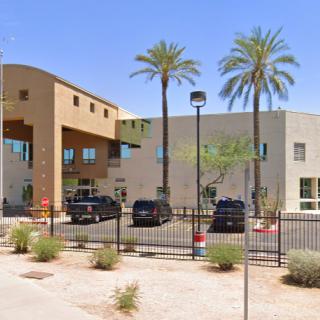
Arizona State Veteran Home in Phoenix is best suited for veterans who need skilled nursing care or rehabilitation and for families who prize a genuinely caring staff, a strong sense of veteran-community, and a program that keeps residents actively engaged. The campus presents as a newer, well-kept environment with a pronounced focus on dignity, respect, and purpose beyond mere custodial care. Reviews consistently highlight that residents are treated with kindness, that staff members feel like a true part of the resident’s family, and that care teams work hard to keep residents connected to meaningful routines, worship services, and social activities. For families seeking a place where staff integrity and veteran-centric culture are palpable, ASVH stands out as a practical, dependable choice.
That said, some families should consider alternatives. For residents who prioritize maximum independence, larger private spaces, or a more traditional residential feel, the crowded feel of cubicles and tighter living areas may be a mismatch. A few reviews raise concerns about consistency in caregiving and personal interactions, with mentions of turnover and varying experiences from one caregiver shift to the next. There are also accounts that frame the campus as oriented toward end-of-life care in certain units, which can color expectations for some families who want a broader rehabilitative or long-term care trajectory rather than a hospice-like environment. Those weighing costs should also compare options for private rooms and care levels elsewhere.
The strongest positives center on the human touch. The staff receives repeated praise for warmth, competence, and reliability, with multiple families calling out individual team members by name for going above and beyond. The head nurse on a key unit is singled out for extraordinary compassion, and the overall nursing and clinical teams are described as professional and attentive. The facility itself earns trust through cleanliness and safety, and the presence of veterans living there helps create a community feel that reinforces mutual respect. Families note robust engagement, from daily activities to church involvement and structured rehab programs, that keep residents mentally and physically active, which translates into improved mood and a greater sense of purpose.
Yet the negative threads cannot be ignored. Some reviews describe substandard patient care or dismissive attitudes, and a few caretakers are remembered more for brusqueness than warmth. Instances of staff turnover and inconsistent interactions with residents appear in the record, and one account points to a caregiver who was perceived as rude or rough. Care experiences are not uniform, and a handful of families report trouble with logistics, such as delays in retrieving a loved one’s belongings after a transition or a sense that some days do not meet expectations for attentiveness. These experiences suggest that while the overall culture is patient-centered, execution can vary by shift, unit, and individual staff members.
These pros and cons need to be weighed against the facility’s clear strengths. The positive, veteran-focused culture, coupled with a reputation for compassionate, capable nursing and a calendar of meaningful activities, often compensates for the less predictable moments in caregiving. For families who value continuity of care, strong advocacy from staff, and the comfort of a facility that treats veterans with particular respect and understanding, the benefits frequently outweigh the drawbacks. The high degree of resident and family satisfaction reflected in many testimonials, plus the emphasis on activity, church participation, and social connection, provides a practical foundation for choosing ASVH when those factors align with care goals.
In practical terms, ASVH should be top-of-mind for families prioritizing compassionate, veteran-centered care with a robust activity program and a dedicated clinical team. It remains a strong entry point for those needing rehab and long-term skilled nursing in a setting that emphasizes dignity and community. However, if the priority is a larger, more spacious living arrangement, rock-solid consistency across all shifts, or a non-veteran population with a different care culture, alternatives will likely align more closely with those expectations. Prospective families are advised to visit with care leaders, request a tour of units, assess room sizes, and discuss staffing patterns and recent turnover to confirm that the day-to-day experience will meet their specific goals.
 Independent Living
 Phoenix Sky Harbor International (6 miles away)




 Caring for Those Who Care: Recognizing, Understanding, and Overcoming Caregiver Burnout
 Caregiver Exhaustion: Recognizing the Signs and Restoring Your Well-Being
 Understanding Hospice Care at Home: Comprehensive Services, Key Benefits, and Eligibility