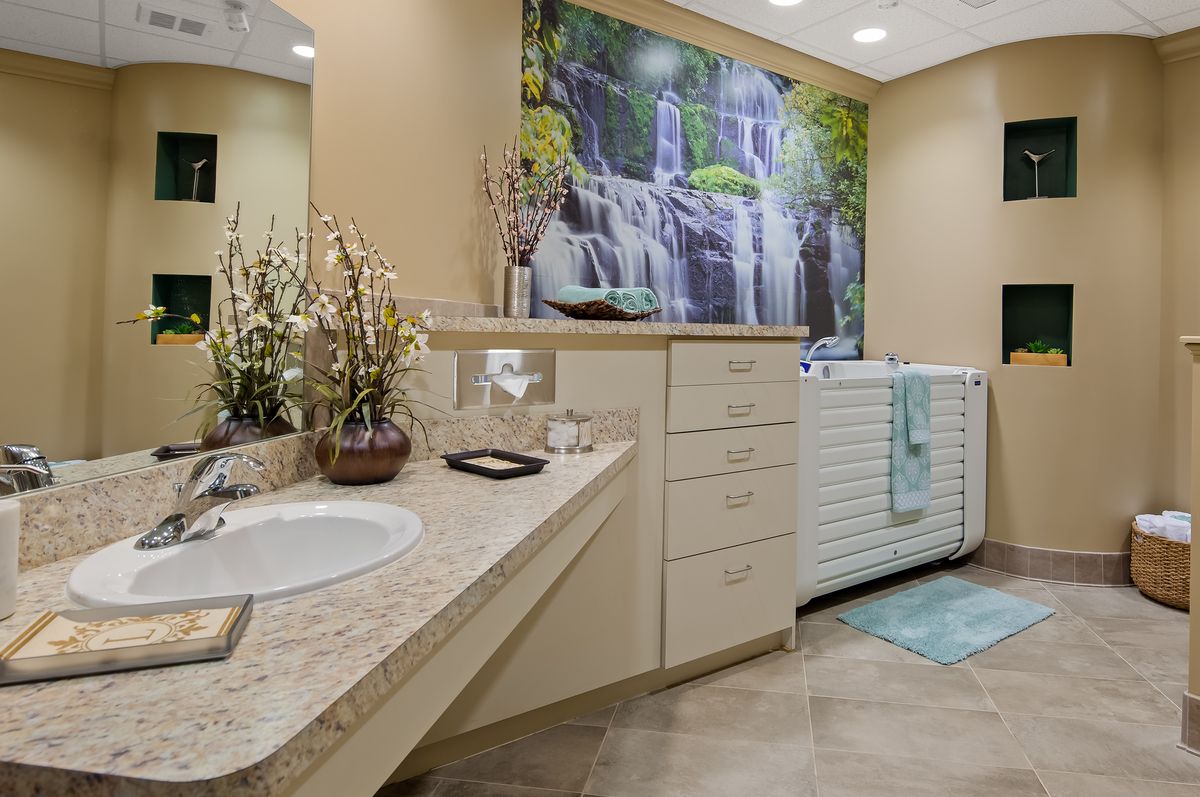
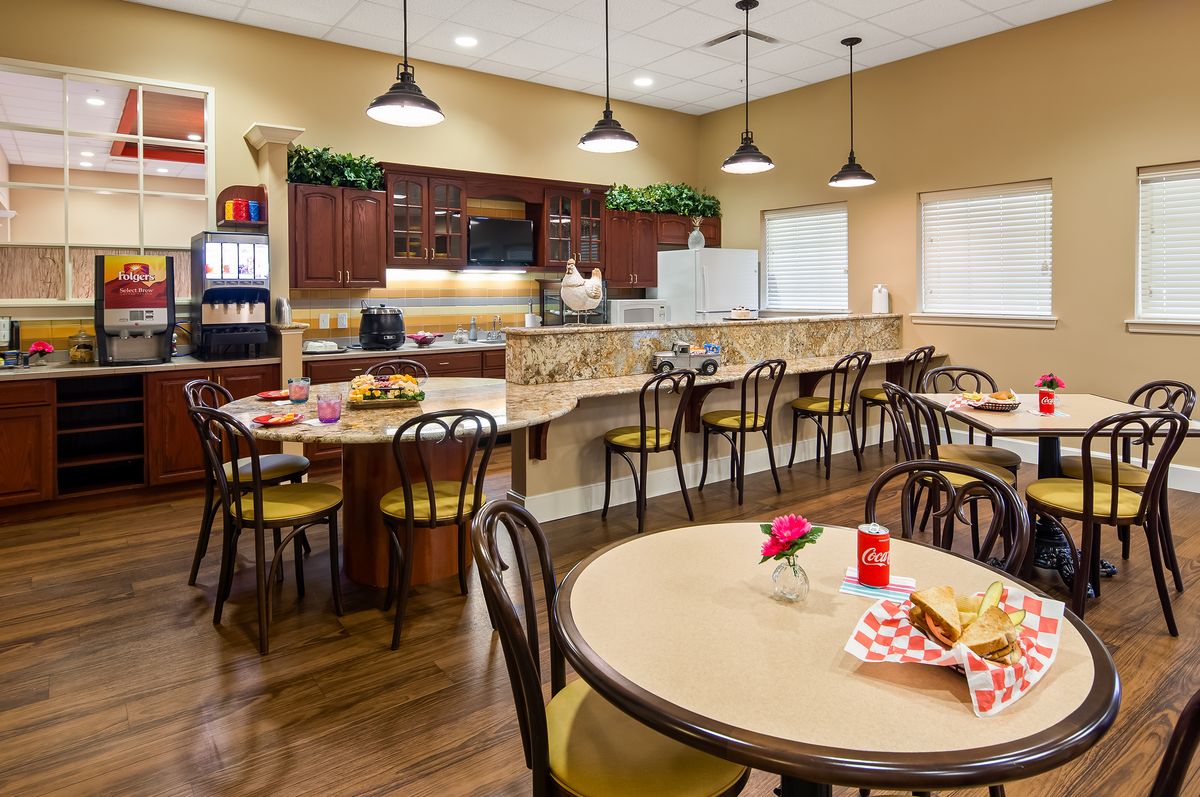
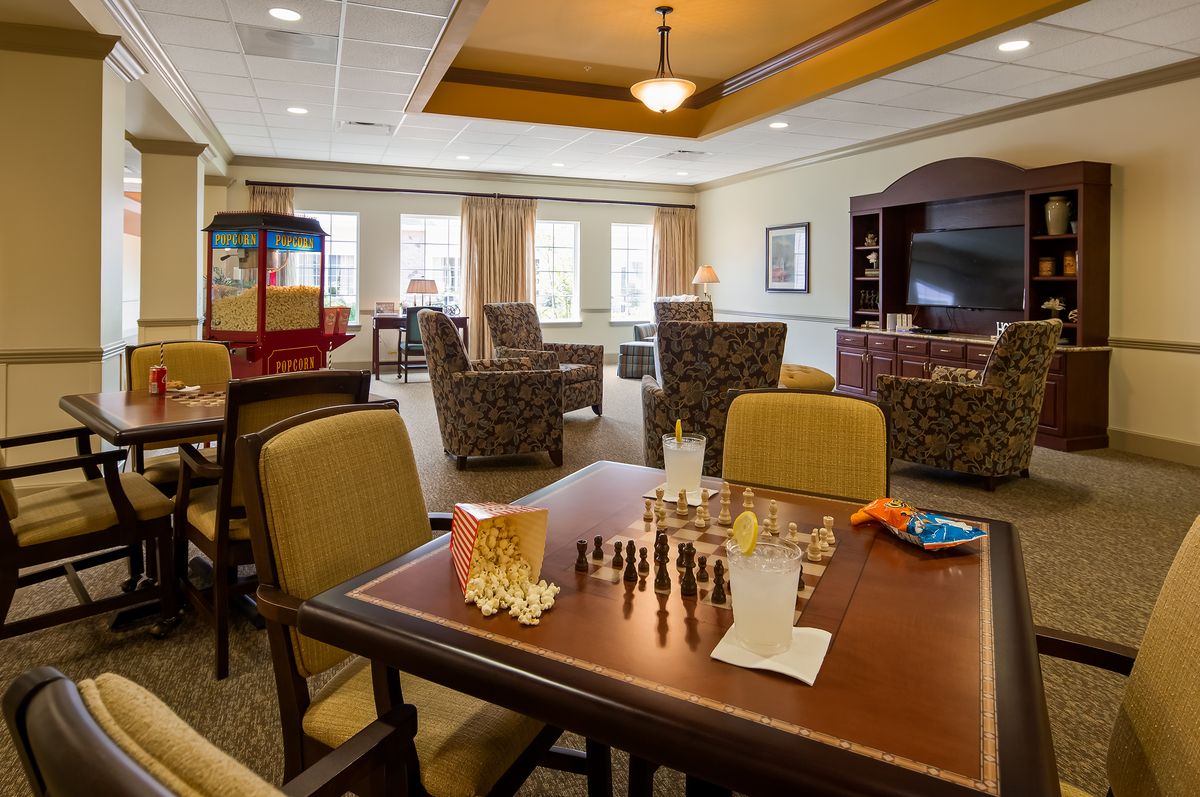
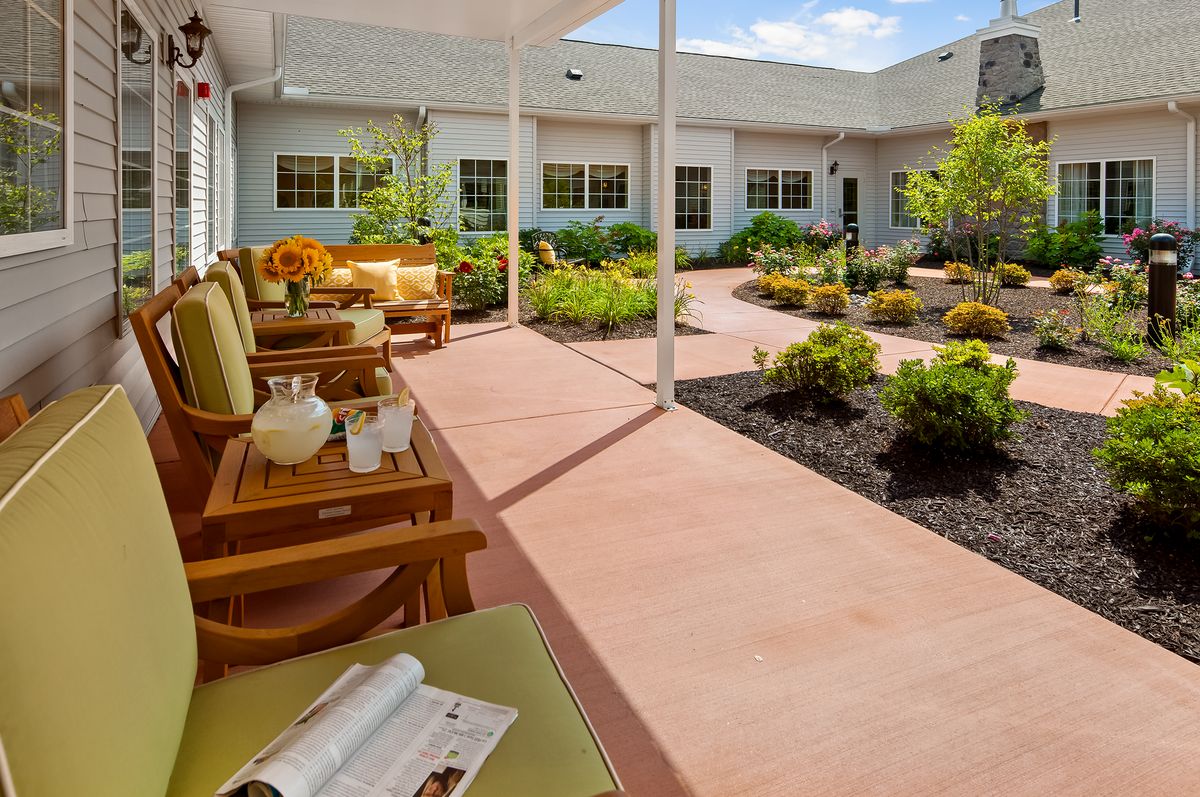
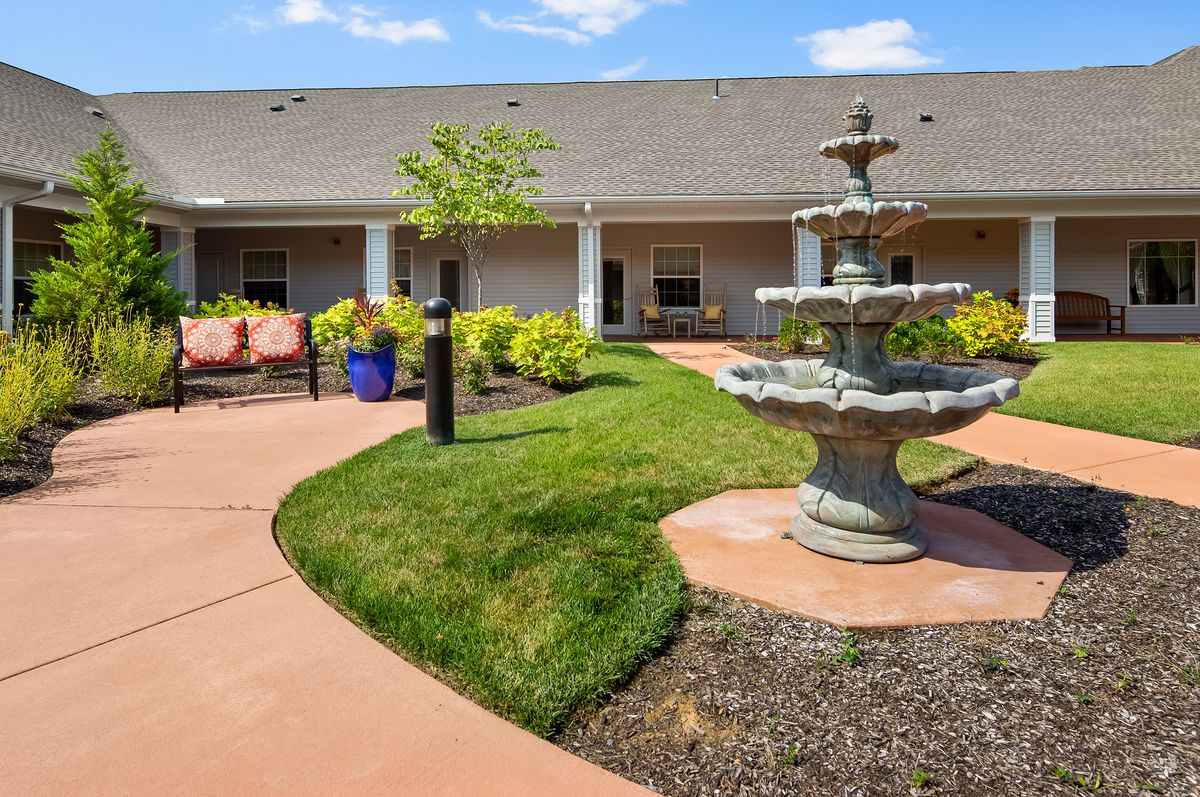
Residents and visitors repeatedly describe a clean, well-maintained community.
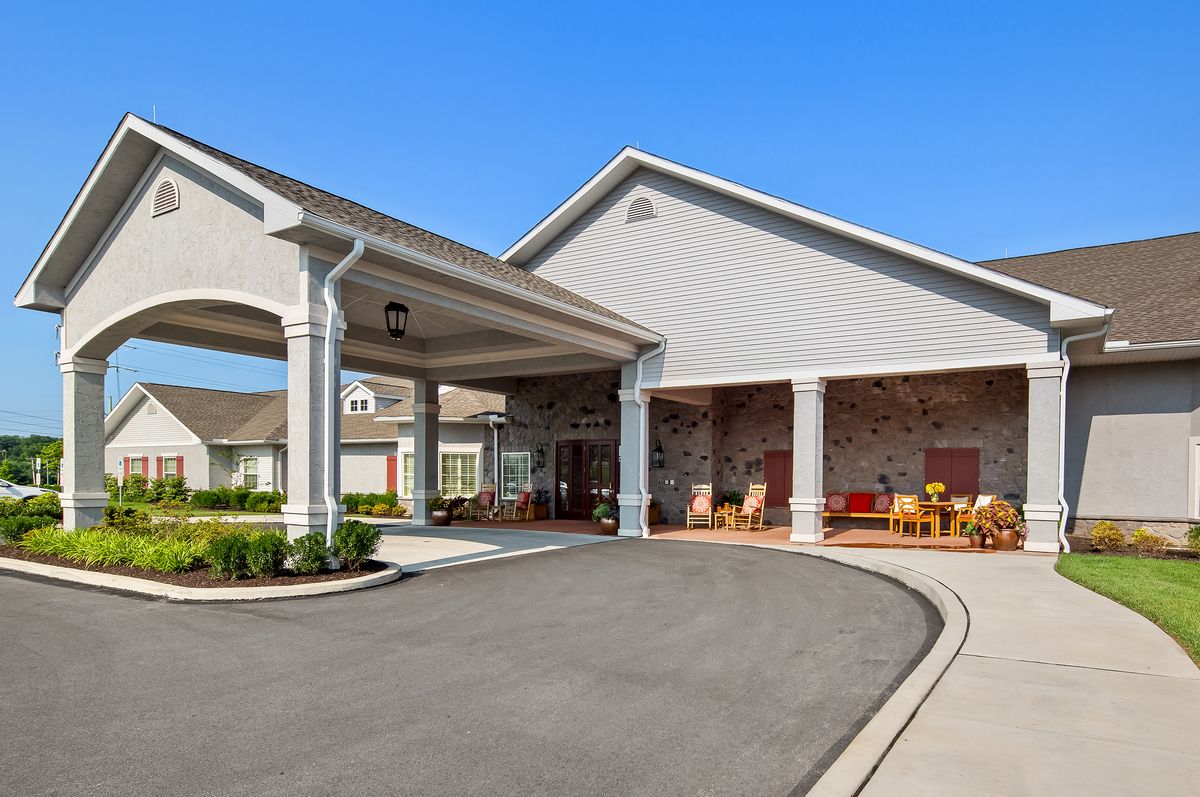
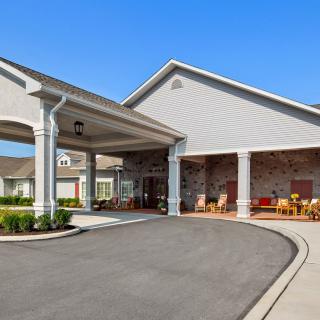
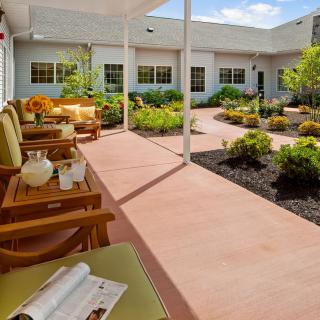
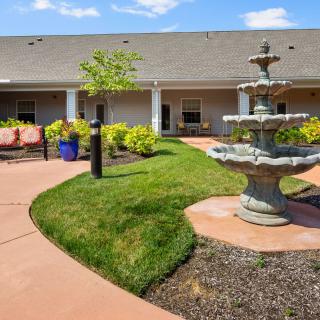
A large number of reviews mention cleanliness and upkeep as a consistent positive, with comments about spotless rooms and common areas. Several people also describe the building as beautiful, modern, and thoughtfully laid out, including courtyards and outdoor spaces that feel peaceful. Even when reviews are critical, some still acknowledge that the facility’s appearance is impressive and clean.
common28 reviews mention this
Staff care and responsiveness are key
The most repeated praise centers on caring, friendly staff who respond to residents.
Across both assisted living and memory care reviews, many families describe staff as compassionate, supportive, and attentive to residents’ needs. Multiple reviews highlight that staff learned residents’ names and personal stories, helped with transitions, and stayed engaged through daily interactions and activities. A smaller set of reviews is much less positive about memory care staffing and management, but even those accounts still name individual staff members who were kind or helpful.
common16 reviews mention this
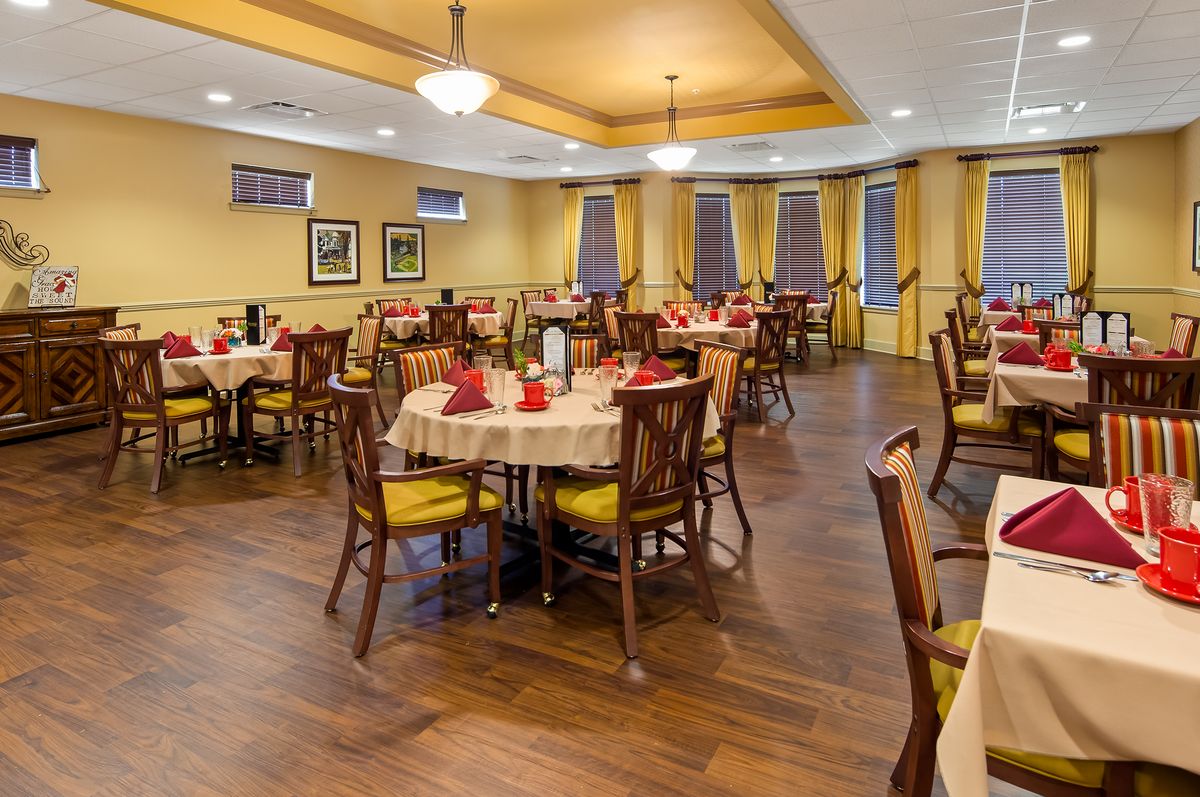
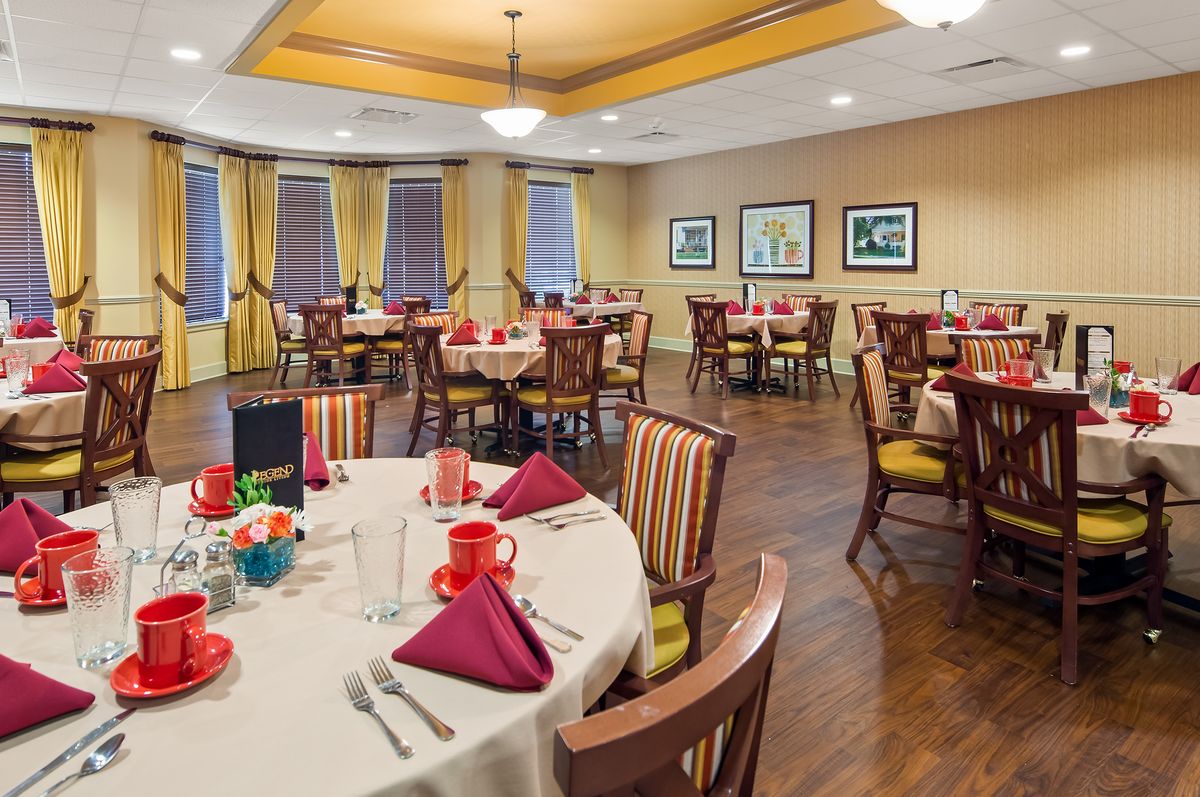
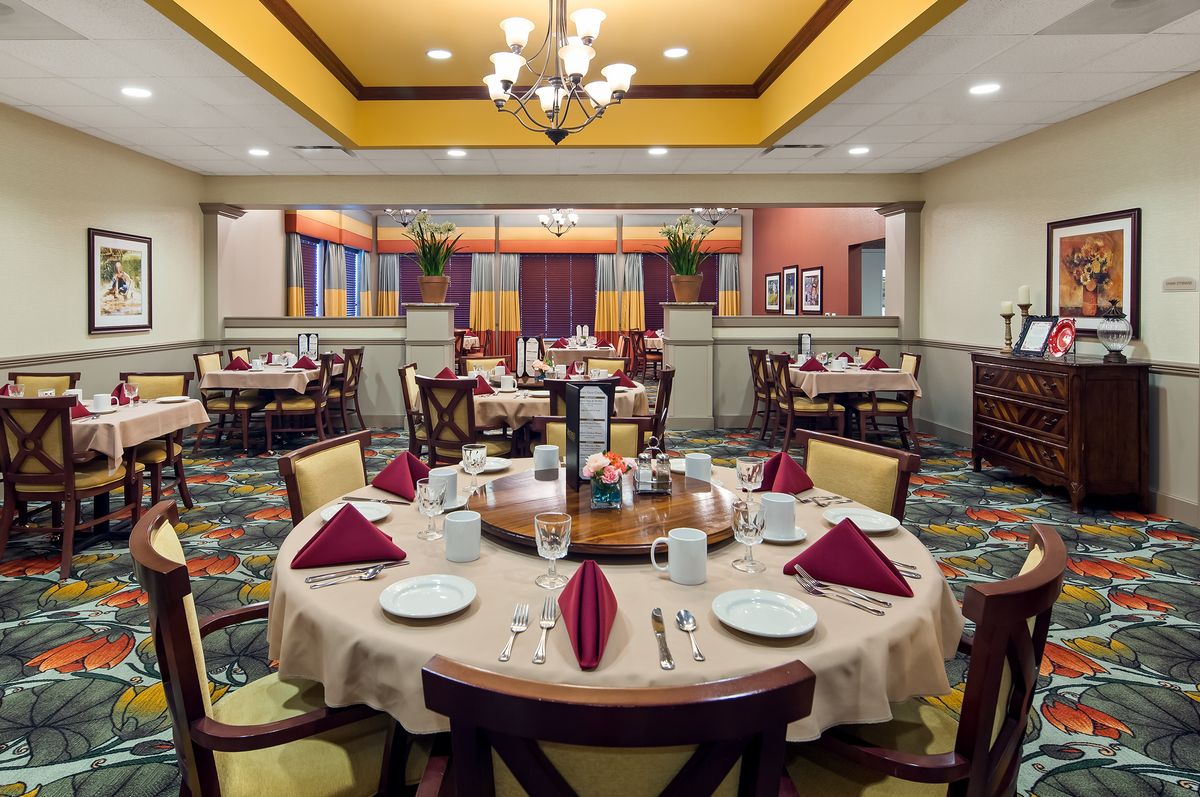
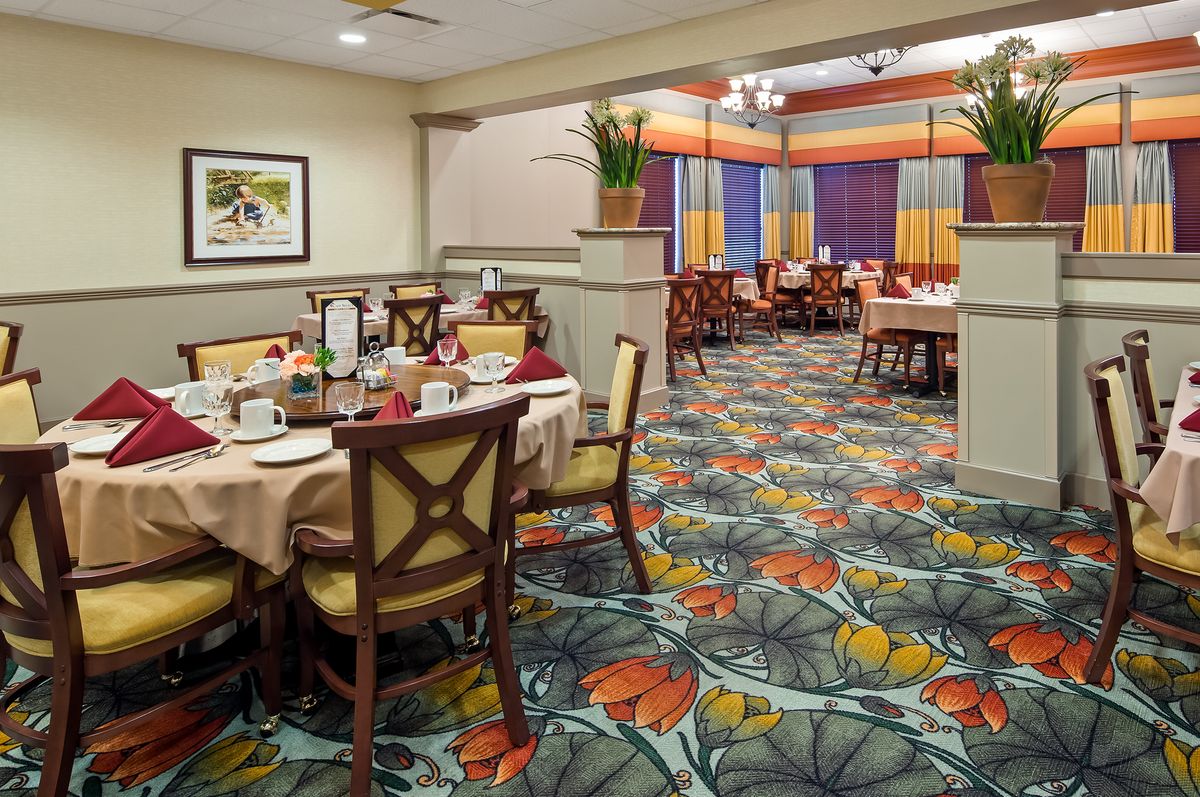
Dining quality is a frequent highlight
Food quality and variety come up often in resident and visitor feedback.
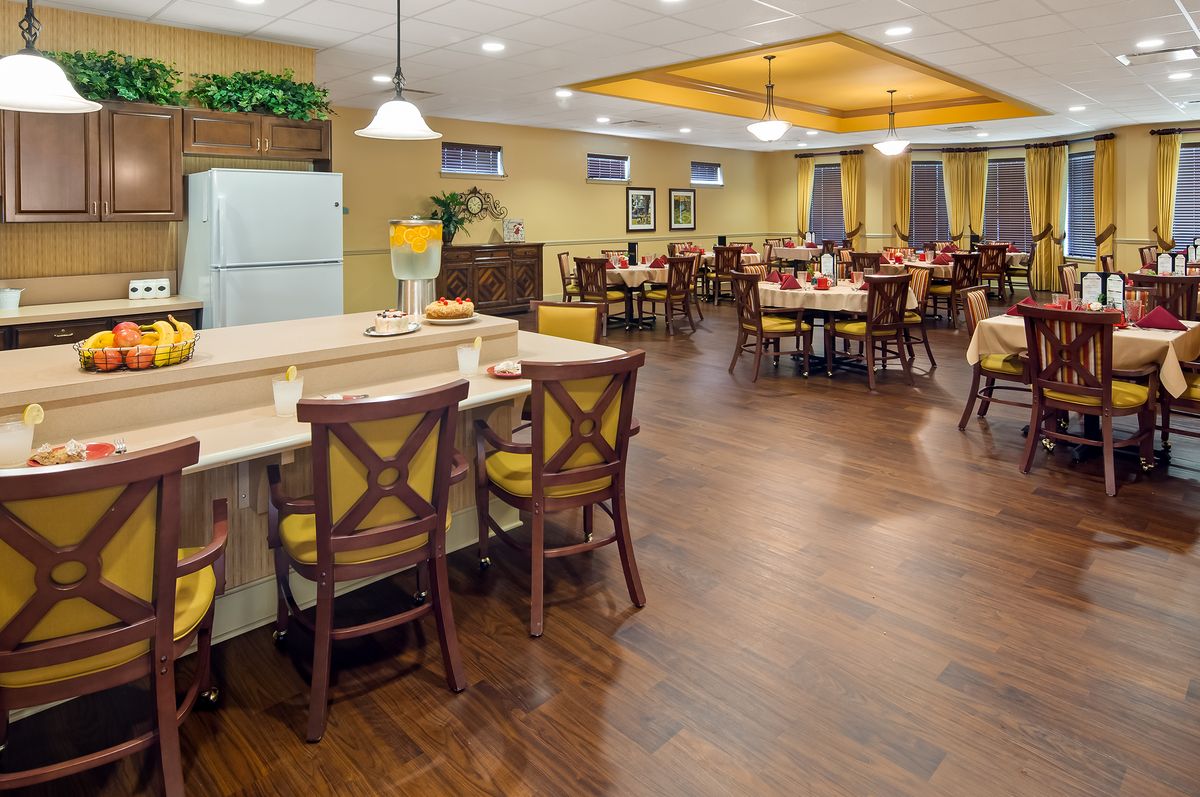
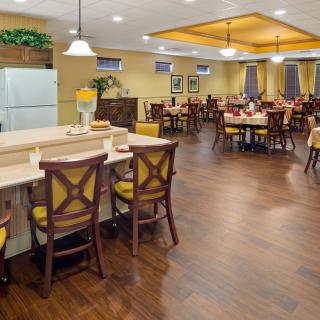
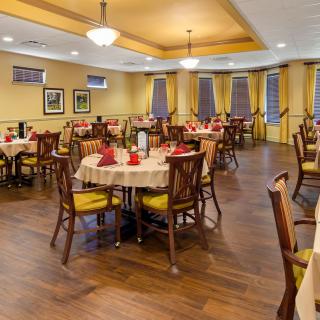
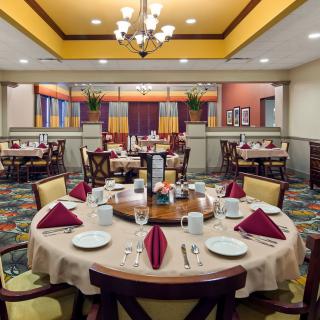
Reviews commonly describe the meals as consistently good, tasty, and prepared with attention to residents’ preferences and dietary needs. Several people mention variety and highlight the dining experience in the community’s restaurant-style setting. A few negative reviews criticize the ability to meet special diets or describe breakdowns around meal support, especially in memory care.
common17 reviews mention this
Activities keep residents engaged
Many residents are described as engaged through frequent, scheduled activities.
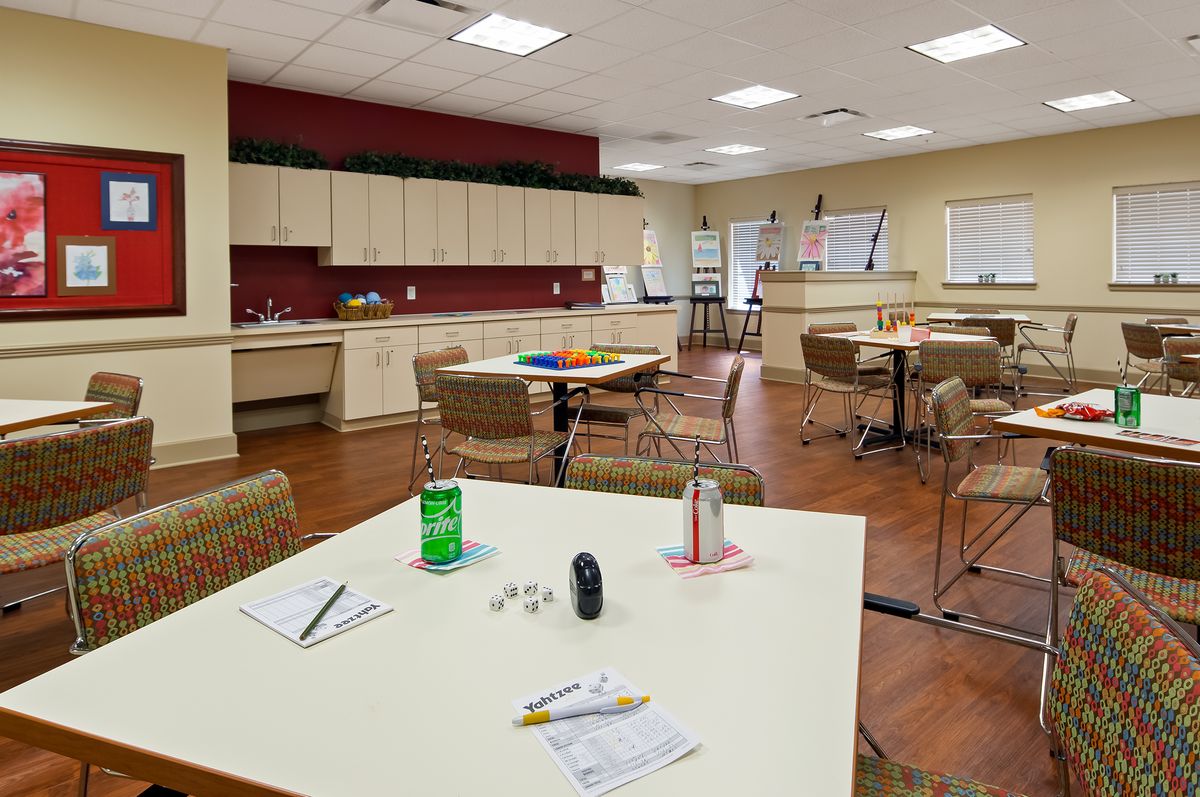
Many reviews mention daily activities, outings, and entertainment that help residents socialize and feel included. Visitors often describe seeing residents participate, including enrichment programs and community events. A couple of reviews in memory care describe concerns about staffing during activities, with observations of little engagement when staff were not present.
caveat7 reviews mention this
Memory care staffing draws complaints
Several memory care reviews raise concerns about staffing and follow-through.
While some families report positive memory care experiences, multiple reviews describe problems such as limited visible staffing, missed personal care tasks, and insufficient assistance during meals. Some accounts also mention incidents like falls, concerns about documentation, or a lack of transparency when asking about staffing coverage. These concerns are described strongly enough that some families say they removed a loved one from the memory care unit shortly after moving in.
caveat2 reviews mention this
Cost is repeatedly described as high
A few reviewers say the community is expensive, especially for memory care.
Some reviews call out the high cost of living at the community and describe financial strain when care needs change. One memory care review specifically cites a monthly figure and notes an additional one-time fee, while another mentions high costs contributing to a move into memory care. These cost concerns appear alongside broader complaints about the level of care received in memory care.
How we summarize
Counts show how many written reviews mention each theme; a review can touch several themes, and only frequently mentioned themes are displayed.
Features
Housing
22 resident community capacity
1-bedroom apartments
2-bedroom apartments
Studio apartments
Types of Care
Assisted Living
Memory Care
Amenities
Beauty salon
Cable or satellite TV
Dining room
Fully furnished
Garden
Housekeeping services
Kitchenette
Move-in coordination
Outdoor space
Respite or short term stays offered
Restaurant-style dining
Small library
Spa
Telephone
Wi-Fi/high-speed internet available
Transportation
Lehigh Valley International (10 miles away)
Transportation arrangement (non-medical)
Transportation to doctors appointments
Care Services
12-16 hour nursing
24-hour call system
24-hour supervision
Activities of daily living assistance
Assistance with bathing
Assistance with dressing
Assistance with transfers
Coordination with health care providers
Dementia waiver
Diabetes diet
Hospice waiver
Meal preparation and service
Medication management
Mental wellness program
Mild cognitive impairment
Special dietary restrictions
Specialized memory care programming
Transportation arrangement (medical)
Transportation to doctors appointments
Dining
Diabetes diet
Special dietary restrictions
Activities
Community-sponsored activities
Resident-run activities
Scheduled daily activities
Nearby Places of Interest
Theaters
Movie Tavern Trexlertown (0.7 miles)
Pharmacies
CVS Pharmacy (0.8 miles)
Walgreens (0.9 miles)
CVS Pharmacy (1.3 miles)
CVS Pharmacy (2 miles)
Cedar Care Pharmacy (3 miles)
CVS Pharmacy (3.3 miles)
Wegmans (3.4 miles)
Restaurants
Chick-Fil-A (0.9 miles)
Don Juan Mex Grill & Cantina (0.9 miles)
Taco Bell (1.1 miles)
Westside Grill (1.2 miles)
BJ's Restaurant & Brewhouse (1.3 miles)
The Shelby (1.3 miles)
McDonald's (1.3 miles)
Cafes
Panera Bread (0.9 miles)
Starbucks (1.2 miles)
Starbucks (1.3 miles)
Starbucks (3.4 miles)
Starbucks (4.2 miles)
Places of Worship
Bethany United Methodist Church (1.1 miles)
St Thomas More Catholic Church (3.5 miles)
Physicians
LVPG Arthritis & RHMTLGY - James M Ross MD (1.2 miles)
Dr Michael Pengelly, Doctor of Audiology (1.3 miles)
Urology Specialists of the Lehigh Valley (1.5 miles)
Village Lane Primary Care (1.9 miles)
Macungie Medical Group (2.5 miles)
Dnese Mary Sokolowski (2.5 miles)
Center For Allergy & Asthma Care (2.5 miles)
Parks
Church Lane Park (1.3 miles)
Grange Park (1.9 miles)
Macungie Memorial Park (2.5 miles)
Cedar Creek Park (4.1 miles)
Bob Rodale Cycling and Fitness Park (4.6 miles)
Hospitals
Life Care Holdings (2.4 miles)
Kaysch Pavilion (2.7 miles)
LVH Pediatric Unit (2.7 miles)
Lehigh Valley Hospital (2.7 miles)
Open Heart Unit (2.7 miles)
Lehigh Valley Hospital - Mother/Baby Unit (2.7 miles)
St Luke's Radiology/X-Ray-Allentown Campus (5.2 miles)
The array of services offered at Legend Of Allentown is meticulously designed to address the diverse needs of residents with dementia or Alzheimer's disease, thereby enhancing their quality of life. Assistance with dressing and bathing promotes not only personal hygiene but also fosters dignity and a sense of normalcy. Medication management ensures that residents receive timely and accurate dosages, mitigating potential health crises while easing caregiver burdens. Meal preparation and service cater to dietary requirements, encouraging proper nutrition crucial for cognitive function. Transportation arrangements for medical appointments ensure residents remain engaged with their health care providers, facilitating a cohesive approach to their overall well-being. Activities of daily living assistance helps maintain independence in familiar routines, while 24-hour supervision provides a safety net for those prone to wandering or confusion. The inclusion of specialized memory care programming and mental wellness programs actively engages residents cognitively and emotionally, catering to both mild cognitive impairment and more advanced stages of dementia. Collectively, these features create a supportive environment that prioritizes safety, health management, and personalized care tailored to the unique challenges posed by memory-related conditions.
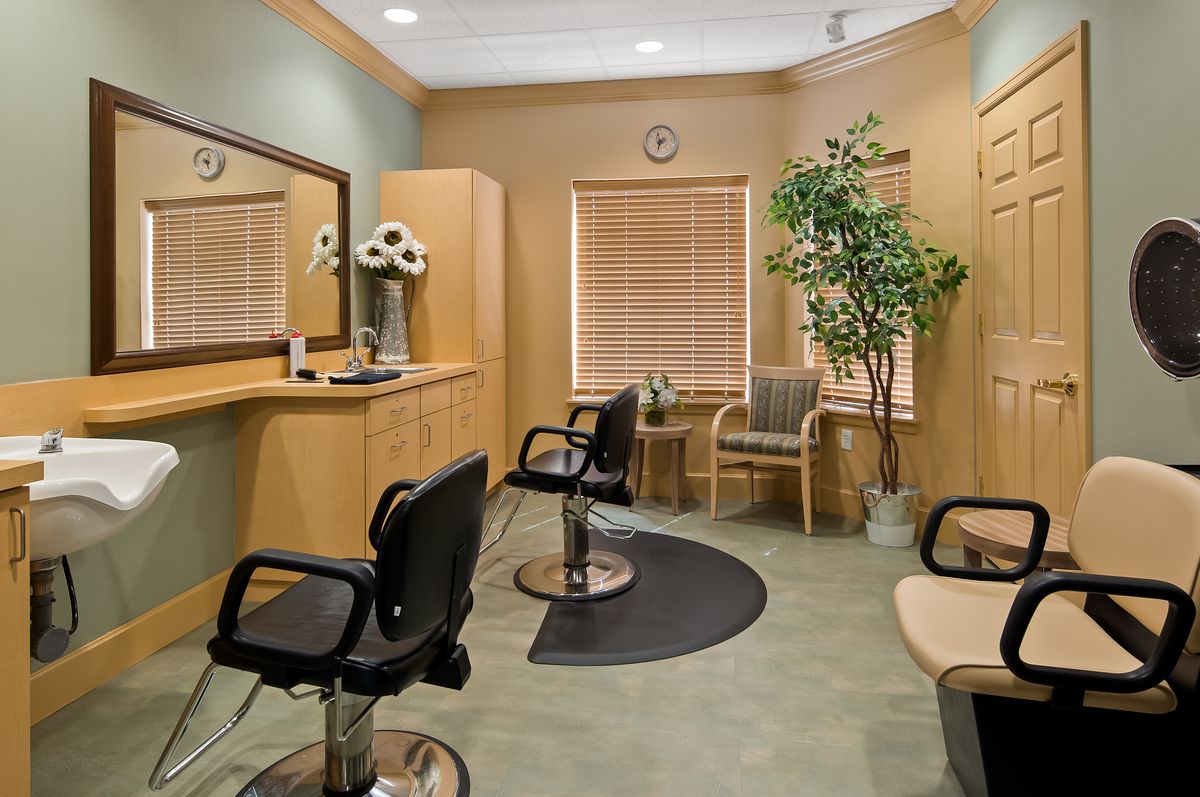
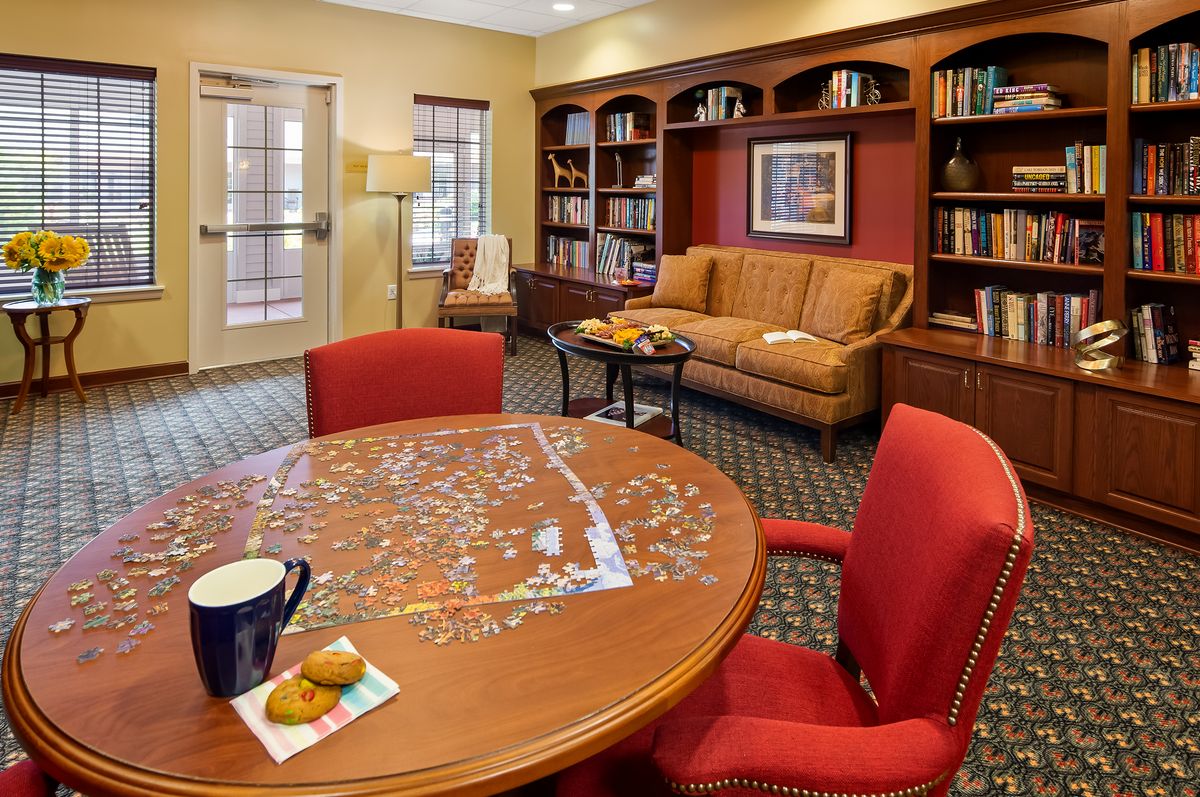
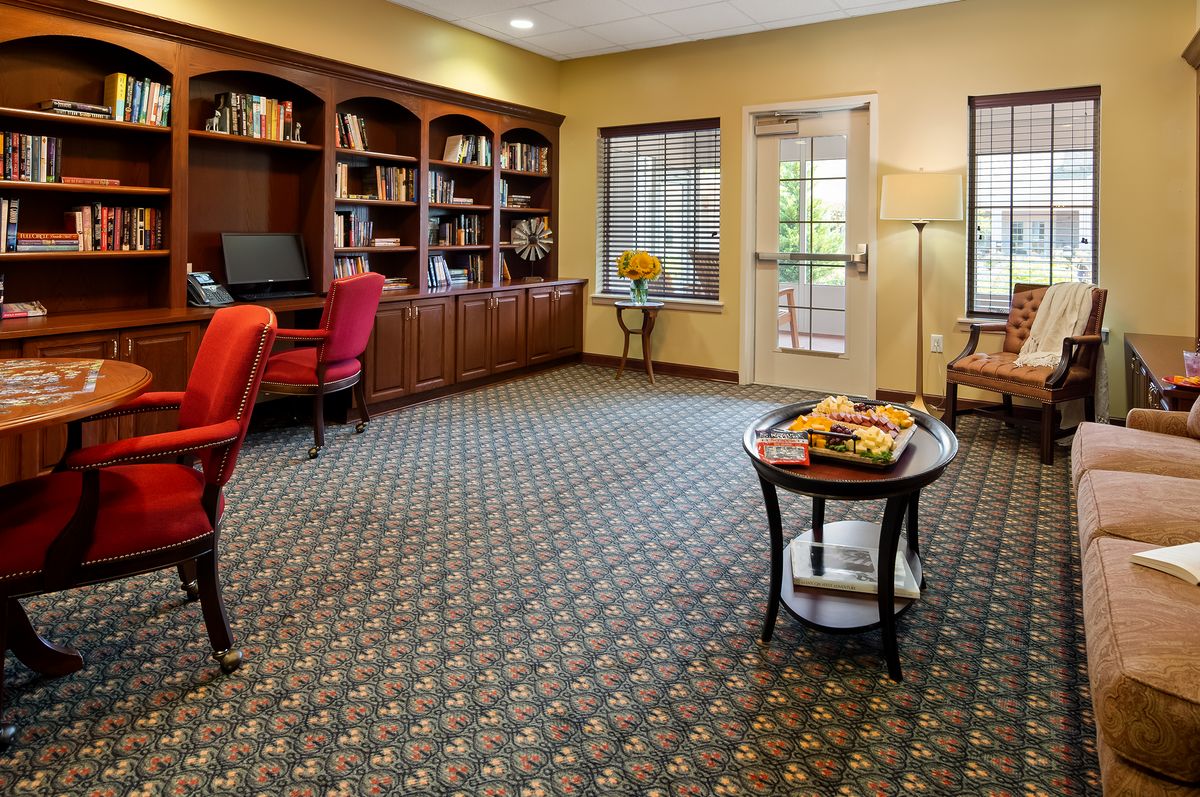
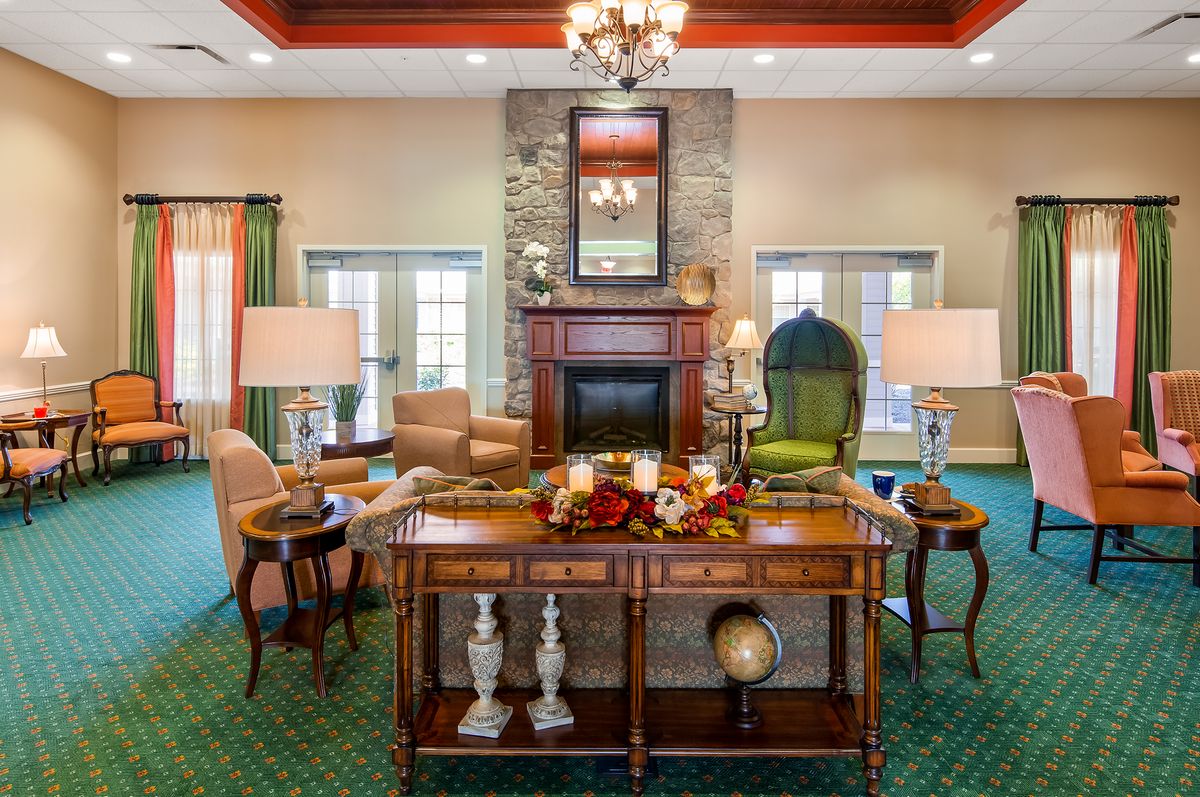
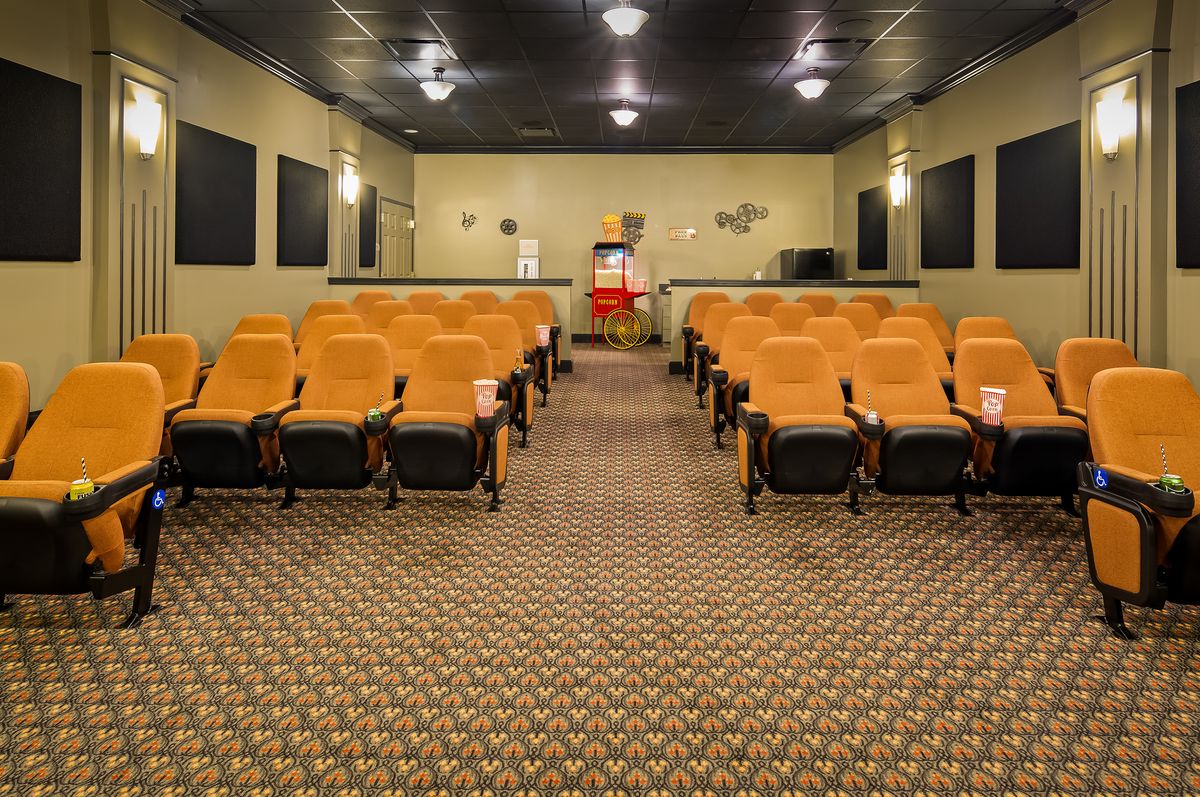
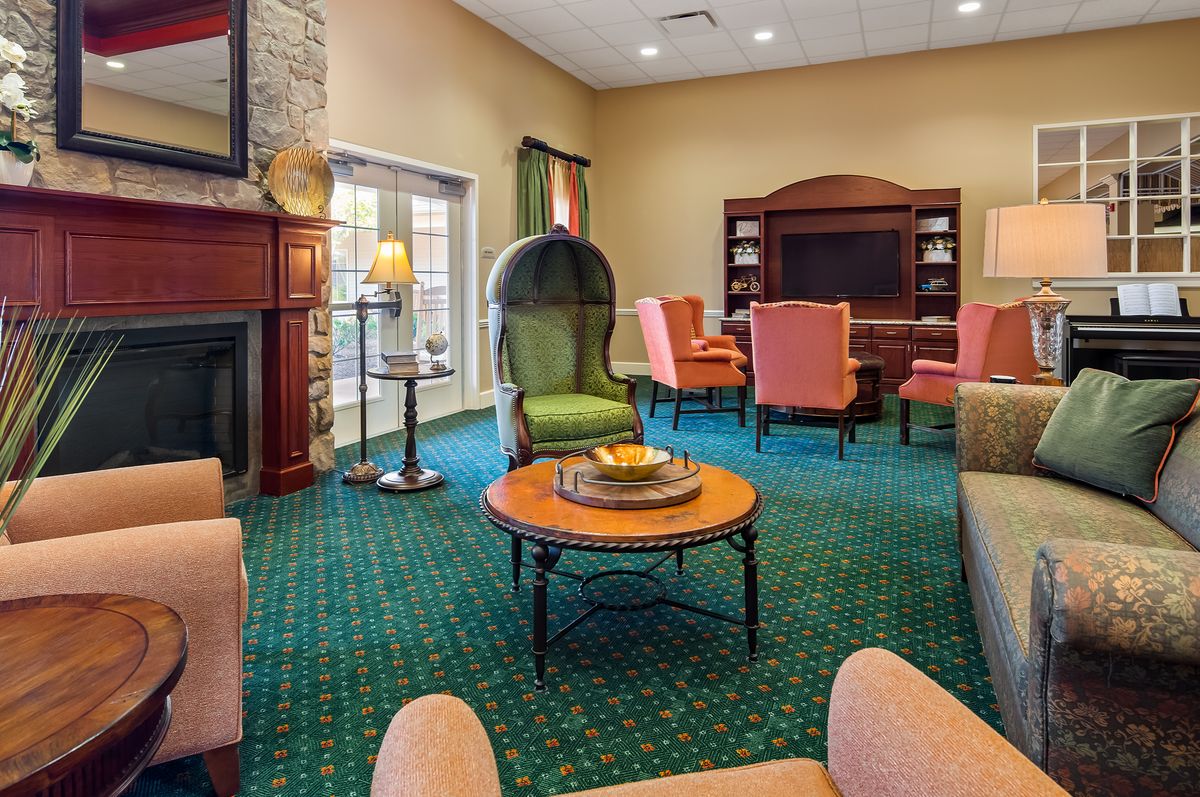
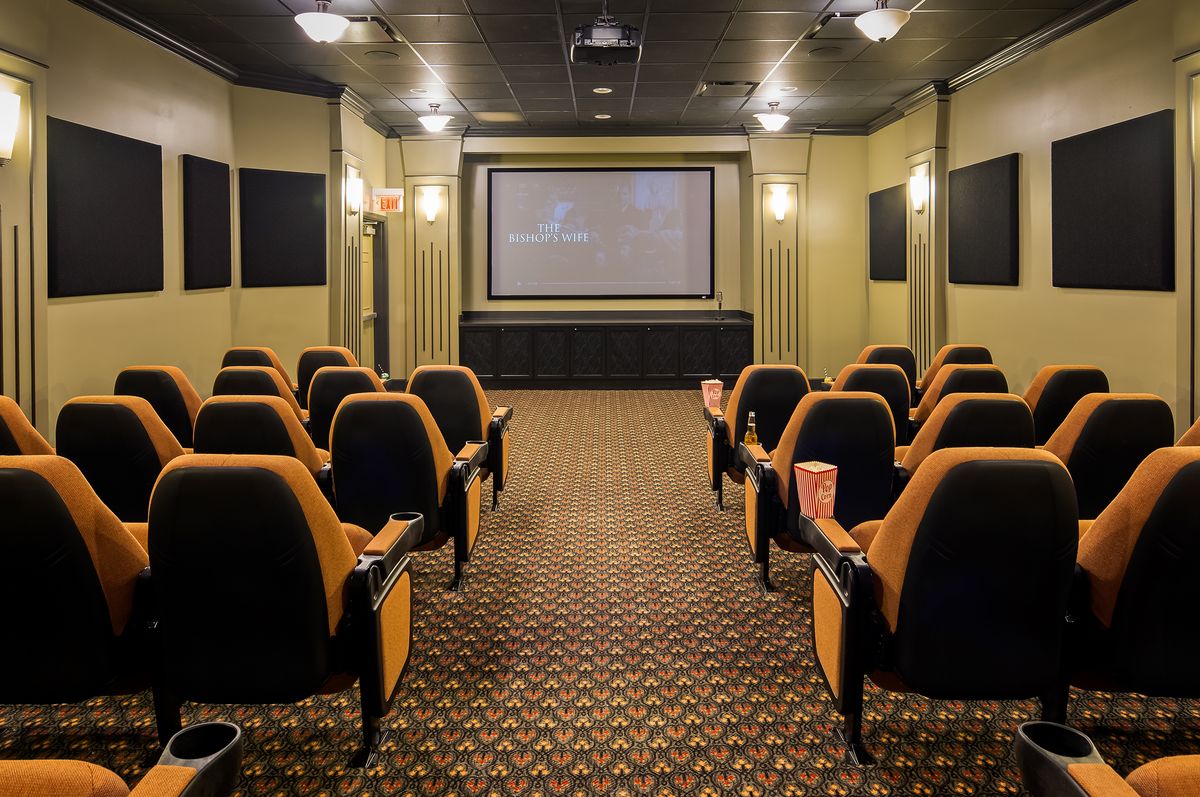
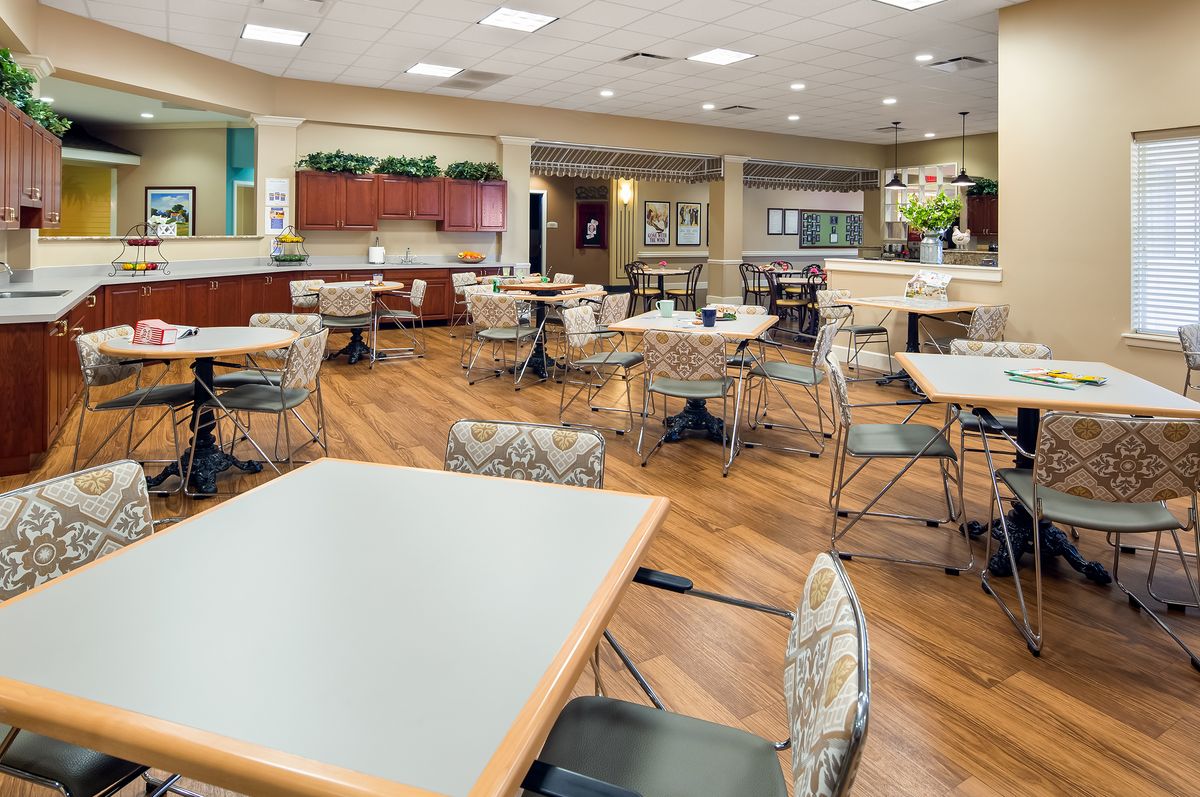
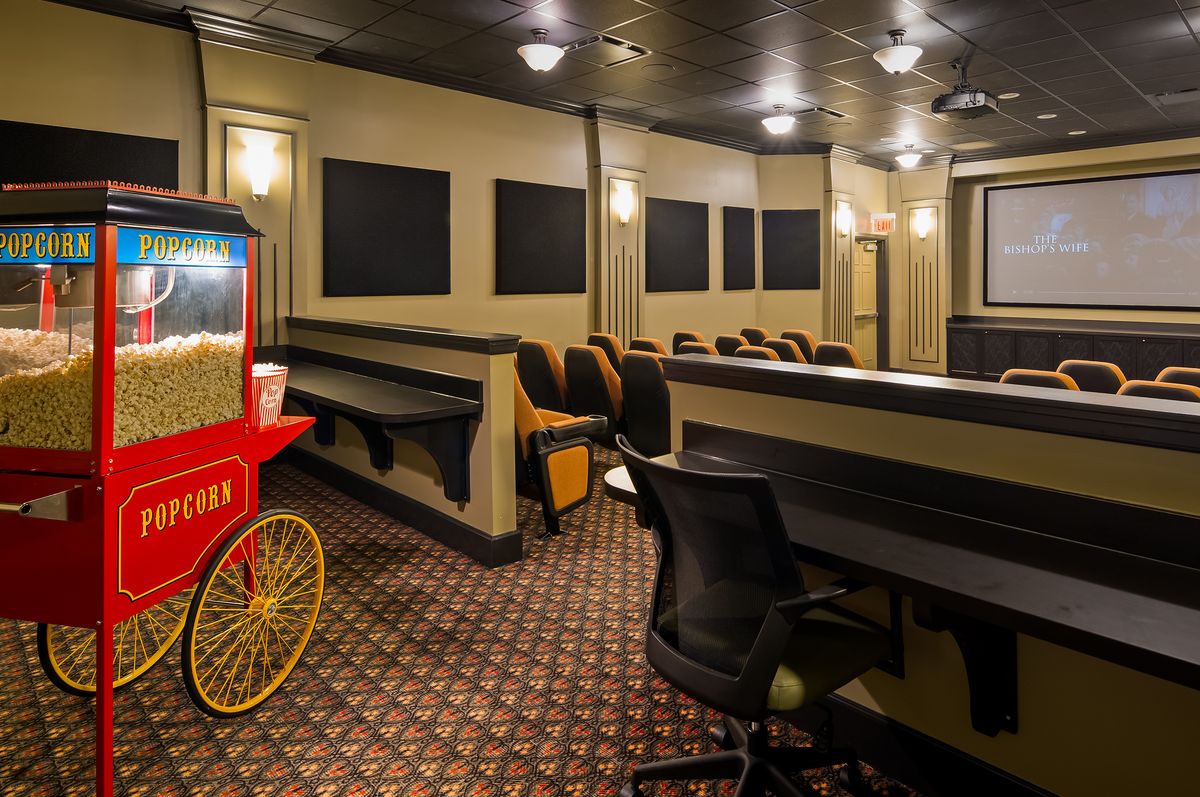
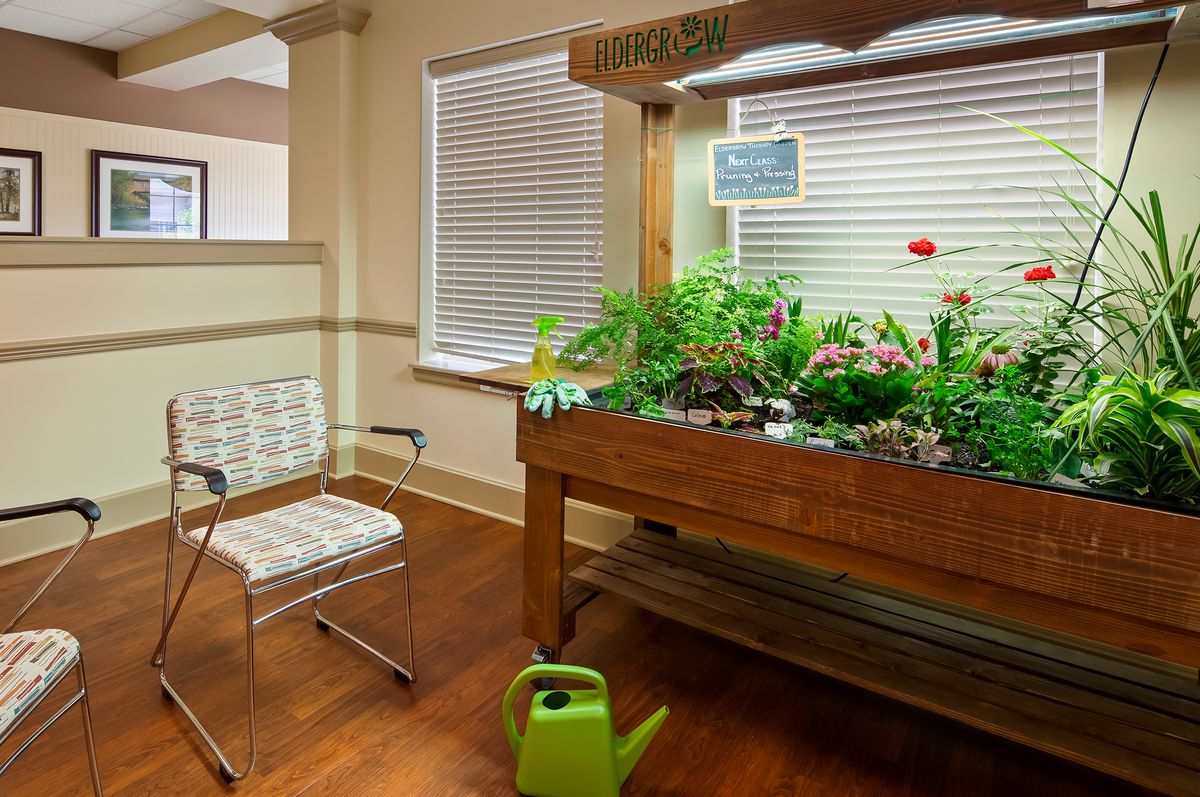
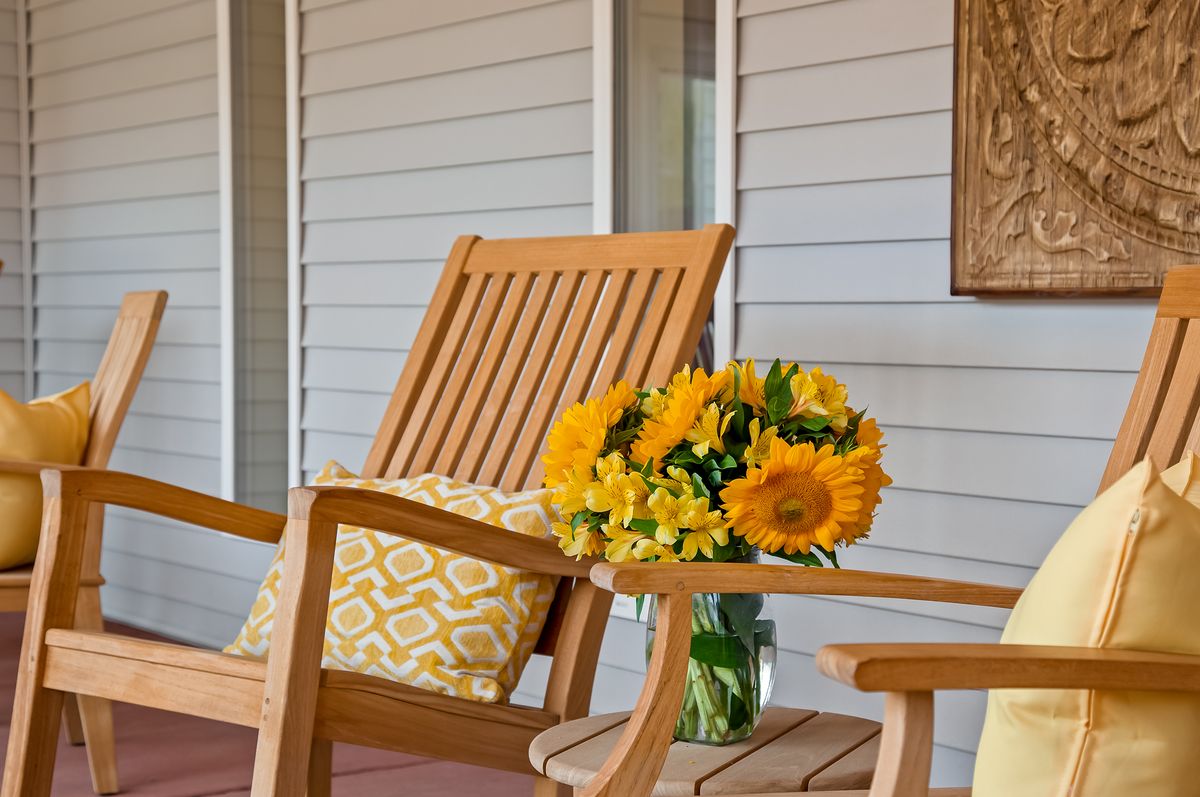
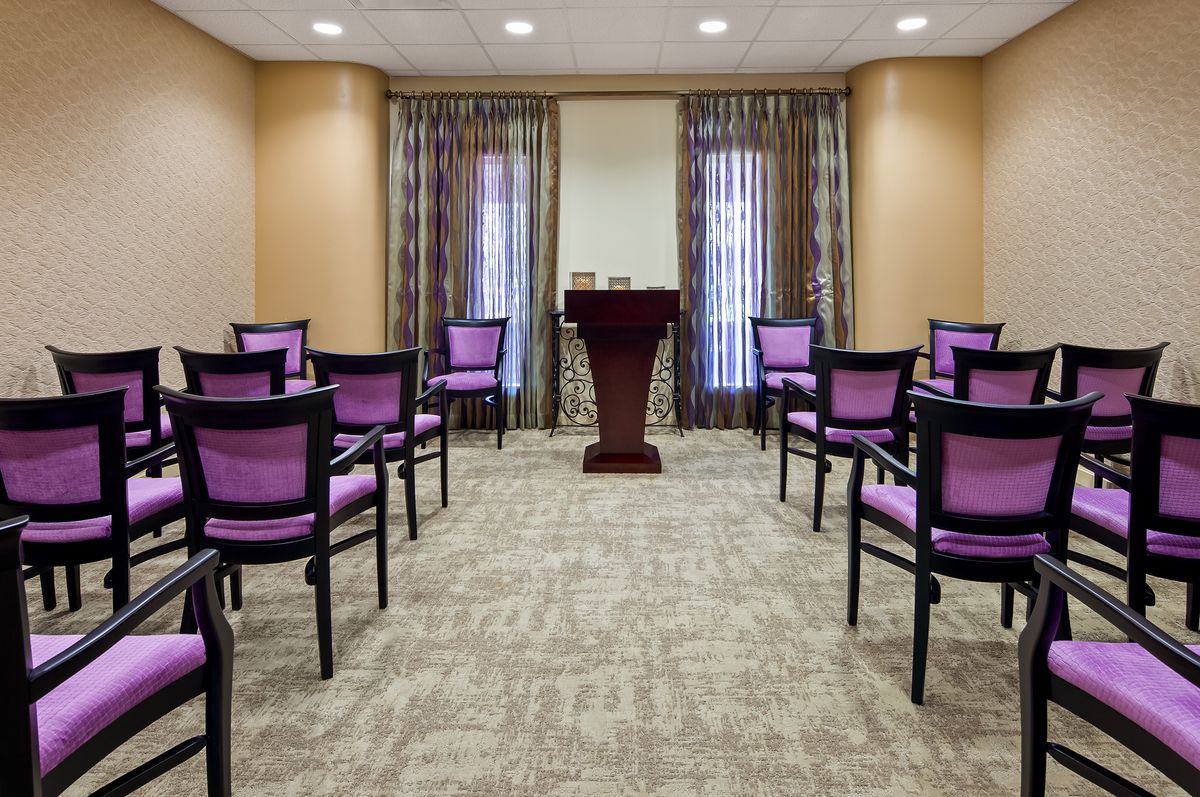
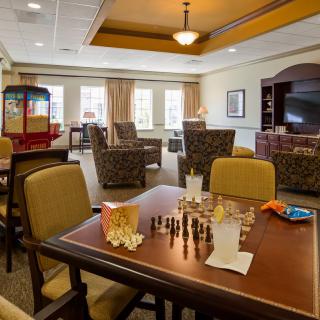
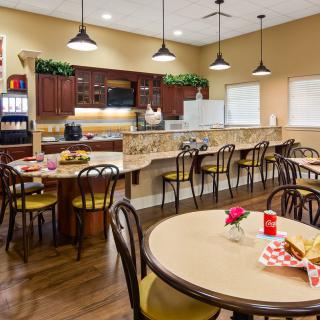
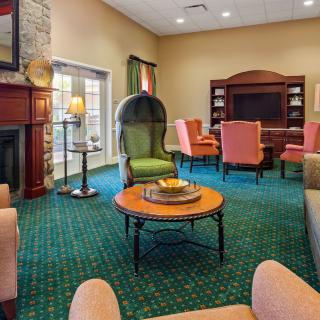
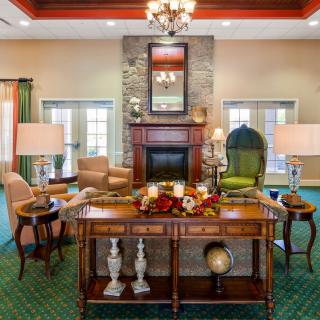
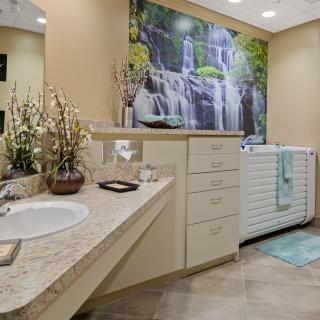
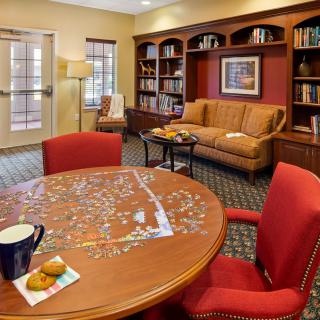
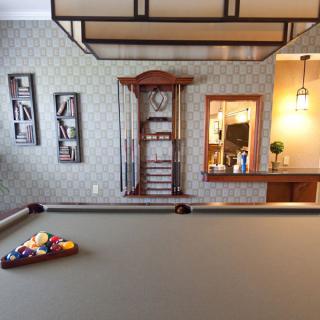
Legend Of Allentown on seniors.fyi includes 25 photos including images showing interior, dining, theater, decor, living room, bathroom, fireplace, chandelier, and more.
Nearby Communities
Complete Care at Lehigh Center
Macungie, PA
3.8 from 44 reviews
Comprehensive skilled nursing with memory care and 24-hour supervision.
Lehigh Commons
Macungie, PA
4.7 from 151 reviews
$3,000 to $5,970 / month
Friendly staff, engaging activities, and good dining.
Four Seasons at Farmington
Macungie, PA
Small, intimate community with personalized care and dietary meal options.
Arden Courts of Allentown
Allentown, PA
4.7 from 71 reviews
$6,800 to $7,400 / month
Caring staff with engaging activities and good dining in a bright, home-like environment.
Country Meadows of Allentown
Allentown, PA
4.5 from 72 reviews
Compassionate, attentive staff with engaging activities and strong family communication.
Wild Cherry Knoll
Macungie, PA
Comprehensive care services with Wi-Fi access and nearby amenities
Atrium of Allentown
Allentown, PA
4.4 from 62 reviews
$3,600 to $4,500 / month
Beautiful, modern facility with attentive staff, strong dining, and engaging activities.
BAYADA Home Health Care - Allentown
Allentown, PA
3.8 from 12 reviews
Consistently reliable and helpful nursing care.
Heather Glen Senior Living
Allentown, PA
4.4 from 104 reviews
$4,600 to $5,900 / month
Compassionate, attentive staff in a warm, home-like setting with engaging activities.
Reminiscence therapy helps individuals with dementia recall past memories through structured discussions and meaningful objects, enhancing mood, relationships, and sense of identity while celebrating their lives. It can be practiced in formal settings or at home, requiring sensitivity to personal histories and cultural backgrounds.
Reminiscence therapy is a structured method for older adults, especially those with dementia, to share life stories using prompts and sensory cues, fostering emotional well-being, social engagement, and self-identity. It aims to improve quality of life by enhancing interpersonal connections and cognitive stimulation while requiring careful facilitation to avoid distressing memories.
Dementia, particularly Lewy body dementia, often involves hallucinations that can significantly distress both patients and caregivers due to disruptions in sensory processing and neurotransmitter imbalances. Effective management includes compassionate communication, environmental adjustments, and a multidisciplinary approach to care while addressing the emotional needs of caregivers.
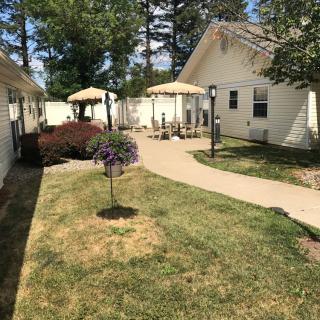
Pathway, Courtyard, Fountain, and Building Exterior
Salon, Waiting Area, and Mirrors
Bookshelves
Seating
Library
Office
Indoor Plants, Window Blinds, and Indoor Garden
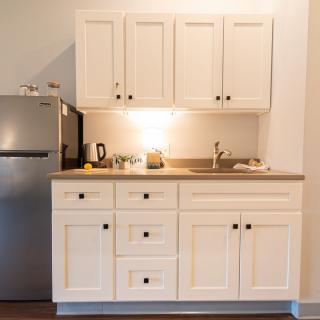
Kitchenette
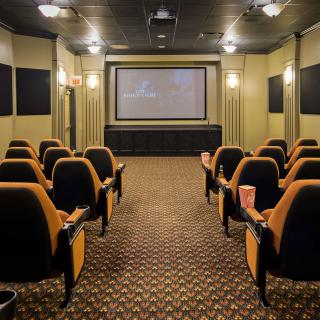
Theater
Meeting Room
Pendant Lights
Paintings
Wooden Flooring
Popcorn Machine
Get PricingAsk A QuestionSchedule A TourContact Senior Advisor
By clicking submit, you agree to our Partner's Terms of Use. You
also consent to receive calls and texts, which may be autodialed, from our Partner. Your consent is not a condition to
using our Partner's service. Please visit our Partner's Privacy Policy for information about their privacy practices.



 22 resident community capacity
 1-bedroom apartments
 Assisted Living
 Memory Care
 Beauty salon
 Cable or satellite TV
 Dining room
 Fully furnished
 Garden
 Housekeeping services
 Kitchenette
 Move-in coordination
 Outdoor space
 Respite or short term stays offered
 Restaurant-style dining
 Small library
 Spa
Spa Telephone
 Wi-Fi/high-speed internet available
 Lehigh Valley International (10 miles away)
 Transportation arrangement (non-medical)
 12-16 hour nursing
 24-hour call system
 Activities of daily living assistance
 Assistance with bathing
 Assistance with dressing
 Assistance with transfers
 Diabetes diet
 Hospice waiver
 Medication management
 Mental wellness program
 Special dietary restrictions
 Transportation arrangement (medical)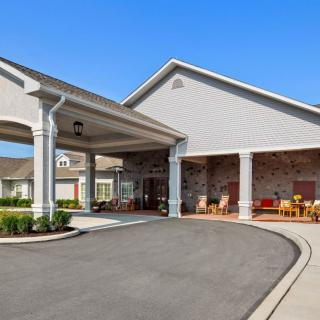
 Comprehensive skilled nursing with memory care and 24-hour supervision.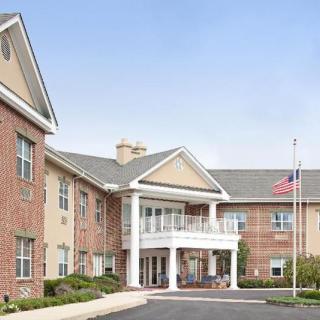


 Exploring the Power of Reminiscence Therapy for Individuals With Dementia
 An In-Depth Look at Reminiscence Therapy in Dementia Care
 Dementia-Related Hallucinations: Causes, Experiences, and Practical Approaches