
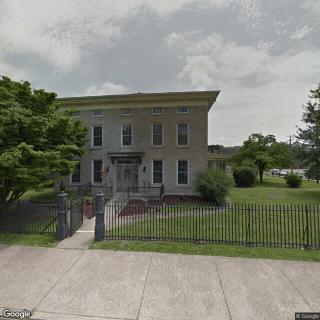
380 Summit Avenue, Steubenville, OH 43952
For more information about senior living options: (866) 208-4318
Overall Review of Trinity Skilled Care Center
Pros
 Trinity Rehab Center provides excellent care from doctors, nurses, therapists, and support staff who are highly accommodating to patients’ needs during recovery.
- The caregivers at Trinity Rehab Center are compassionate professionals who help patients recover and even make new friends during the healing process.
- Steubenville and the surrounding areas are fortunate to have this health program and this group of professionals.
- The rehabilitation hospital is a top choice in the Ohio Valley for stroke, brain injury, Parkinson's, MS, prosthetic training, hip and leg fractures, and joint replacements.
- The Ohio Valley offers some of the best care around through this facility, making it unnecessary to seek care elsewhere.
Cons
 The reviews are entirely positive about Trinity Rehab Center and its staff.
Review
Trinity Skilled Care Center in Steubenville is best suited for adults and seniors who emerge from hospitalization needing intensive, goal-directed rehabilitation. The reviews highlight a multidisciplinary team, doctors, nurses, therapists, and support staff, whose coordinated care helps regain mobility, independence, and confidence after events like strokes, brain injury, Parkinson’s, and MS, as well as after hip or leg fractures and joint replacements. Families prioritizing rapid, measurable improvements will find the program designed to push toward concrete recovery milestones rather than simply providing custodial care. The emphasis on practical outcomes, patients leaving stronger with newly acquired skills, positions this center as a premier option for those who want rehabilitation outcomes to drive the care plan.
Alternatives should be considered for anyone whose needs extend beyond rehabilitation or who places a premium on long-term living arrangements. For residents requiring ongoing custodial supervision, memory-care support, or a more domestic, home-like setting with a less clinical feel, other local options may fit better. The strength here lies in rehabilitation prowess, but that focus can be misaligned for families seeking sustained daily living support without a strong rehab trajectory. Families should evaluate whether discharge planning, post-acute coordination, and connections to outpatient or home-health services align with expectations if Trinity is chosen.
Key advantages lie in the depth and enthusiasm of the care team. One reviewer emphasizes that the doctor, nurses, therapists, and support staff are extraordinarily accommodating to individual needs during the healing process, delivering not only progress but also social connections that help sustain motivation. The facility is described as a hub of expertise, perceived as “Valley’s Best Kept Secret”, with capabilities across stroke, brain injury, Parkinson’s, MS, prosthetic training, and orthopedic recovery. That breadth translates into faster, more confident rehab trajectories, where families witness tangible improvements and patients return home with strengthened function and renewed hope.
For all the strengths, a realistic assessment must acknowledge potential drawbacks. The rehab-focused model inherently emphasizes clinical protocols and structured schedules, which may feel less homelike than traditional assisted living. The available feedback does not detail room options, campus amenities, or long-term care capabilities, so families must verify what happens after discharge and whether post-acute services integrate smoothly with home health or follow-up therapy. Yet the powerful results, clear recovery milestones and a supportive community, often offset these questions because successful discharge planning can shorten stays and accelerate return to independent living or safer in-home routines.
Decision-making should include practical due diligence. Prospective families should request a current rehab plan with target goals and estimated timelines, ask about therapist-to-patient ratios, and review discharge options, including referrals to outpatient therapy and home health services. Tour the facility to gauge staffing responsiveness, cleanliness, and the consistency of communication with families. Speak with former patients or families about pain management, pace of therapy, and social engagement. In short, Trinity stands out for rehabilitation proficiency; the question is whether its structure and follow-through align with the resident’s long-term living needs.
Overall, Trinity Skilled Care Center delivers a compelling value proposition for those prioritizing high-caliber post-acute rehabilitation in the Steubenville catchment. It is best for adults who require intensive therapy after stroke, brain injury, or major orthopedic events and who want a robust, professionally driven team to guide recovery. Those who anticipate needing long-term custodial care, a memory-care component, or a more homelike living environment should weigh alternatives that foreground ongoing daily living support. With a proven track record, families can move forward confidently by validating discharge pathways, coordinating with outpatient services, and arranging early follow-up. When rehabilitation success is the primary objective, Trinity earns serious consideration.
 50 resident community capacity
 Skilled Nursing Facility
 Beauty salon
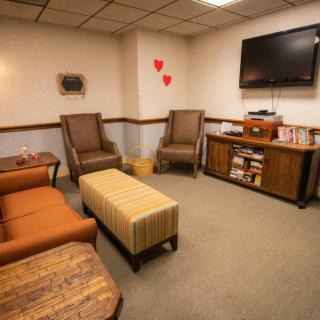
 Cable or satellite TV
 Dining room
 Fully furnished
 Garden
 Housekeeping services
 Kitchenette
 Move-in coordination
 Outdoor space
 Restaurant-style dining
 Small library
 Telephone
 Wi-Fi/high-speed internet available
 Pittsburgh International (23 miles away)
 24-hour call system
 Activities of daily living assistance
 Assistance with bathing
 Assistance with dressing
 Assistance with transfers
 Diabetes diet
 Medication management
 Mental wellness program
 Special dietary restrictions

 Financing Long-Term Nursing Home Care Through Social Security: A Thorough Exploration
 Essential Knowledge on Pneumonia in Older Adults
 Exploring Palliative Care in the Home: A Comprehensive Overview