
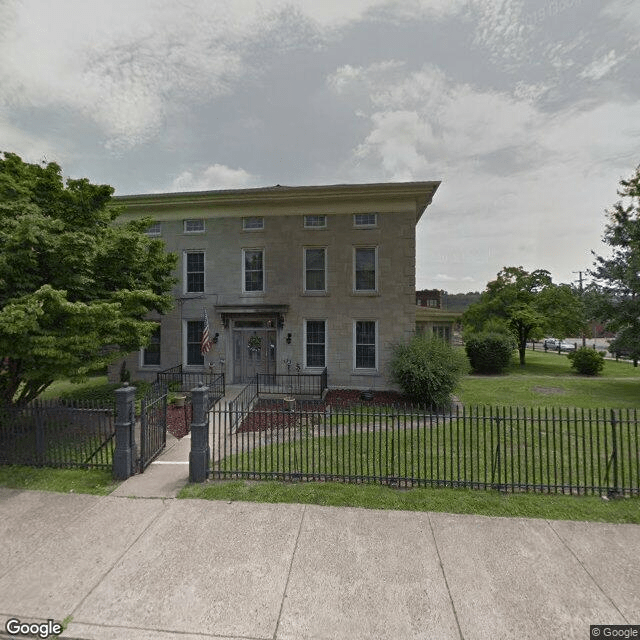
408 N 5th St, Steubenville, OH 43952
To contact a resident: (740) 282-5623
For more information about senior living options: (866) 208-4318
Overall Review of Martha Manor Home-Aged Women
Pros
 The facility is a wonderful place where the staff and manager truly care for residents and provide resources to help their situations.
- The environment is full of care and hospitality.
- It is a nice, safe place for women and their children who have experienced domestic violence.
- The staff are excellent and the food is of high quality.
- The rooms are safe and clean, and the facility offers family rooms for large families with small children.
- Martha Manor is highly recommended for its caring staff, 24/7 availability, home-cooked meals, single rooms, 24-hour nursing care, and activities for all.
Cons
 One reviewer states that the staff are not properly trained and are extremely impertinent to the majority of women who deserve respect.
- The same reviewer alleges that belongings and food are stolen from residents and calls for the place to be fixed and investigated.
- The reviewer says that the rest of the staff are a joke.
Review
Martha Manor Home-Aged Women in Steubenville is best suited for older women who want a safe, home-like setting with continuous care and a community focus. The facility reads as much a supportive residence as a family-centered refuge, with staff who appear dedicated to providing resources that help residents navigate difficult situations. The environment emphasizes warmth, routines, and practical support, making it a natural fit for women who value care that feels personal and anchored in everyday living. For survivors of domestic violence seeking stability for themselves and children, Martha Manor presents as a protective, nurturing option with round-the-clock care, stable meals, and structured activities. In short, this is the choice for those who prioritize a caring, community-first atmosphere over clinical detachment.
Nonetheless, this community will not be the right fit for every elder woman. For families seeking highly specialized medical oversight, dementia-focused care, or a non-religious program, alternatives with more explicit clinical capabilities or neutral programming may be preferable. A pattern in several reviews points to uneven staff training and interactions that at times felt impertinent or disrespectful, which can undermine trust in daily care. Allegations of belongings and food going missing introduce a reliability risk that demands careful verification before any commitment. Additionally, policy constraints around length of stay and daily routines may pose a hurdle for families planning long-term residency or flexible arrangements.
On the upside, Martha Manor delivers a solid set of advantages that frequently outweigh these concerns. Caring staff, a clean and safe environment, and dependable meals contribute to predictable daily life and genuine reassurance. The presence of around-the-clock caregiving support is a meaningful safety net, and the facility’s layout includes family rooms and child-friendly spaces that accommodate visitors and younger relatives. Faith-based programming, Bible study, and a playroom for kids add enrichment that keeps residents engaged beyond basic custodial care. Taken together, these strengths create a stable, hospitable setting where aging-in-place feels feasible and emotionally sustainable for women who value community connection.
Decision-makers should approach with a structured, practical checklist. Arrange a comprehensive tour and request to meet the caregiving staff and management, then verify credentials, training practices, and supervision standards. Probe how staff handle conflicts, meal variety and nutrition, and safety measures in private rooms. Seek references from current residents or families and observe the tone of interactions in common areas to gauge responsiveness. Clarify policies on length of stay, visiting hours, and any curfews, as well as opportunities for private family time. If possible, negotiate a short-term trial to assess fit without committing to a long-term plan, paying close attention to how well needs align with actual day-to-day operations.
The setting shines most for survivors of domestic violence who need both protection and practical support. The combination of around-the-clock staffing, inviting spaces for family interaction, and steady meal service can anchor a difficult transition with dignity. The home-like rituals and routine can reduce anxiety and provide a sense of normalcy that is hard to find in more institutional environments. Yet the cautionary notes about staff training and the possibility of missteps or disputes cannot be ignored; these concerns warrant aggressive due diligence and ongoing oversight. For families seeking a non-religious atmosphere or greater flexibility in daily structure, alternatives may offer better alignment with personal preferences and care goals.
Overall, Martha Manor stands out as a practical, credible option for women who want a nurturing, resource-rich home where caregiving is visible and continuous. It is not a generic, one-size-fits-all facility, but a community with a clear sense of mission and a familial ethos that many will find compelling. The decisive factor rests on consistency and long-term compatibility: if staff training can be validated and policies navigated with confidence, the positives outweigh the drawbacks. For families prepared to verify quality and advocate for reliable care, Martha Manor offers a viable path to stable living, with a protective environment that supports women and their children when needed.
 Board and Care Home
 Pittsburgh International (22 miles away)



 A Detailed Examination of Nursing Home Costs Across the U.S.
 Exploring Nonmedical Home Care: Understanding Services, Costs, and Financial Approaches
 Engaging Brain Games and Innovative Apps to Keep Senior Minds Active