
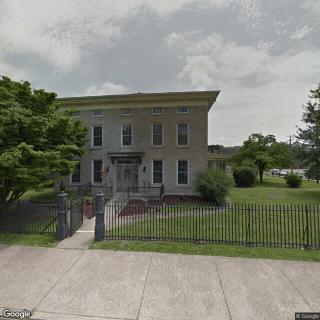
380 Summit Ave, Steubenville, OH 43952
To contact a resident: (740) 283-7090
For more information about senior living options: (866) 208-4318
Overall Review of Trinity Skilled Care Unit
Pros
 The team at Trinity Rehab Center delivers excellent care from doctors to support staff, with high accommodation to each patient’s needs.
- Families note that the caregivers are highly attentive and create a healing-focused environment.
- The facility helps patients form new friendships while receiving comprehensive rehabilitation.
- Steubenville and the surrounding areas are fortunate to have this high-quality health program and professional team.
- The rehabilitation hospital is praised as a top choice for stroke, brain injury, Parkinson's, MS, prosthetic training, and joint replacement care.
Review
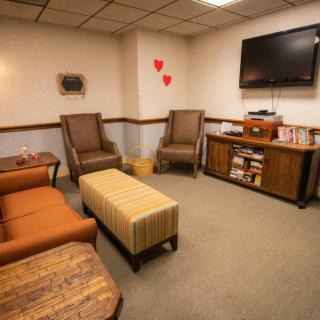
Trinity Skilled Care Unit is best suited for seniors who need intensive, hospital-grade rehabilitation with close medical oversight after acute events. After stroke, brain injury, Parkinson’s, MS, prosthetic training, or major joint replacements, the staff’s purpose-built approach shines. In Steubenville and the surrounding Ohio Valley, this unit reads as a center of recovery, where doctors, nurses, therapists, and support teams coordinate around a single goal: get the patient back to independence as quickly and safely as possible. Family members repeatedly note that the caregivers are exceptionally accommodating, turning a difficult recovery into a collaborative, hopeful process. The environment is described as practical, focused, and deeply invested in outcomes, with patients forming meaningful social connections during rehab.
That strength also helps identify who should consider alternatives. For families needing long-term custodial care, memory care, or a broader assisted-living continuum, where daily living supports, social programming, and leisure activities beyond rehab are the priority, other communities may offer a more rounded living experience. Trinity’s model leans toward short- to mid-term intensive rehabilitation rather than ongoing independent living, so those seeking sustained independence or non-acute daily support may find it a mismatch over time. Outpatient options and home-health pathways can complement the rehab stay if the goal is rapid discharge to home with continued progress.
The most compelling pros are the caliber of the clinical team and the rehabilitation focus. Families report a unified, highly responsive care team, doctors, nurses, therapists, and supportive staff, who treat each patient as a priority. The rehab program spans stroke, brain injury, Parkinson’s disease, MS, prosthetic training, and orthopedic recovery, with a track record of turning mobility and function around. The setting seems to foster both healing and social connection, giving patients a sense of community as they work toward milestones. The clarity of purpose, structured therapy, measurable progress, and attentive discharge planning, reduces uncertainty for anxious families.
With any strong rehab program, it’s prudent to anticipate how transitions are handled. The available information points to a hospital-like rehab environment; however, questions about long-term care options, memory care availability, and what happens after discharge should be clarified. Families should verify admission length flexibility, therapy intensity, caregiver-to-patient ratios during peak times, and how discharge plans integrate with home supports or outpatient therapy. The absence of explicit cons in public feedback isn’t a guarantee against gaps; the risk is that rehab-focused centers may require a plan B for ongoing custodial needs once the acute rehab window closes.
When evaluating options, start with a practical decision framework. Confirm the expected pathway: prognosis, targeted goals, and the timetable for progress; inquire about post-acute discharge support, equipment and home modifications assistance, and the arrangement for follow-up therapy. Assess proximity to home for easy family involvement, and ask about cost structures, insurance coverage, and any potential gaps between hospital rehab and home. Look for transparent metrics on functional gains, patient satisfaction, and readmission rates. If a transition to home with robust outpatient therapy fits, Trinity stands out as a top-tier choice in the Steubenville area.
In sum, Trinity Skilled Care Unit represents a compelling option for families prioritizing rapid, high-quality rehabilitation under strong medical supervision. It delivers a proven, evidence-based rehab pathway with a responsive, caring team and a community feel that makes tough recoveries more bearable. Those whose needs extend beyond rehab, ongoing custodial support, memory care, or a richer long-term living plan, will want to explore alternatives that offer a broader continuum. For suitable cases, this community offers a practical, results-driven route back to independence, grounded in local expertise and demonstrated clinical excellence.
 Skilled Nursing Facility
 Pittsburgh International (23 miles away)

 Caring for Those Who Care: Recognizing, Understanding, and Overcoming Caregiver Burnout
 Caregiver Exhaustion: Recognizing the Signs and Restoring Your Well-Being
 Understanding Hospice Care at Home: Comprehensive Services, Key Benefits, and Eligibility