
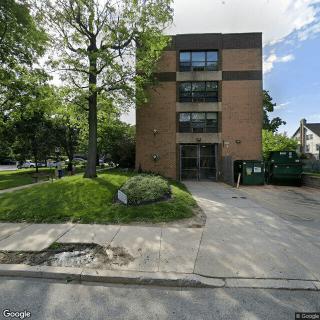
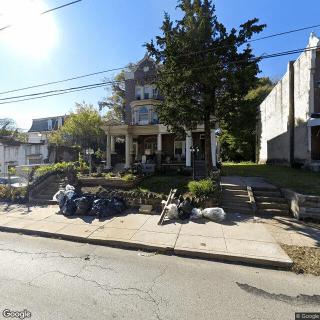
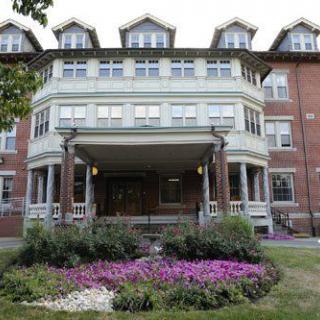
5909 19 Wayne Avenue, Philadelphia, PA 19144
For more information about senior living options: (866) 208-4318
Overall Review of Kaysim Court Manor
Pros
 The staff are top notch.
- The premises were kept clean by the family-run personal care home.
- The living conditions and scenery were nice.
- The step-father received 24-hour supervision, medication assistance and other personal care services.
- Kaysim provided three daily meals, housekeeping and laundry services, plus 1-4 bedroom units.
- The step-father had a private bedroom that he could afford.
- The staff accommodated residents and provided helpful support, including medical follow-ups from outside agencies.
Cons
 Bedbugs were bad, and washing clothes didn’t help.
- They did not refund the family member’s money, which the reviewer called theft.
- Kaysim is not a nursing home; the level of care is below nursing-home care.
- The receptionist was very rude.
Review
Kaysim Court Manor in Philadelphia is best suited for seniors and adults who need steady daily living assistance but do not require skilled nursing. The community reads as a small, family-run personal care home that emphasizes a home-like atmosphere, private rooms, three meals a day, housekeeping, laundry, and medication assistance. It suits residents who can participate in their own care to some extent and who value personal attention, predictable routines, and accessible, neighborly oversight over clinical intensity. For families prioritizing affordability and a more intimate, less institutional setting, this facility can be a practical match.
Conversely, those with high medical acuity or strong memory-care needs should consider alternatives. Kaysim Court Manor is explicit about not being a nurse home, and the care level is described as a step below skilled nursing facilities. Residents requiring 24/7 skilled nursing, intensive wound care, or specialized memory-programming will likely outgrow what this setting provides. In addition, prospective residents should be mindful of operational reliability and billing transparency, since financial disputes and service expectations have appeared in past experiences.
On the upside, the strongest positives center on cleanliness, courteous interaction, and a robust basic care framework. Accounts from families note well-kept premises, a family-run feel that fosters accountability, and staff who were consistently polite and helpful. The facility also delivers tangible daily living support: 24-hour supervision, medication assistance, three meals, and the convenience of housekeeping and laundry services. A private bedroom that could be afforded by residents seeking consistent routines adds a meaningful layer of independence within a supportive environment. For caregivers who want closer involvement, the family-run model can translate into responsive, hands-on attention.
The primary red flags are serious enough to command careful scrutiny. Bedbug reports suggest pest management is a critical area needing ongoing improvement, with at least one household description implying that washing clothes did not resolve the problem. Financial disputes, specifically, a claim that a refund was not issued when a resident moved out, also raise concerns about billing practices and trust. A single review referring to a receptionist as rude, while not universal, hints at inconsistent customer-service experiences. Taken together, these issues underscore the need for a thorough pre-move evaluation and a clear agreement on pest-control protocols and financial terms before committing.
The key pros, affordable, person-centered care in a home-like setting with reliable daily living supports, do offset some concerns when the resident’s needs align with what a personal care home delivers. If a resident can thrive with routine supervision, basic medical assistance, and the comfort of a smaller, less clinical environment, the positives become meaningful and tangible. Yet the bedbug problem and the potential for billing friction cannot be dismissed; they can erode trust and undermine comfort, especially for families balancing health and budget considerations. Concrete assurances from management on pest control, a transparent billing policy, and consistent staff training would tilt the decision decisively toward confidence.
In the end, Kaysim Court Manor offers a practical, budget-conscious option for families seeking a home-like setting with hands-on daily care for residents who are not nursing-home dependent. It works best when expectations are aligned around what is and isn’t provided: solid daily support, modest medical oversight, and a warm, familiar staff presence, counterbalanced by a willingness to address pest-control issues promptly and to clarify billing practices upfront. For those whose loved ones require significant medical oversight, complex memory care, or faultless operational reliability, exploring larger assisted-living communities or skilled-nursing alternatives is advisable. The right fit hinges on matching care needs with the facility’s proven strengths while preemptively verifying the two most consequential risk areas: pest management and financial transparency.
 81 resident community capacity
 Assisted Living
 Air-conditioning
 Beauty salon
 Cable or satellite TV
 Computer center
 Dining room
 Fitness room
 Fully furnished
 Gaming room
 Garden
 Housekeeping services
 Kitchenette
 Move-in coordination
 Outdoor space
 Private bathrooms
 Restaurant-style dining
 Small library
 Telephone
 Wellness center
 Wi-Fi/high-speed internet available
 Philadelphia International (11 miles away)
 Community operated transportation
 12-16 hour nursing
 24-hour call system
 Activities of daily living assistance
 Assistance with bathing
 Assistance with dressing
 Assistance with transfers
 Diabetes diet
 Medication management
 Mental wellness program
 Special dietary restrictions
 Concierge services
 Planned day trips





 Securing Financial Support for Assisted Living: A Comprehensive Overview
 Social Security Benefits and Assisted Living: Navigating Options Across the U.S.
 An Extensive Exploration of the VA Aid and Attendance Benefit