

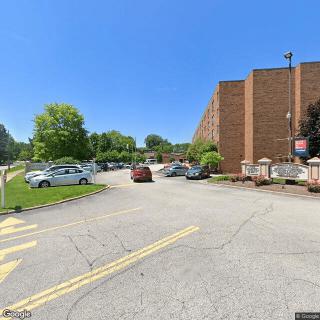
9415 Johnnycake Ridge Rd, Mentor, OH 44060
To contact a resident: (440) 974-9080
For more information about senior living options: (866) 208-4318
Abbey-Assisted Living Costs & Pricing
Abbey-Assisted Living offers competitive pricing for its services, with both private and semi-private rooms available at a monthly cost of $3,000. This rate is notably lower than the average costs in Lake County, where similar accommodations range from $3,283 for private rooms to $3,491 for semi-private options. Additionally, when looking at state-wide averages in Ohio, Abbey's prices are significantly more economical - private room rates soar to an average of $4,771. This positioning makes Abbey-Assisted Living an attractive option for those seeking quality care without the burden of exorbitant expenses.
| Floor plans | Abbey-Assisted Living | Lake County | Ohio |
|---|---|---|---|
| Private | $3,000 | $3,283 | $4,771 |
| Semi-Private | $3,000 | $3,491 | $3,965 |
Senior living communities with a similar price nearby
-
from -$486 / mo
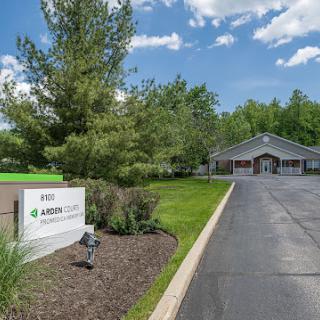
ARDEN COURTS CHAGRIN FALLS
$2,514 to $3,016 / month17.0 miles away -
About the same
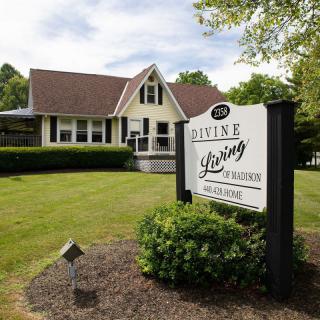
Divine Living of Madison
$3,000 / month16.6 miles away -
About the same
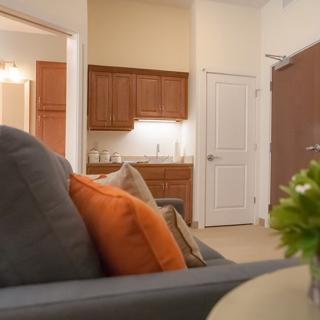
Vista Springs Quail Highlands
$3,000 to $5,000 / month3.0 miles away -
from +$593 / mo

Light of Hearts Villa
$3,593 to $4,343 / month22.4 miles away -
from -$105 / mo
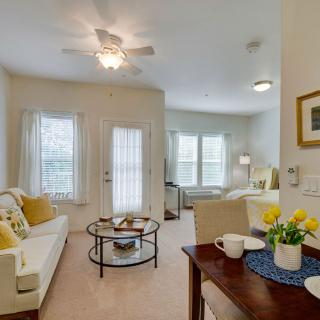
Parker Place Gracious Retirement Living
$2,895 to $4,775 / month2.1 miles away
Overall Review of Abbey-Assisted Living
Pros
 Alla and the entire Mentor Creek team take amazing care of the mother and treat the family like their own.
- Mentor Creek provides safety, privacy, and dignity in a setting that feels like a private home.
- Alla and her team consistently deliver a high level of care in a professional and compassionate way.
- They go above and beyond to help residents reach their highest level of independence.
- The Abbey is described as more than assisted living—a home and a family with compassionate caretaking.
- The meals at The Abbey are well planned and nutritious, with the special needs of each person considered.
- Cleanliness is evident everywhere at The Abbey, without the medicinal smell found at other places.
- There is never over-medication to manage behavior; the staff have the knowledge, experience, and patience to handle all.
Cons
 There were steps and ramps that would be difficult for someone using a walker.
- Smoking was allowed in the house.
- The facility was not very wheelchair accessible, requiring assistance to push a chair.
- Up to three people shared a bedroom.
- Residents watched TV and appeared bored, with one lying on another's lap.
- The environment was very loud at times, with staff living on site and kids and animals running around.
- The reviewer’s mother fell during a week-long stay there.
Review
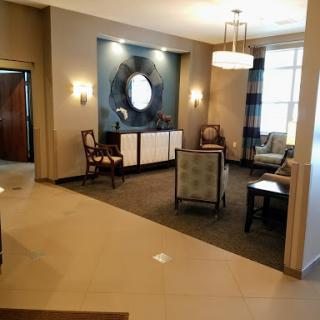
Abbey-Assisted Living in Mentor is best suited for families seeking a warm, home-like living experience with deeply attentive, compassionate care. The reviews consistently describe a setting that feels private and dignified, where meals are thoughtfully planned and staff treat residents like family. The care team, led by devoted professionals, demonstrates steady competence in daily needs as well as more complex moments, including end-of-life care coordinated with hospice when required. For residents with dementia or other ongoing care needs, the environment leans into independence within a supportive, non-institutional frame. In short, Abbey excels when the priority is a truly humane, relationship-driven approach.
Conversely, some families should consider alternatives if mobility, accessibility, and a more traditional activity calendar are non-negotiables. Critiques embedded in the broader context of Mentor Creek-like reviews point to physical barriers, steps and ramps, limited wheelchair accessibility, and configurations that may hinder self-sufficiency for wheelchair users. The bedroom setup, up to three residents sharing a single room, can clash with privacy expectations and long-term comfort. The ambiance can also feel busy, sometimes loud, with staff residents and even visiting children and animals contributing to a less controlled environment. For those who require a highly accessible, highly scheduled, or more private living arrangement, alternatives may serve better.
The strongest positives, exceptional caregiving, dignity-centered practice, and seamless hospice collaboration, largely offset the noted drawbacks for many families. Alla and her team routinely go beyond basic care, maintaining residents’ independence where possible while ensuring safety, privacy, and respectful treatment. Cleanliness and a homey atmosphere are repeatedly cited, along with a careful, non-coercive approach to medications. The anecdotal evidence of personalized meals, attentive monitoring, and a belief in treating aging loved ones as family helps to compensate for occasional accessibility gaps, particularly when the resident does not require full-time wheel mobility support.
Another standout is the sense that Abbey is more than an assisted-living facility; it is described as a genuine home and a caring community. The staff’s reliability, the compassionate caretaking of multiple family members over years, and the emphasis on meals and daily life that honor individual needs all contribute to a sustainable, comforting living experience. Testimonials highlight not only medical attention but the broader, day-to-day atmosphere, calm, clean, and respectful, where residents feel known and valued. That combination makes Abbey feel trustworthy for families prioritizing warmth, continuity, and a non-clinical quality of life.
Still, practical questions should anchor any decision. Prospective residents should inquire about room options, including privacy expectations and the feasibility of downsizing to smaller or single-occupancy spaces if privacy is essential. Clarify the level of planned activities and social programming, particularly for residents who thrive on structured routines and regular group engagement. Assess accessibility in real-world terms: which areas are truly wheelchair-friendly, what kinds of assistive supports are readily available, and how staff assist with transfers and mobility during daily tasks. Discuss the in-house policy on smoking and any impact on safety, ambience, and medical considerations. A candid tour will reveal how the environment feels during peak times versus quieter moments.
Bottom line: Abbey-Assisted Living delivers remarkable warmth, individualized attention, and a caregiver-driven culture that consistently earns high marks for dignity and compassion. It is an excellent fit for families who prioritize a home-like atmosphere, strong caregiver relationships, and robust support for dementia- or end-of-life needs, even if that choice involves shared rooms and some accessibility trade-offs. For those whose priorities include full wheelchair accessibility, a more regimented activity calendar, or highly private accommodations, exploring alternatives with stronger structural accessibility or more defined programming may be prudent. When choosing, lean into the core strength Abbey offers, an environment where care teams treat residents as family while upholding essential, professional standards.
 Board and Care Home
 Activities off-site
 Bath tubs
 Beautician on-site
 Devotional services off-site
 Indoor common areas
 Outdoor common areas
 Private
 Respite or short term stays offered
 Wheelchair accessible showers
 Ambulatory care
 Diabetic care
 High acuity care
 Incontinence care
 Medication management
 Meals provided


 Financing Long-Term Nursing Home Care Through Social Security: A Thorough Exploration
 Essential Knowledge on Pneumonia in Older Adults
 Exploring Palliative Care in the Home: A Comprehensive Overview