

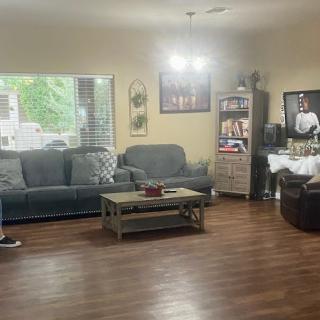





211 West King Road, Tucson, AZ 85705
For more information about senior living options: (866) 208-4318
The Villas At King Road - Villa B Costs & Pricing
The Villas At King Road - Villa B presents a pricing structure that reflects the premium quality of care and accommodations offered within its facilities. For semi-private rooms, the monthly cost is $3,316, which surpasses the averages for both Pima County at $2,805 and statewide in Arizona at $2,820. When considering private room options, residents can expect to invest $3,979 per month - again exceeding local and state averages of $3,332 and $3,345 respectively. Furthermore, those opting for studio apartments will find the rate set at $4,310, which is higher than both the county average of $3,786 and the state average of $3,829. This discrepancy in costs highlights not only the exceptional services provided but also positions The Villas At King Road - Villa B as a desirable choice for individuals seeking quality living arrangements in a supportive environment.
| Floor plans | The Villas At King Road - Villa B | Pima County | Arizona |
|---|---|---|---|
| Semi-Private | $3,316 | $2,805 | $2,820 |
| Private | $3,979 | $3,332 | $3,345 |
| Studio | $4,310 | $3,786 | $3,829 |
Assisted Living communities with a similar price nearby
-
from -$166 / mo

Casa De Buena Vida
$3,150 to $3,450 / month3.6 miles away -
from -$116 / mo

Academy Villas
$3,200 to $7,000 / month19.7 miles away -
from +$284 / mo

The Ranch Estates of Tucson
$3,600 to $4,840 / month4.2 miles away -
from -$316 / mo

Crossroads Adult Care Homes
$3,000 to $3,600 / month2.0 miles away -
from -$616 / mo

Casa De Los Abuelos Dos
$2,700 to $3,200 / month4.9 miles away
Overall Review of The Villas At King Road - Villa B
Pros
 The Villas at King is described as a great community partner with caring and compassionate staff.
- Residents at The Villas at King enjoy a safe environment, regular meals, and medication oversight, along with regular physician visits and social activities.
- Management and caregivers at The Villas at King are responsive and amazing to work with, helping residents get involved in activities.
- Families feel relief and confidence in the care their loved ones receive at The Villas at King.
- The facility is described as clean, homey, and staffed by friendly people.
- The Villas at King comes highly recommended by families who have had positive experiences.
Cons
 HIPAA violations occurred when staff discussed a resident’s mother’s medical information with an undesignated out-of-town family member who had access to funds paying the $4,500-a-month stay.
- They placed the resident’s mother on hospice without informing her, and singled her out for being vocal about wanting to go home.
- At least four other residents told the reviewer that the mother was being treated unfairly and picked on.
- The main manager and the undesignated family member decided to place the mother on hospice, found a doctor who said she had less than six months to live, then took her off her medications; she died three days later with no family present.
- They did not notify any family member about being taken off medications, and did not call the in-town daughter about her condition while she was dying for three days; her body was moved to a crematory they chose before informing the family.
- They were not equipped to handle the mother’s complex health condition and, rather than refer her to skilled nursing, took the hospice route and removed her from their care.
- They were not caring, understanding or professional or ethical, as the reviewer is concerned.
- The reviewer was helpless to advocate or choose where the mother died, or to be made aware that she was dying, and no religious rites were provided despite her being Catholic.
- The experience was described as a nightmare beyond description.
- Staff pulled the resident so hard it left a burn on the neck and shoulder.
- They put a diaper over the resident’s stomach instead of a bag on the colostomy.
- The reviewer’s family paid $5,000 a month, while staff claimed ALTCS denial but never tried to apply.
- They wouldn’t consult with the resident’s daughter on care decisions, despite her advocacy, and gave conflicting information to family.
- The place was described as a nightmare and the workers as unprofessional.
- Managers, including Tanisha and Alma, were described as rude, dishonest, uncompassionate, and not adhering to PHI guidelines; medical records were alleged to be kept hostage and information to families was lied about.
- The reviewer would never allow anyone they know to live there and called the place a nightmare; they warned to beware of this place and any place associated.
Review
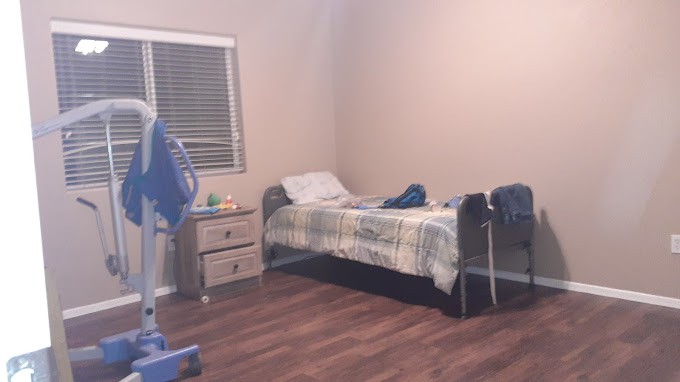
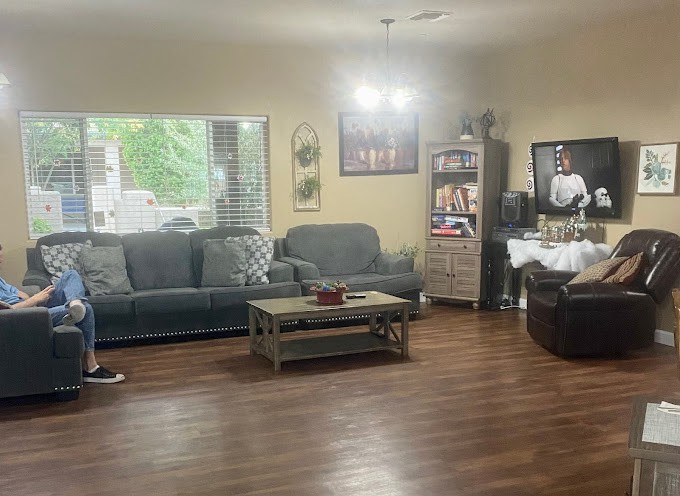
The Villas at King Road - Villa B is best suited for families seeking a warm, socially engaged, home‑like assisted living option for an older adult who needs daily living support and medication management but does not require around‑the‑clock skilled nursing. The environment shines for residents with memory challenges when supported by attentive caregivers, and families report reliable oversight, predictable daily routines, and regular social activities that help keep a resident connected to others. For someone who values a genuine, personable staff and a community feel that feels like a traditional neighborhood home, this setting delivers.
Yet a candid decision requires acknowledging that several families may want to consider alternatives. The most serious red flags involve privacy and governance concerns: allegations of HIPAA violations, discussions of a resident’s medical information with outsiders, and perceived manipulation around hospice decisions. In addition, there are accounts of inconsistent information to families, rapid or unexplained changes in care, and complaints about management’s conduct. Financial issues also surface in some reviews, including questions about eligibility and how payments align with services rendered. For residents with high medical complexity or those who insist on pristine privacy and principled, transparent decision‑making, other options may be safer.
The core positives here, clean, homey rooms and common areas, a friendly day‑to‑day staff, and a sense of community, do offer meaningful value for many families. Residents appear to enjoy social time outside, engage in activities, and receive regular meals, medication oversight, and primary care visits. When management and caregivers are responsive, families gain relief and confidence that their loved one is safe and socially engaged. For memory‑challenged residents, there is qualifier: the right match hinges on the continuity and quality of staff interactions, the perceived attentiveness of caregivers, and the ability to maintain consistent, compassionate contact with family members.
However, the weight of the drawbacks cannot be dismissed. Reports of rude or dishonest behavior by certain managers, disputes over how protected health information is handled, and experiences that left family members feeling unheard create a serious trust deficit. The most troubling narratives describe end‑of‑life decisions made without family involvement or timely notification, and medical changes that seem abrupt or inadequately explained. These dynamics undercut the fundamental safety and peace of mind families seek when choosing an assisted living, especially for a resident whose care is at least partly medical in nature.
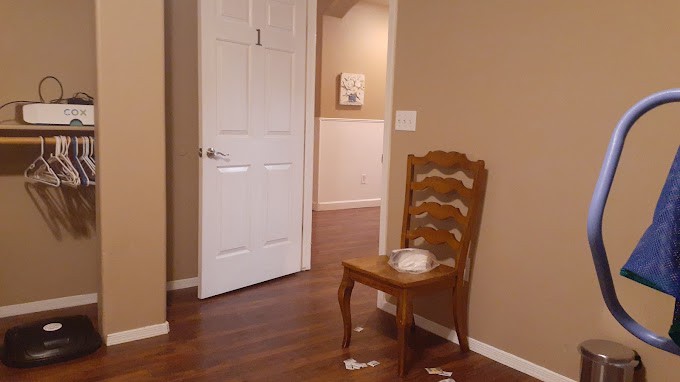
To evaluate this community with confidence, prospective families should demand clear, written policies and live conversations around privacy, care planning, and crisis management. Ask how care plans are developed and updated, who authorizes changes in medications or hospice approaches, and how families are informed of significant health events. Request direct conversations with the director of nursing or medical director, tour patient rooms and activity spaces, and speak with current residents or their families about their day‑to‑day experiences. Verify licensing history, incident logs, and any outstanding state or regulatory concerns, and compare with other local options that emphasize transparent governance and consistent clinical oversight.
Bottom line: The Villas at King Road – Villa B can be a strong match for families prioritizing a warm, engaged environment, routine support with medications, and meaningful social activity for a resident who is relatively stable or managing memory concerns. The decision hinges on trust in privacy practices, consistency of medical governance, and the responsiveness of management. Where those elements are solid, the community delivers a comfortable, active living experience. If privacy, ethical care decisions, or reliable family communication are nonnegotiable, or if medical complexity is high, it is prudent to explore alternatives that foreground transparent governance and robust clinical oversight.
 10 resident community capacity
 Assisted Living
 Board and Care Home
 Cable or satellite TV
 Dining room
 Fully furnished
 Garden
 Housekeeping services
 Move-in coordination
 Outdoor space
 Telephone
 Wi-Fi/high-speed internet available
 Tucson International (11 miles away)
 24-hour supervision
 Activities of daily living assistance
 Assistance with bathing
 Assistance with dressing
 Assistance with transfers
 Diabetes diet
 Meal preparation and service
 Medication management
 Special dietary restrictions
 Transportation arrangement (medical)
 Transportation to doctors appointments






 When to Transition from Assisted Living to Memory Care: Key Indicators, Steps, and Finding the Right Community
 Assisted Living and Memory Care: Understanding Their Core Differences
 Beyond the Bingo Hall: 50+ Enriching Activities for Seniors in Assisted Living