
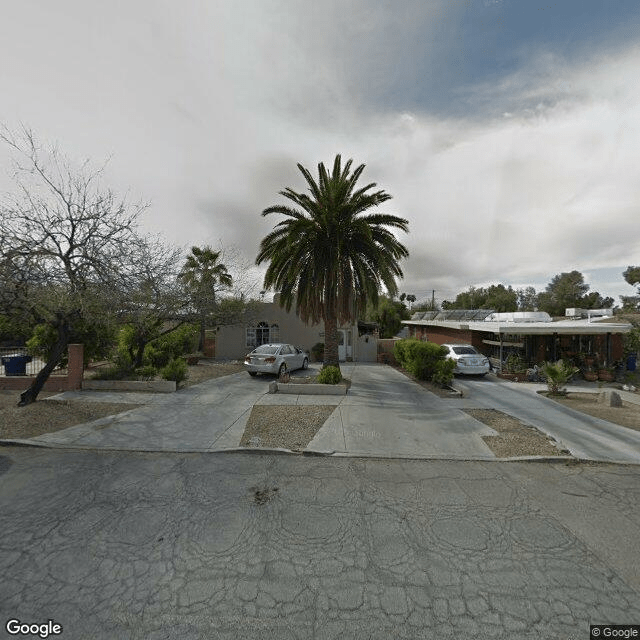
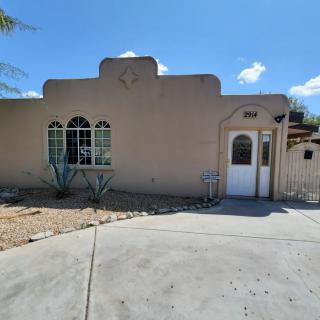
2914 E 4th Street, Tucson, AZ 85716
To contact a resident: (520) 326-1016
For more information about senior living options: (866) 208-4318
Akator's Assisted Living Home Costs & Pricing
Akator's Assisted Living Home offers competitive pricing for its services compared to both Pima County and the broader state of Arizona. For semi-private rooms, Akator's rate is $2,500 per month, which is notably lower than the county average of $2,805 and the state average of $2,820. Similarly, while a private room at Akator's costs $3,500 per month, it remains effective in maintaining affordability against Pima County's average of $3,332 and Arizona's average of $3,345. These cost advantages reflect Akator's commitment to providing quality care while ensuring accessibility for residents seeking assisted living options in the region.
| Floor plans | Akator's Assisted Living Home | Pima County | Arizona |
|---|---|---|---|
| Semi-Private | $2,500 | $2,805 | $2,820 |
| Private | $3,500 | $3,332 | $3,345 |
Senior living communities with a similar price nearby
-
from +$300 / mo

Abella Manor Senior Care, LLC
$2,800 to $3,200 / month7.5 miles away -
from -$300 / mo
Abuelos At La Canada
$2,200 to $2,800 / month7.0 miles away -
from -$200 / mo

Northwest Assisted Living
$2,300 to $2,500 / month8.4 miles away -
from -$300 / mo

Gentlemen's Inn I
$2,200 / month6.4 miles away -
About the same
Grace Home I
$2,500 to $3,200 / month7.3 miles away
Overall Review of Akator's Assisted Living Home
Pros
 La Paz Assisted Living is highly recommended by healthcare advocates.
- Cate provides valuable and supportive care during cancer treatment.
- La Paz is homey, clean, spacious, professional, and responsibly managed.
- La Paz is located in an appealing tree-lined neighborhood in Tucson.
- Cate and her staff are competent, thorough, considerate, and kind.
- The residents are relaxed and happy.
- Residents receive homemade meals customized to dietary needs.
- Families feel safe and cared for by Cate and her staff.
- Cate welcomes residents on short notice and provides a peaceful and supportive space for end-of-life care.
- La Paz is an appealing, safe, and supportive environment for care.
- La Paz earns the highest recommendation.
Review
This community is best suited for families seeking a small, home‑like, highly personalized assisted living experience where a hands‑on operator drives care and where end‑of‑life and treatment‑support needs can be met with intimate oversight. From the qualities highlighted in the referenced experience, the model favors residents who thrive on a calm, neighborhood setting, clean and comfortable spaces, and attentive, personable staff. The emphasis on a homey atmosphere, professional management, and a responsive caregiver team makes it especially appealing to those who want companionship, dignity, and practical support delivered with kindness. When a resident’s day-to-day needs include tailored meals, emotional reassurance, and a peaceful routine, this approach shines.
Those considering Akator’s should also be mindful of alternatives if the situation calls for more clinical intensity or specialized programming. Facilities with larger staff rosters, on‑site medical clinics, or memory‑care programs that require structured activities and constant clinical oversight may better suit residents with complex medical needs, frequent skilled nursing assessments, or extensive cognitive support requirements. Families aiming for highly active programming, robust socialization across a bigger community, or advanced rehabilitative services might find a larger campus structure preferable. In short, if medical complexity or specialized memory care is central to the plan, it pays to compare options beyond a small, privately run setting.
The strongest positives in the cited experience point to how the right operator can elevate daily life and care. A capable, considerate on‑site leader who can coordinate care during intensive treatment and during hospice phases creates an environment where safety feels natural and care feels personalized. A home‑like footprint, clean, spacious, and thoughtfully maintained, reduces the stress of transition and helps residents settle into routines with less disruption. Staff who are described as competent, thorough, and kind translate into reliable day‑to‑day support, predictable responsiveness, and a sense of security for families. When meals are customized to dietary needs and prepared with care, residents experience dignity in nourishment, which is often a meaningful measure of quality in assisted living.
Yet prudent families will acknowledge potential trade‑offs inherent in a smaller, operator‑driven setting. The most obvious risk is reliance on a single driver of care: if staffing patterns shift, or if turnover occurs among the key caregivers, consistency can become a concern. A limited on‑site medical presence may also complicate decision‑making for escalating care or coordinating with outside hospice services. It remains essential to confirm processes for urgent medical issues, medication management, and timely access to higher levels of care if medical needs spike. These are standard questions for any intimate setting, but they become particularly salient when care hinges on steady leadership and a deeply involved onsite team.
To make a well‑informed choice, prospective families should demand concrete assurances and observable practices. Inquiries should cover staff‑to‑resident ratios across day and night shifts, the availability of licensed nursing oversight, and the cadence of care conferences or family updates. It is equally important to explore how meals are planned and modified for dietary restrictions, and to request sample menus and dining routines. Prospects should ask about hospice partnerships, the home’s approach to end‑of‑life comfort, and the degree of resident autonomy in daily activities. Finally, touring the environment, private spaces, outdoor areas, safety features, and opportunities for meaningful engagement, will reveal whether the intimate, homey promise translates into tangible daily life.
For families prioritizing individualized attention, warm, hands‑on leadership, and the peace of mind that comes with a calm, home‑like setting, Akator’s could represent a compelling fit, provided these elements are present in practice and supported by consistent staffing and medical coordination. If the landscape of care required leans toward more clinical oversight, larger programming, or specialized memory‑care frameworks, it would be wise to compare Akator’s with facilities that foreground those strengths. The bottom line is practical: choose a setting where the degree of personal attention, the reliability of the caregiving team, and the capacity to tailor care to evolving medical and end‑of‑life needs are demonstrably strong.
 Board and Care Home
 Dogs allowed
 Activities off-site
 Indoor common areas
 Outdoor common areas
 Private
 Respite or short term stays offered
 Wheelchair accessible showers
 Tucson International (8 miles away)
 Diabetic care
 Incontinence care
 Meals provided




 Comprehensive Guide to Medicare Coverage for Hospice Care
 Caring for Those Who Care: Recognizing, Understanding, and Overcoming Caregiver Burnout
 Caregiver Exhaustion: Recognizing the Signs and Restoring Your Well-Being