
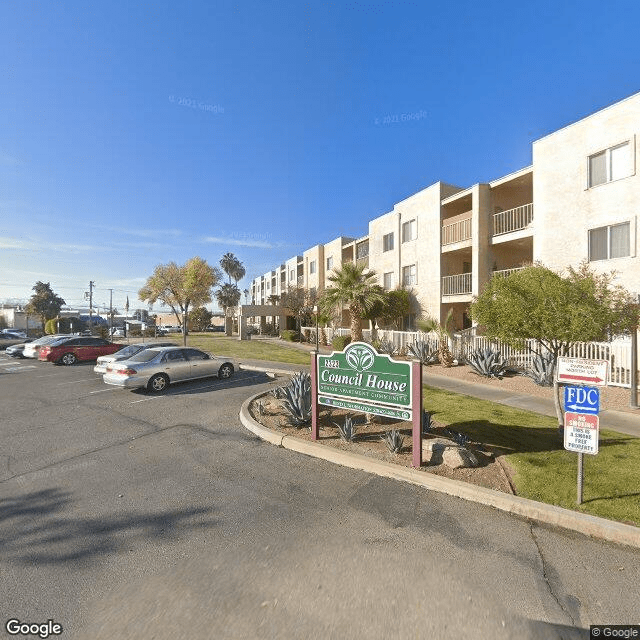
2323 E 10th St, Tucson, AZ 85719
To contact a resident: (520) 623-4686
For more information about senior living options: (866) 208-4318
Council House Apartments Costs & Pricing
Council House Apartments offers competitive pricing for its residents, with semi-private rooms priced at $3,000 per month. This rate is slightly higher than the average costs in Pima County and the broader state of Arizona, which stand at approximately $2,805 and $2,820 respectively. For those seeking more privacy, private rooms at Council House are available for $4,500 per month, again reflecting a premium compared to Pima County's average of about $3,332 and Arizona's typical rate of $3,345. While Council House Apartments may be positioned above local averages, it's essential to consider the unique amenities and services that may accompany these costs when evaluating overall value.
| Floor plans | Council House Apartments | Pima County | Arizona |
|---|---|---|---|
| Semi-Private | $3,000 | $2,805 | $2,820 |
| Private | $4,500 | $3,332 | $3,345 |
Independent Living communities with a similar price nearby
-
from -$405 / mo
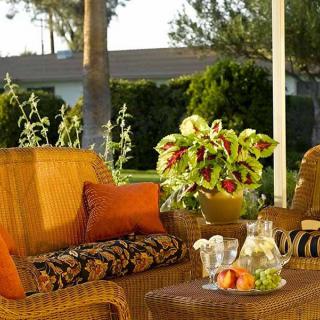
Atria Valley Manor
$2,595 to $3,095 / month4.0 miles away -
from +$145 / mo

The Watermark at Oro Valley
$3,145 to $4,995 / month10.4 miles away -
from +$335 / mo
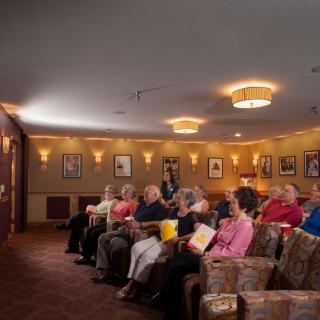
Cascades of Tucson
$3,335 to $5,350 / month5.2 miles away -
from +$95 / mo
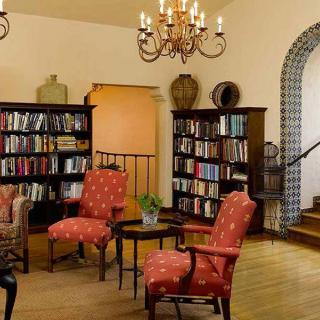
Atria Bell Court Gardens
$3,095 to $5,195 / month5.1 miles away -
About the same
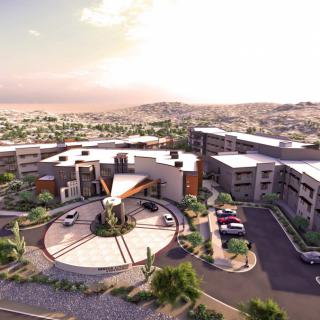
La Sonora at Dove Mountain
$2,950 to $5,270 / month16.4 miles away
Overall Review of Council House Apartments
Pros
 The place feels very peaceful.
- Management is very helpful and courteous.
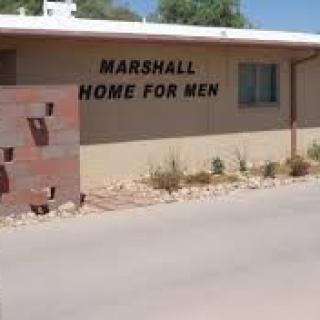
- The building is clean and well maintained.
- Maintenance is respectful.
- The porch provides a sense of space and openness.
- The management is compassionate and understanding and greets residents with a smile.
Cons
 The staff are extremely rude and disrespectful.
- The management was worse than any place they have lived and did not care about anything besides money.
- The office staff were rude and condescending toward prospective residents.
- The staff failed to assist a delivery driver.
Review
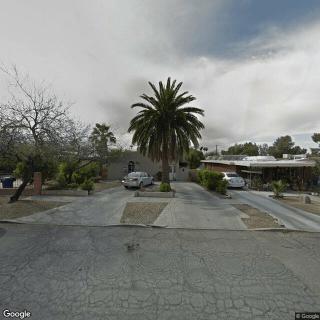
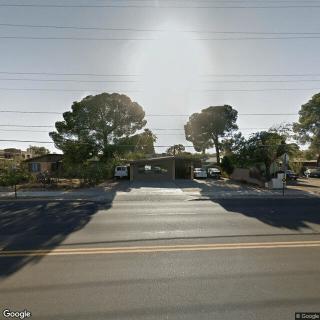
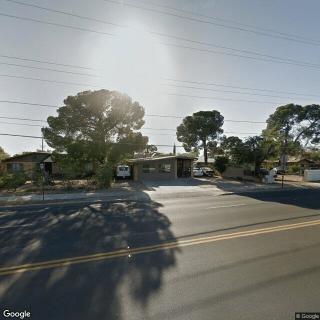
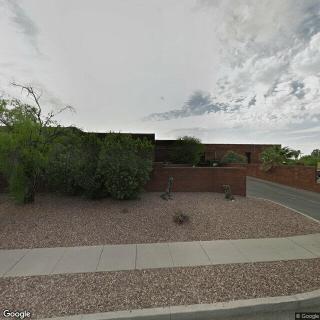
Council House Apartments in Tucson is best suited for independent seniors who want a quiet, low-stress living option with a stable, neighborly feel. The property often reads as peaceful and well cared-for, with residents who interact amicably and a physical environment that remains clean and orderly. A porch and outward-facing living space help residents avoid feeling boxed in, which matters for longer stays. Maintenance responses are praised as timely when possible, contributing to a predictable daily rhythm. This is not a destination for high-touch care; it rewards those who value autonomy and a straightforward, calm atmosphere.
Those evaluating alternatives should note that experiences diverge. Several accounts flag rude or unhelpful interactions from office staff, and a perception that management is more concerned with finances than resident welfare. For families prioritizing consistently courteous service, clear communication, and proactive help with deliveries or questions, options with steadier front-desk behavior may be preferable. The mix of positive and negative staff experiences suggests variability across staff and perhaps shifts in management approach that families should test firsthand.
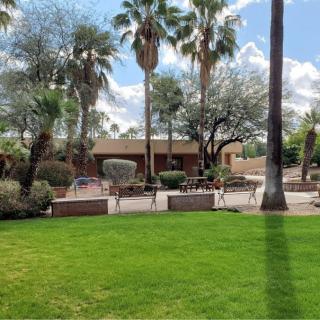
On the upside, the strongest pro is genuine stability. Tenants report long residency, one resident for nearly five years and others for more than a decade, indicating a community where neighbors know one another and routines take hold. The property’s upkeep is tangible: good landscaping, clean common areas, and a maintenance team that addresses concerns promptly when possible. These elements translate into practical value for households seeking a low-friction, enduring residence without frequent transitions. When maintenance and a familiar, settled population align, the quality of daily life rises meaningfully.
Yet the cons have weight that cannot be dismissed. The negative impressions surrounding management behavior, perceived brusqueness, condescension toward outsiders, and a sense that staff sometimes prioritize expedience or appearances over resident experience, can overshadow the positives. Statements that management cares “about money” recur enough to influence decision-making, especially for families comparing options where the front-office tone and consistency of service are critical. In other words, the same building that delivers a pleasant common environment can still feel uneven in how questions are answered and problems are resolved.
From a decision-making standpoint, the practical steps matter as much as the impressions. Prospective residents should visit at different times, engage with multiple residents, and question how new situations get handled, from deliveries to visitor access. Look for a consistent pattern of courtesy and responsiveness across staff members, not just isolated good moments. If a high value is placed on dependable, respectful front-desk service and a clear, resident-focused management approach, this property may fall short. If independence, quiet routines, and maintenance reliability align with the family’s priorities, Council House Apartments offers a credible, affordable base in the Tucson area, provided due diligence confirms today’s staff culture matches expectations.
In summary, Council House Apartments provides a practical, peaceful environment with dependable maintenance and a seasoned, neighborly atmosphere. It is well aligned with independent seniors who prize stability, straightforward routines, and an outdoor-friendly layout. Families should consider alternatives if front-desk warmth and consistent, resident-centered management are non-negotiable, or if a higher level of care coordination is required. Within the Tucson market, this community deserves serious consideration for those who can tolerate mixed interpersonal experiences in exchange for a serene home and long-tenured neighbors. The decisive factor will be current staff temperament and management consistency, the difference between a homey, predictable stay and a persistently rocky impression shaping the overall value.
 Independent Living
 Tucson International (7 miles away)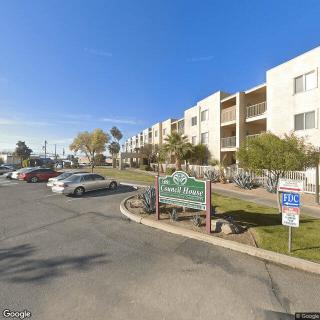
 Understanding the Nuances of Palliative Care and Hospice: A Comprehensive Exploration
 Fecal Incontinence in Older Adults: A Comprehensive Guide
 Recognizing the Journey: Understanding and Navigating Anticipatory Grief