
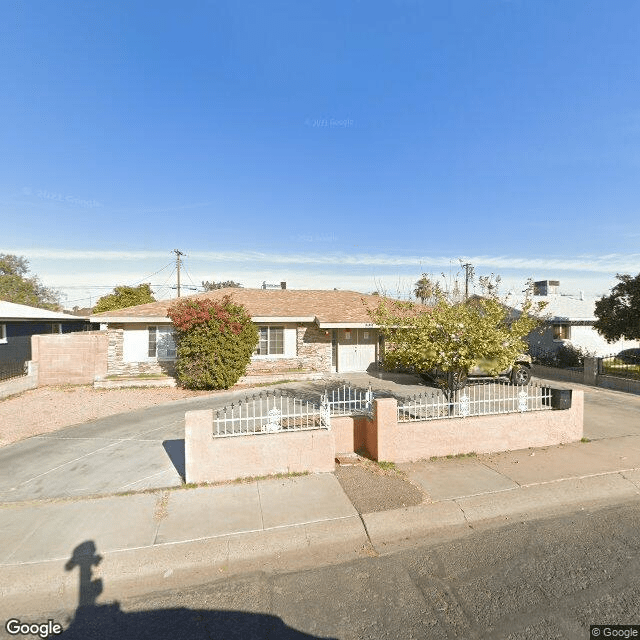
3750 W Mulberry Drive, Phoenix, AZ 85019
To contact a resident: (602) 314-4646
For more information about senior living options: (866) 208-4318
Family Senior Care Costs & Pricing
Family Senior Care offers competitive pricing for their services compared to the broader market rates in Maricopa County and across Arizona. For a semi-private room, Family Senior Care is priced at $2,000 per month, significantly lower than the county average of $2,801 and the state average of $2,820. Similarly, their one-bedroom accommodations also stand out at $2,000 monthly, well below Maricopa County's average of $3,473 and Arizona's average of $3,532. Even for private rooms, at $2,500 per month, Family Senior Care offers a more affordable option compared to the county's $3,318 and the state's $3,345 averages. This pricing strategy not only provides excellent value but also ensures that families can access high-quality care without overwhelming financial strain.
| Floor plans | Family Senior Care | Maricopa County | Arizona |
|---|---|---|---|
| Semi-Private | $2,000 | $2,801 | $2,820 |
| 1 Bedroom | $2,000 | $3,473 | $3,532 |
| Private | $2,500 | $3,318 | $3,345 |
Memory care communities with a similar price nearby
-
About the same
Santo Nino Villas 2
$2,000 to $2,300 / month23.6 miles away -
About the same
Tatum Ranch Assisted Living
$2,000 to $3,000 / month21.1 miles away -
About the same
Angel's Adult Group Home
$2,000 to $3,000 / month15.5 miles away -
from +$255 / mo

Windsor Luxury Assisted Living, LLC
$2,255 to $5,950 / month10.3 miles away -
from +$225 / mo
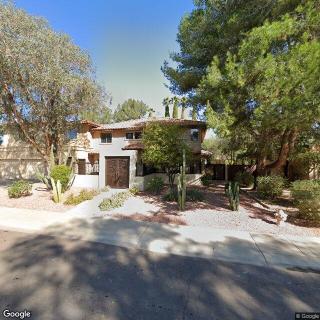
Harts Home - Exceptional Elder Care
$2,225 to $5,500 / month15.3 miles away
Overall Review of Family Senior Care
Pros
 The facility is a nice, clean place with compassion that makes residents feel comfortable.
- Caregivers show compassion and help residents feel at home.
- The place is highly recommended for its compassionate staff and comfortable environment.
- Families feel at ease and confident in recommending this facility.
Review
This community is best suited for seniors who are in a recovery phase and want a clean, compassionate, home-like setting where staff provide personal attention and help ease the transition from hospital to daily life. It appeals especially to families prioritizing warmth, a smaller-community feel, and reassurance that their loved one will be treated with kindness and respect. The reviews describe a setting where convalescence and comfort go hand in hand, and where familiar routines, clean surroundings, and attentive caregivers help alleviate the stress that comes with post-acute care. For someone seeking a straightforward, human-centered environment to support healing, this option stands out as a practical fit.
Those weighing alternatives should consider whether a facility must deliver more intensive medical oversight or specialized care. If a loved one requires continuous 24/7 nursing supervision, complex wound care, advanced therapy programs, or dementia/ memory-care services with a structured clinical framework, a larger or more medically oriented community may be a better match. For families prioritizing cutting-edge rehab equipment, diverse therapy schedules, or broader clinical staffing, the absence of explicit detail about these offerings here suggests exploring other options. This community’s strengths lie in warmth and cleanliness, not in a deep, hospital-like clinical footprint.
The core strengths articulated in the reviews are clear and persuasive. Cleanliness and a calm, orderly environment set a reassuring stage for recovery, while caregiver teams are described as genuinely compassionate. The staff’s demeanor translates into residents feeling at home, which can ease anxiety, improve cooperation with therapies, and support adherence to a recovery plan. In a healing-focused setting, such attributes often translate to better resident engagement, more cooperative participation in activities, and easier collaboration with families. The consistently positive tone around staff compassion reinforces that this is a place where human connection matters as much as routines.
Where the picture becomes more cautious is in the absence of explicit details about medical and therapy offerings. The reviews do not reveal a formal rehab curriculum, bedside nursing coverage, or on-site physician access, leaving open questions about the level of clinical oversight and availability of skilled services. With only three reviews and no mention of 5-star ratings, there is a legitimate need for families to verify how daily medical needs are managed, what therapies are included, and how often professionals are present. Potential gaps in program breadth should be weighed against the advantages of a homey, attentive environment.
Practical due-diligence steps are clear. Prospective families should ask for a concrete breakdown of care levels, including the presence of licensed nurses on site, medication management protocols, and access to physical, occupational, and speech therapy. Inquire about staffing ratios during peak hours and night shifts, emergency procedures, wound-care capabilities, and how transitions from hospital discharge are coordinated. A firsthand visit is essential to observe how caregivers interact with residents, how meals are prepared, and how engaging daily activities are structured. Request references from current families and a detailed sample schedule to gauge alignment with recovery needs.
In the end, Family Senior Care in Phoenix offers a solid, practical option for seniors who prize a clean, homelike atmosphere and genuinely compassionate caregiving as the backbone of recovery care. It is a strong fit for families seeking reassurance that their loved one will be treated with warmth, respect, and personal attention during convalescence. For those whose priorities center on a robust clinical program or specialized memory-care services, alternatives that foreground medical oversight and structured therapy may be more appropriate. A thoughtful tour, coupled with targeted questions about clinical capabilities, will determine whether this community matches the specific recovery goals and daily living expectations of the individual in question.
 Board and Care Home
 Day Program
 Memory Care
 Private
 Phoenix Sky Harbor International (8 miles away)
 Ambulatory care
 Diabetic care
 High acuity care
 Incontinence care
 Medication management

 An In-Depth Look at Reminiscence Therapy in Dementia Care
 Dementia-Related Hallucinations: Causes, Experiences, and Practical Approaches
 Illuminating Insights About Alzheimer's Disease: Ten Crucial Realities