
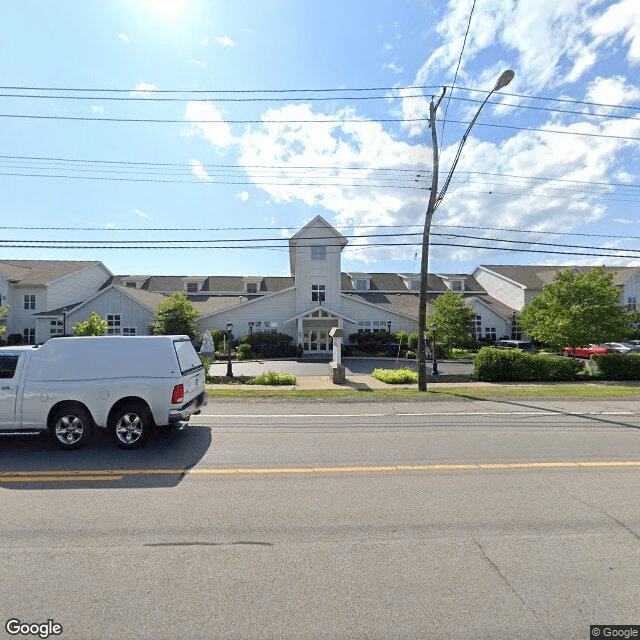
5229 South Park Ave, Hamburg, NY 14075
To contact a resident: (716) 290-5448
For more information about senior living options: (866) 208-4318
St. Francis Park Costs & Pricing
At St. Francis Park, the monthly cost for a studio apartment is set at $2,600, which presents a more affordable option compared to the average prices seen in both Erie County and across New York State. Specifically, Erie County's average for similar accommodations sits at approximately $4,223, while the state averages escalate even further to around $4,532. This pricing not only underscores St. Francis Park's competitive stance within the local housing market but also highlights its appeal as an attractive alternative for those seeking quality living arrangements without the burden of exorbitant costs.
| Floor plans | St. Francis Park | Erie County | New York |
|---|---|---|---|
| Studio | $2,600 | $4,223 | $4,532 |
Independent Living communities with a similar price nearby
-
from -$400 / mo
Presbyterian Village-N Church
$2,200 / month15.2 miles away -
About the same
Elderwood Residences at Wheatfield
$2,649 to $2,905 / month24.8 miles away -
from -$150 / mo
The Amberleigh
$2,450 to $4,750 / month17.5 miles away -
from -$305 / mo
Solstice Senior Living At East Amherst
$2,295 to $3,545 / month19.5 miles away -
from -$80 / mo

Orchard Heights
$2,520 to $4,988 / month3.9 miles away
Overall Review of St. Francis Park
Pros
 St. Francis Park was wonderful and perfect for her.
- The reviewer liked everything—the people, the cleanliness, and everything about it.
- The rooms were very nice, bright, cheerful, and clean.
- There were a lot of different things for the residents.
- It smelled good and looked delicious.
- The facility has an indoor pool.
Cons
 The place hides behind its Catholic Identity as a craven profit-seeking enterprise at the cost of residents’ mental health and well-being.
- They have forced the aunt, who is active and independent, to live on the Alzheimer’s wing.
- The food is bland, starchy, and fat-laden and making her sick.
- They won’t even order fish or offer fresh produce.
- They have institutionalized a healthy, active person in the worst possible sense.
- This is the reward for a life of service to the Catholic Church.
- It proves that women, and especially women religious, don’t matter to this money-grubbing enterprise.
- Rooms are small and poorly designed.
- Staff are argumentative and unresponsive to reasonable concerns (like variety of food).
- The aunt’s well-being and mental health are being seriously compromised.
- They are forcing the independent-living-relative to live in the full-care nursing home wing with Alzheimer’s patients.
- She should be in the apartments, but they refuse to move her there.
- The food is on a constant school-cafeteria level 3-week rotation with chicken fingers, little fresh produce, fish, or other healthy options.
- Not even reduced salt or other restrictions are honored.
- There is a fully capable chef, but the person in charge of ordering is inflexible and seemingly overburdened with other duties.
- They are all about profit and not actually interested in what is best for their residents.
- There are no truly Catholic virtues of service on view.
Review
St. Francis Park is best suited for seniors who will require assisted living with on-site nursing and memory-care support, and for families seeking a structured, social environment where care coordination happens under one roof. The community’s strength lies in its capacity to provide secured memory-care options and a bustling activities calendar, which can support residents who may otherwise drift without constant oversight. This is not the place for fiercely independent elders who pride themselves on driving, cooking, and managing medications from a private apartment, nor for those who prize unencumbered autonomy and a flexible dining plan. Prospective residents should recognize that autonomy can be constrained by placement choices, and that the governance and care model may feel oriented toward centralized efficiency rather than resident-led living.
On the positive side, the facility is consistently described as clean and well-maintained, with rooms that are bright, cheerful, and inviting. A notable feature is the indoor pool, which adds a tangible social and recreational option that many peer communities lack. Reviewers point to a wide range of activities and amenities designed to engage residents, creating opportunities for social connection and purposeful days. Several accounts highlight pleasant sensory cues, the smells and presentation of meals, the overall cleanliness, and the visible effort put into resident-facing spaces. For families navigating transitions, these tangible amenities can translate into measurable improvements in mood and daily purpose, particularly for residents who need more structured programming or who benefit from regular social engagement.
Yet the downsides are consequential and repeatedly cited. The most troubling pattern is the pressure to move capable, independent-minded relatives into the full-care ward, narrowing autonomy in ways that can erode mental health and dignity. Menu quality trails far behind in the realm of nutrition and variety, with bland, school-cafeteria-style rotations, limited fresh produce, and few healthy options like fish, vegetables, or reduced-sodium choices. Operational inflexibility and what some describe as a heavy-handed ordering process leave room for improvement in meal planning. Other concerns surface around room size and design, with some spaces feeling cramped or poorly laid out. Across several reviews, allegations of profit-driven motives and inconsistent responsiveness from staff reinforce the impression that resident welfare can be secondary to enterprise pressures.
These strengths and weaknesses interact meaningfully when matching a family’s priorities. For residents who need memory support or who benefit from a built-in social framework, activities, staff oversight, and on-site care, St. Francis Park can deliver steady, dependable care in a comforting environment. The advantages of cleanliness, safety, and a robust activity slate may outweigh the dietary and autonomy concerns for those in need of higher care levels or those who value predictable routines. However, for someone who values culinary quality, frank autonomy, and a truly responsive, resident-centered culture, the cons may overshadow the benefits, making a move to a different community or an alternative arrangement a wiser long-term decision.
Families should consider alternatives if independence is the priority, if the Catholic identity is not a core value, or if there is strong concern about the alignment between stated mission and everyday practice. Prospective movers ought to scrutinize real-world details: are independent-living residents kept out of apartments, and can a future transition be negotiated with dignity? Request current menus showing variety and nutrition, and ask for a transparent plan for meal procurement and resident feedback. Inquire about staff turnover, responsiveness, and what happens when concerns arise. Compare with other neighborhood options that may offer more expansive floor plans, higher autonomy, or more patient-oriented governance. The right choice hinges on whether the resident’s needs truly align with a secure, activity-rich environment, or demand greater personal freedom and culinary choice.
Bottom line: St. Francis Park can be a strong fit for seniors who require structured care, memory support, and a well-staffed social milieu, provided a clear plan preserves dignity and autonomy. Approach with a plan: verify what happens if independence wanes, confirm menu flexibility and nutritional offerings, and demand transparent communication from leadership. If a family values a lively, clean, and active setting with on-site care, this community may satisfy those expectations, yet the price may be autonomy and certain dietary preferences. For many, alternatives that emphasize resident-led living and more transparent governance will deliver greater long-term peace of mind.
 Independent Living
 Activities on-site
 Devotional services off-site
 Indoor common areas
 Respite or short term stays offered
 Swimming pool / hot tub
 Wheelchair accessible showers
 Buffalo Niagara International (14 miles away)
 Ambulatory care
 Diabetic care
 Meals provided
 Bible study group
 Choir / singing club
 Walking club

 In-Depth Look at the VA Aid and Attendance Program
 Nurturing Our Loved Ones: A Daughter's Journey in Caring for Her Mother
 Nurturing Our Elders: Linda's Journey of Supporting Her Mother