
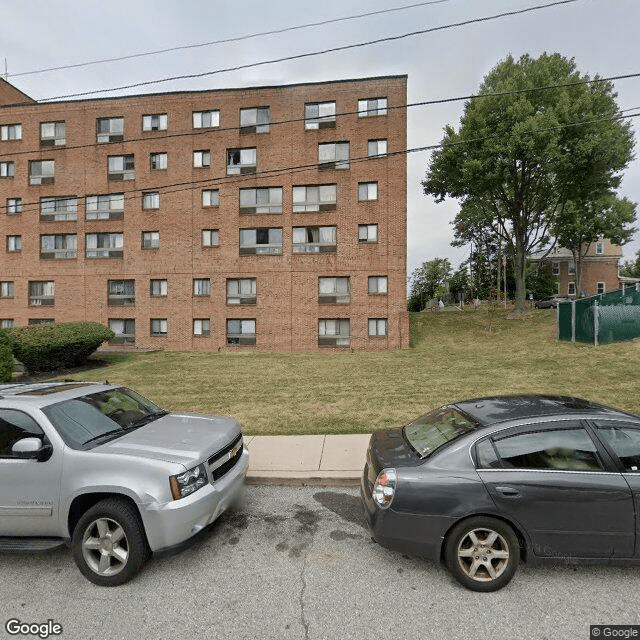
200 N Washington St, Wilmington, DE 19801
To contact a resident: (302) 571-0100
For more information about senior living options: (866) 208-4318
Quaker Hill Place Costs & Pricing
Quaker Hill Place offers competitive pricing for its services when compared to the broader market in New Castle County and the state of Delaware. For semi-private accommodations, residents pay $3,000 per month, which is significantly lower than the county's average of $4,551 and the state average of $4,428. In terms of private rooms, Quaker Hill Place charges $4,000 monthly; this aligns closely with New Castle County's rate of $3,980 but is slightly below Delaware's statewide average of $4,553. Overall, Quaker Hill Place stands out as an economically attractive option for both semi-private and private living arrangements in a region where costs can run considerably higher.
| Floor plans | Quaker Hill Place | New Castle County | Delaware |
|---|---|---|---|
| Semi-Private | $3,000 | $4,551 | $4,428 |
| Private | $4,000 | $3,980 | $4,553 |
Independent Living communities with a similar price nearby
-
from -$150 / mo
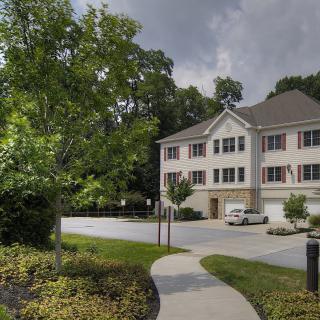
Freedom Village at Brandywine, a CCRC
$2,850 to $4,090 / month22.5 miles away -
About the same
Brandywine Living At Haverford Estates
$2,970 to $7,020 / month23.0 miles away -
About the same
The Mansion at Rosemont
$3,000 to $5,259 / month22.2 miles away -
from -$315 / mo
Ivy Creek Gracious Retirement Living
$2,685 to $4,675 / month10.1 miles away -
from +$250 / mo
Merrill Gardens at West Chester
$3,250 to $6,200 / month17.2 miles away
Overall Review of Quaker Hill Place
Pros
 Mario's parents are great.
- The place has been upgraded and is wonderful.
- There are lovely, kind, open, honest, and respectful people in the office.
- The place is an excellent place to live.
- The place is nice and clean.
Cons
 The office provides false information.
- There is something shady going on with the waiting list.
- Applicants under 62 face an undetermined, multi-year wait due to an elderly-preference policy.
- Applicants were not informed about this policy when applying.
- Residents are disrespectful, and mice run through the building.
- The building is filthy and infested with mice, and management only uses mouse traps instead of patching the holes.
Review
Quaker Hill Place in Wilmington is best suited for older adults aged 62 and up who want an age-restricted, relatively quiet environment with an upgraded building and an active on-site office presence. The property has been described as peaceful and clean, with recent upgrades that improve both curb appeal and interior spaces. The strongest fit tends to be residents who value a traditional senior-housing atmosphere and a sense of community where staff are accessible and courteous. Families seeking dependable interaction from the front desk will find reassurance in the reports of kind, respectful office staff. Those under 62 or with urgent housing needs should be prepared for policy-driven delays and may want to explore alternatives that offer faster, clearer access and fewer constraints.
On the positive side, multiple residents praise Quaker Hill Place for its upgrades and overall upkeep. The building is described as neat and pleasant to inhabit, with some residents recalling it as a place they miss once they move on. The front-desk presence is repeatedly cited as approachable, responsive, and supportive, contributing to a sense of daily security and belonging. For those who fit the 62+ target and prize a calm, stable setting, this combination of upgraded interiors and a welcoming community can translate into genuinely comfortable living. In practice, the appeal hinges on the alignment between resident expectations and the consistency of day-to-day operations.
Yet serious caveats temper the appeal. The most consequential is the waiting-list policy tied to an elderly-first approach. One account describes being told a roughly three-year wait, only to learn that under-62 applicants may be bypassed when openings arise, effectively delaying placement for years even for someone with a disability. The core issue is a lack of transparent, predictable timelines and a clear explanation of eligibility rules. For families seeking certainty and upfront planning, this is a major red flag that requires direct validation from management before any commitment.
Equally troubling for some is the reported quality of daily life related to pests and cleanliness. Several accounts describe mice in units or in common areas, with distressing implications for safety and hygiene. In one instance, a handicapped resident faced ongoing access to holes and inadequate patching, while maintenance responsiveness is characterized as inconsistent. The sense that problems are tolerated until they become complaints compounds frustration and undermines trust in the property’s ability to protect resident well-being. Taken together, pest issues and maintenance gaps stand as meaningful deterrents for households prioritizing a pristine, worry-free environment.
Pros and cons are not simply additive, but the balance tilts with health, mobility, and expectations. For a 62-plus resident who values a peaceful, well-kept building and a front desk that generally feels responsive, the positives can outweigh the negatives if management remains steady and communicative. However, the two most consequential drawbacks, the opaque waiting-list dynamics and persistent cleanliness concerns, make the decision highly site-specific. Prospective residents should insist on a documented pest-control plan, a transparent, written wait-list policy, and a concrete maintenance-response protocol before making a move. Without those assurances, the positives risk becoming outweighed by daily stressors.
Bottom line: Quaker Hill Place can be a solid choice for the right buyer, someone 62 or older who prizes a quiet, nicely upgraded building with approachable staff and a sense of community. It is not the best option for anyone needing immediate housing, or for those who require exceptionally stringent cleanliness controls and airtight transparency around access. Families with younger adults, or with disabilities that necessitate prompt placement and reliable pest management, should consider alternatives that prioritize predictable timelines and consistent maintenance. A thorough on-site tour, plus pointed questions about wait times, eligibility rules, pest-control records, and response times, will determine whether this community truly aligns with short- and long-term needs.
 Independent Living
 New Castle County (5 miles away)



 In-Depth Look at the VA Aid and Attendance Program
 Nurturing Our Loved Ones: A Daughter's Journey in Caring for Her Mother
 Nurturing Our Elders: Linda's Journey of Supporting Her Mother