
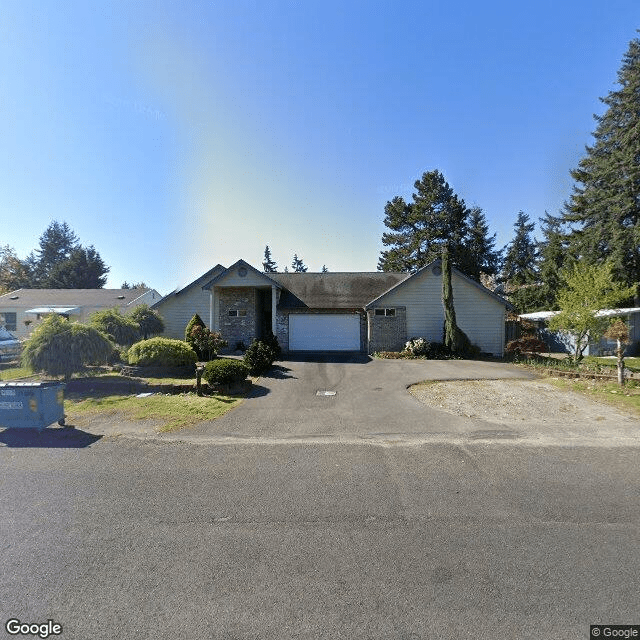
422 122nd Street S., Tacoma, WA 98444
To contact a resident: (253) 537-3190
For more information about senior living options: (866) 208-4318
May Flower Adult Family Home Costs & Pricing
May Flower Adult Family Home offers competitive pricing for its services, with both private and semi-private rooms available at a monthly rate of $3,500. This cost is notably lower than the average rates in Pierce County, which stand at approximately $4,623 for private rooms and $4,264 for semi-private accommodations. Additionally, when compared to the state averages in Washington, which are $4,772 and $4,267 respectively for the same room types, May Flower Adult Family Home presents an attractive option for those seeking quality care without the higher price tag commonly found elsewhere. This combination of affordability and care makes it a noteworthy choice for families looking to provide a supportive living environment for their loved ones.
| Floor plans | May Flower Adult Family Home | Pierce County | Washington |
|---|---|---|---|
| Private | $3,500 | $4,623 | $4,774 |
| Semi-Private | $3,500 | $4,264 | $4,272 |
Senior living communities with a similar price nearby
-
from -$500 / mo

Hummingbird Homecare
$3,000 / month12.3 miles away -
from +$500 / mo

Riverton Home Care
$4,000 to $5,000 / month23.9 miles away -
from +$500 / mo

Canterwoods Estate AFH
$4,000 to $5,500 / month20.2 miles away -
from -$500 / mo
Home Care in Kent Inc.
$3,000 to $3,500 / month19.9 miles away -
About the same

Twin Lakes Haven Adult Family Home
$3,500 to $8,000 / month12.4 miles away
Overall Review of May Flower Adult Family Home
Pros
 They bring music, dancing, and engaging activities, creating a lively, home-like atmosphere for residents.
- The home feels like a true home—personal, intimate, and where every resident is lovingly cared for.
- They decorate for each season and give thoughtful gifts to residents.
- The caregivers are loving and capable, with cooking that adds warmth to the home.
- The Christian home offers a loving, spirit-filled family environment where residents feel like part of the family.
- The staff provide attentive medical care and nourishment for residents’ hearts and souls, treating them like their own.
- The home is spotlessly clean with comfortable indoor and outdoor spaces for socializing.
- The staff communicate well, keeping families updated and coordinating with other medical providers.
Review
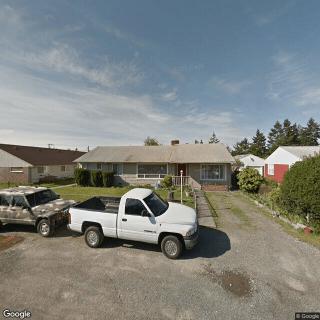
May Flower Adult Family Home in Tacoma is best suited for families seeking a true home-like setting for an aging parent, where care feels personal, intimate, and hands-on. It excels for residents who value consistent, affection-driven daily interactions, with caregivers who decorate for the seasons, organize social activities, and treat residents as family. The environment is spiritually warm, with a Christian ethos evident in daily rhythms and care philosophy. Residents benefit from frequent engagement, music, dancing, shared meals, and from a caregiver who communicates attentively. For seniors who prefer smaller, less clinical surroundings over a large campus, this community delivers a reassuring sense of belonging and predictability.
Alternatives may be worth considering for families facing higher medical acuity or secular preferences. If the loved one requires robust on-site nursing oversight, frequent skilled interventions, or memory-care specialization, a larger assisted living or memory-care community may deliver more immediate clinical capacity and structured programming. Those who prioritise a non-religious environment or a broader menu of on-site services and residents may find a larger facility more aligned with expectations. Additionally, residents who desire a wide array of amenities and a bustling campus atmosphere might feel constrained by the intimate scale of a single-family home like May Flower.
The major strengths lie in the home’s intimacy and the staff’s devotion. The setting feels like a living room with the care of a devoted family, where Nadya Spinu and her team clearly invest in residents’ happiness and comfort. The staff’s attentiveness translates into high-quality meals, frequent affection, and consistent social engagement, music, activities, and opportunities for meaningful interaction. Cleanliness is evident, with well-kept indoor and outdoor spaces. The home’s approach to care emphasizes not only physical needs but emotional and spiritual well-being, with regular communication with families, well-organized medical records, and proactive coordination with other providers. These elements collectively create trust that the resident will be treated with dignity and warmth.
The few potential drawbacks stem from scale. As a smaller adult family home, resources are more limited than in larger facilities, which can affect the immediacy of specialized medical services or the breadth of programming. If a resident’s needs evolve toward complex skilled nursing, or if 24/7 RN presence becomes essential, this format may require transitions. The strong Christian orientation, while a blessing for those aligned with the ethos, may not suit every family or resident, and secular-minded families should verify alignment with personal values. Finally, the homey atmosphere can mean fewer private spaces or quieter times compared to larger campuses, which matters for residents who value maximum privacy or ultra-low stimulation.
Yet the positives tend to offset these trade-offs compellingly. The personal attention and consistent caregiver presence reduce anxiety for residents and families, while the sense of family fosters emotional security that improves quality of life. Nadya Spinu and the Spinu family’s hands-on care, transparent communication, and meticulous record-keeping mean medical providers can coordinate care smoothly, lowering risk of lapses. The homey atmosphere, seasonal decor, thoughtful gestures, and meaningful social touches create daily routines that feel predictable and comforting, which is especially valuable for memory support and mood stability. In short, emotional well-being and social connectedness are the core strengths that reinforce the practical care delivered.
For families prioritizing warmth, spiritual resonance, and a truly home-like model in Tacoma, May Flower offers a strong, practical choice. It excels for residents who want to feel seen, loved, and actively engaged in daily life. Before deciding, confirm that medical needs can be met within the home’s framework, meet the caregiver-owner in person, review care schedules, and observe the resident’s interactions with staff. If a loved one requires more intensive clinical services, or if secular or highly specialized memory-support programs are non-negotiable, alternatives should be explored. Overall, this community stands out as a dependable path to dignified, affectionate elder care in a familiar, welcoming setting.
 Board and Care Home
 Private
 Seattle-Tacoma International (22 miles away)
 Diabetic care
 High acuity care


 Understanding the Nuances of Palliative Care and Hospice: A Comprehensive Exploration
 Fecal Incontinence in Older Adults: A Comprehensive Guide
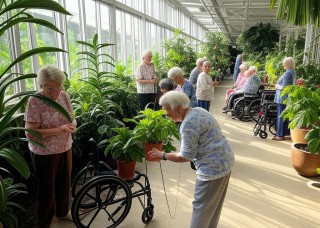 Nurturing Well-Being Through Gardening: A Detailed Guide for Senior Enthusiasts