

7979 State Road, Philadelphia, PA 19136
For more information about senior living options: (866) 208-4318
Overall Review of Riverview Personal Care Home
Pros
 The staff were competent and genuinely cared about residents.
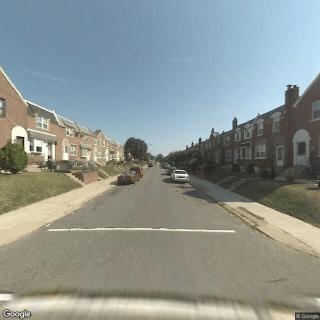
- The facility is nicely located with easy access and convenient parking.
- The rooms are comfortable and provide privacy for visitors and residents.
- Residents are treated with respect by the care team.
- The meals are better than typical hospital fare.
- The property is kept fairly clean and residents make lots of friends there.
Cons
 The place is cringe-inducing.
 - There are alleged criminal and cruel incidents associated with it.
- They would not want their worst enemy there.
- It is described as a government-run facility where belongings are stolen.
- Residents' belongings were stolen, including items from a refrigerator, even a frozen pie.
- Personal belongings went missing after a resident passed away.
Review
Riverview Personal Care Home in Philadelphia is best suited for families seeking a practical, safety-conscious option for a loved one who needs daily living assistance but does not require skilled nursing or memory-care specialization. The community shines for those who prize convenient access to major routes and easy family visits, with on-site parking and a clearly structured environment. It works best for residents who can function with regular supervision, respectful staff, and predictable routines, where privacy in reasonably sized rooms and a straightforward, no-fruss care approach feel reassuring. Those needing advanced medical oversight, complex dementia programming, or highly stringent security measures should consider alternatives, as questions about security and item protection have surfaced in competing experiences.
On the upside, Riverview earns points for a facility feel that conveys stability and competence. The locationā€™s proximity to major roads and straightforward access make visits simple for relatives, and the facility maintains a clear sign-in process that adds a layer of safety without feeling oppressive. Rooms are described as comfortable and of sufficient size, offering private space during visits. The staff is repeatedly described as competent and professional, with a consistent patient-care ethic that translates into respectful treatment of residents. Food, framed as better-than-average hospital fare by some families, helps reduce the friction that can accompany daily living in a care setting, and the overall atmosphere is one of orderly operation and reliability.
Yet the counsel of several families cannot be ignored. One reviewer highlights serious allegations about criminal and cruel treatment, noting that although the evidence was circumstantial, the sentiment of danger persisted in their view. A second review folds in a more pointed safety concern: the perception of theft and material loss, including personal items and even homemade meals brought in for a resident. These narratives, whether rooted in isolated incidents or recurring patterns, create a backdrop of caution. Taken together with the mixed rating spectrum, they emphasize that security, accountability, and transparent incident handling must be central priorities for prospective residents and their families.
The important tension, then, is whether the solid, staff-driven care and accessible location can offset the risk signals around belongings and safety. The positive elements, competent caregivers, privacy for visits, and dependable routines, can translate into a dependable daily life for many residents. When security policies are transparent, inventory controls are enforced, and there is a demonstrated commitment to safeguarding personal belongings, the advantages become tangible counterweights to the concerns raised. In other words, the better Riverview can document and communicate safeguards, the more robust the case for choosing it becomes.
Those who should actively consider alternatives are families seeking a higher level of assurance on security and incident response, or those needing specialized memory-care programming and more robust clinical oversight. If the priority is to avoid even the perception of belongings going missing, or if distrust about management practices is a non-starter, exploring other options with stronger incident reporting, stronger audit trails, and more rigid control of resident personal items is prudent. For others, a structured tour combined with targeted questions about staffing ratios, caregiver turnover, daily activity schedules, meal plans, and grievance handling can yield a clear, substantiated picture.
Bottom line: Riverview offers a solid core of care, accessibility, and resident privacy that can serve many families well. The caveat is that a handful of families report troubling security concerns that cannot be dismissed lightly. Prospective residents should insist on concrete, verifiable policies, such as item inventory controls, incident logs, staff supervision schedules, and third-party reviews, before committing. If those safeguards are visible and credible, Riverview stands as a practical, dependable option for daily living support close to home. If not, the search should continue until a setting with tighter protections and clearer accountability is found.
 107 resident community capacity
 Assisted Living
 Respite Care
 Activities on-site
 Air-conditioning
 Beauty salon
 Cable or satellite TV
 Computer center
 Devotional services off-site
 Dining room
 Fitness room
 Fully furnished
 Gaming room
 Garden
 Housekeeping services
 Indoor common areas
 Kitchenette
 Move-in coordination
 Outdoor space
 Private bathrooms
 Restaurant-style dining
 Small library
 Telephone
 Wellness center
 Wi-Fi/high-speed internet available
 Philadelphia International (16 miles away)
 Community operated transportation
 12-16 hour nursing
 24-hour call system
 Ambulatory care
 Assistance with bathing
 Assistance with dressing
 Assistance with transfers
 Diabetes diet
 Diabetic care
 Medication management
 Mental wellness program
 Special dietary restrictions
 Concierge services
 Planned day trips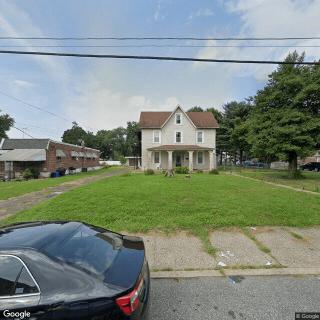







 Medicare Coverage for Assisted Living: An In-Depth Exploration
 Choosing the Right Senior Care: A Detailed Exploration of Assisted Living and Nursing Homes
 Understanding the True Cost of Assisted Living in 2025: A Comprehensive Guide