
2160 Warrensville Rd, Montoursville, PA 17754
To contact a resident: (570) 433-4663
For more information about senior living options: (866) 208-4318
Overall Review of The Meadows Assisted Living
Pros
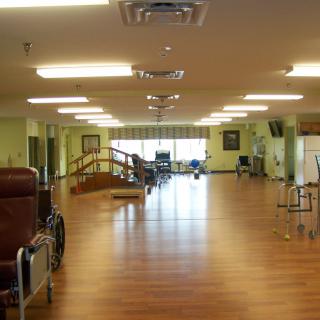
 The facility offers activities for residents with limited mobility.
- Meals and medications are mostly on time.
- Some staff members are friendly.
- The staff is described as friendly and caring.
- The facility is very well run.
- The food is good.
Cons
 The staff make fun of residents in the break room.
- Management has a very bad attitude.
- Staff corrections are poor because they fear losing staff.
- There is not enough staff.
- Medical personnel are only available at very limited times of the day.
- The doctor on call is only available once a month.
- The staff won’t answer simple questions about placing cameras in residents’ rooms.
- Three nurses were observed speaking badly about the grandmother and other residents.
- Management was informed but did little to address the concerns.
Review
The Meadows Assisted Living in Montoursville is best suited for seniors who need help with mobility and daily tasks but do not require intensive medical oversight or specialized memory care. The community lends itself to residents who can participate in structured activities, tolerate routine, and rely on timely meals and medication administration. In practice, the facility earns praise for a generally well-run operation and for staff who are friendly in parts of the campus, with meals that are consistently served on schedule. For families prioritizing a predictable daily rhythm, social programming, and a largely uncomplicated care plan, The Meadows can deliver a competent, livable environment.
Those who should consider alternatives are families facing higher acuity needs. Residents with significant cognitive impairment, frequent behavioral challenges, or conditions demanding frequent on-site medical attention may outgrow what this community can safely provide. The most frequently cited red flags, limited hours for medical personnel, a monthly doctor on call, and apparent staffing shortages, signal that complex nursing care, rapid crisis response, or stringent supervision may not be reliably available. Privacy and governance concerns also emerge in some reviews, suggesting a need for due diligence around leadership responsiveness, transparency, and resident protections before committing.
The positive attributes, reliable meal timing, consistent medication administration, available activities, and pockets of friendly staff, do form a meaningful foundation for daily life. These advantages offset some of the drawbacks by offering stability and social engagement, which are crucial for long-term well-being in a setting where routine matters as much as ramped-up clinical care. For residents who can thrive with companionship, regular dining, and routine oversight of basic needs, the good balance can translate into a comfortable, low-stress living experience. However, the offset is incomplete when medical readiness and behavioral management are central to the resident’s safety and quality of life.
Yet the most consequential concerns cannot be dismissed. Allegations of staff disrespect toward residents, a management environment perceived as having a poor attitude, and a culture where staff corrections seem constrained by fear of turnover point to potential risks in daily safety and dignity. Understaffing compounds these issues, making timely assistance uncertain during busy shifts. The medical support framework, limited on-site hours, and a doctor on call only once a month, creates a blind spot for any situation requiring prompt medical assessment or coordinated care plans. When family questions about privacy, such as room cameras, go unanswered or are treated defensively, trust erodes and care decisions become harder to monitor closely.
To navigate these dynamics, families should come prepared with a concrete set of investigations. Request a current staffing schedule and nurse-to-resident ratios across different shifts, and ask how the campus handles peak times and patient surges. Inquire about the medical services model: the exact hours of nursing coverage, where visits occur, and how chronic conditions are monitored. Seek clarity on dementia and behavior management protocols, including staff training, emergency procedures, and any partnerships with outside specialists. Finally, insist on transparent policies about resident privacy, family communications, and incident reporting, and take the opportunity to observe the facility at multiple times of day to assess responsiveness and warmth firsthand.
In the end, The Meadows offers solid value for families seeking a dependable, socially active environment with predictable meal and medication routines for residents without demanding medical complexity. It is a credible option for those who prize consistency and a pleasant dining atmosphere. However, for anyone facing significant cognitive needs, aggressive behavioral issues, or the expectation of robust on-site medical oversight, alternatives with stronger nursing coverage and more proactive leadership should be pursued. Memory-care focused communities or facilities renowned for higher staff-to-resident ratios and transparent governance are worth comparing, as are in-home support arrangements that can deliver closer supervision without sacrificing independence. The decision will hinge on balancing the importance of daily rhythm and sociability against the imperative for readily available medical care and vigilant, respectful oversight.
 Assisted Living
 Activities on-site
 Devotional services off-site
 Indoor common areas
 Ambulatory care
 Diabetic care
 Meals provided




 When to Transition from Assisted Living to Memory Care: Key Indicators, Steps, and Finding the Right Community
 Assisted Living and Memory Care: Understanding Their Core Differences
 Beyond the Bingo Hall: 50+ Enriching Activities for Seniors in Assisted Living