
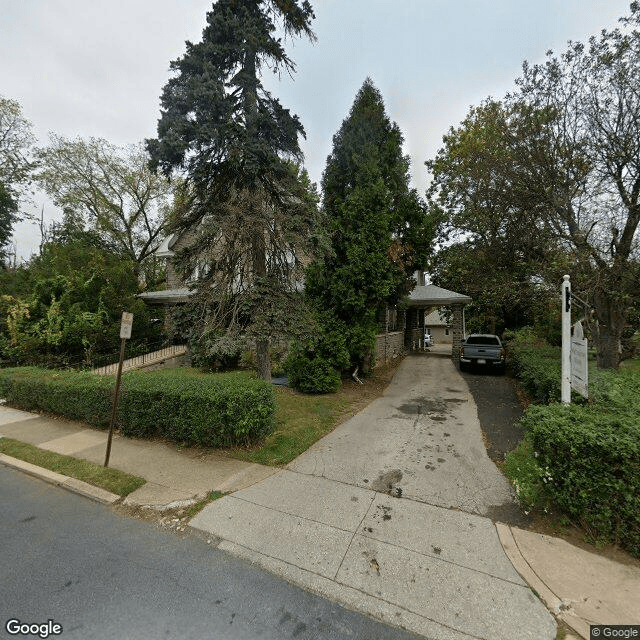
31 West Mill Road, Flourtown, PA 19031
For more information about senior living options: (866) 208-4318
Whitemarsh House Costs & Pricing
Whitemarsh House offers competitive pricing for its various room types when compared to the costs in Montgomery County and across Pennsylvania. For a semi-private room, residents would pay $3,750 per month, which is notably lower than the county average of $4,587, while also being slightly higher than the state median of $3,542. The studio option at Whitemarsh House is priced at $4,950, surpassing both the county's rate of $4,393 and the state's average of $3,737. Finally, for those seeking more privacy with a one-bedroom unit, Whitemarsh House's monthly cost of $6,750 stands out as significantly higher than both the county average of $4,619 and the state average of $4,006. Overall, while some options at Whitemarsh House present a greater financial commitment compared to local and state averages - particularly for private accommodations - the facility offers attractive rates on semi-private rooms that may appeal to budget-conscious individuals.
| Floor plans | Whitemarsh House | Montgomery County | Pennsylvania |
|---|---|---|---|
| Semi-Private | $3,750 | $4,587 | $3,542 |
| Studio | $4,950 | $4,393 | $3,737 |
| 1 Bedroom | $6,750 | $4,619 | $4,006 |
Assisted Living communities with a similar price nearby
-
from +$200 / mo

The Landing of Towamencin
$3,950 to $6,950 / month9.6 miles away -
from +$115 / mo
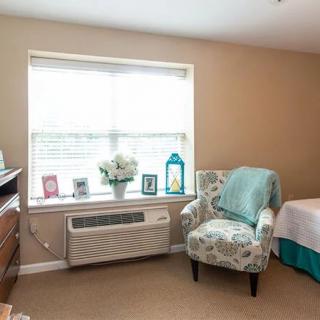
Granville Place
$3,865 to $6,506 / month20.1 miles away -
from -$300 / mo

Brandywine Senior Living at Haddonfield
$3,450 to $4,080 / month17.6 miles away -
from +$445 / mo

Echo Lake
$4,195 to $6,995 / month17.5 miles away -
About the same
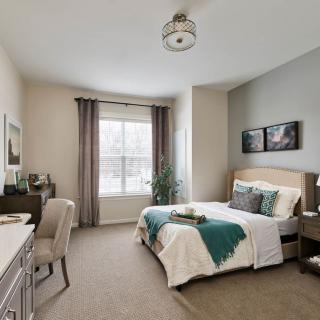
Arbor Terrace Exton
$3,780 to $7,560 / month24.0 miles away
Overall Review of Whitemarsh House
Pros
 The management team is great and the facility is excellent.
- It is a great place.
- The care provided for loved ones is excellent.
- The facility is well-suited for residents who require direction and ADL assistance.
- The residents appear happy.
Cons
 The facility needs to be shut down.
- It is dirty.
- The residents have been neglected.
- The food is always cold.
- There is mold.
- There are bugs.
- The management is incompetent or totally uninterested in the residents.
- They provide no activities for the residents.
- The place should be shut down by Human Services.
Review
Whitemarsh House is best suited for seniors who need direction, help with ADLs, and a defined daily routine, provided they can manage a substantial amount of stairs. It serves residents who want hands-on staff support and clear structure more than independent living. For anyone seeking a pristine, highly polished environment with abundant social programming or for those who cannot navigate stairs, this community is unlikely to meet expectations and alternatives should be explored.
Those weighing other options should consider environments that emphasize cleanliness, consistent dining quality, and robust activity calendars, or facilities that offer easy accessibility and more extensive memory-care programming. If mobility limitations, cleanliness standards, or engaging daily activities are non-negotiables, it makes sense to look at competing communities in the area. Prospective residents who require minimal staff oversight or a highly active social scene may also want to broaden choices before committing here.
On the upside, several reviewers point to a capable management team and a facility that feels solid in purpose. The sense that residents receive care in a structured setting is a common through-line, and those who need direction and ADL support often report that staff provide attentive, practical assistance. Coupled with a generally orderly, purpose-built environment, these positives can translate into reliable day-to-day stability for residents who prioritize safety and routine over ambience or high-end amenities. In other words, for families prioritizing consistent caregiving and predictable schedules, the core offering can be meaningful.
However, the strongest drawbacks are substantial and nontrivial. Long-term concerns center on cleanliness and upkeep, with explicit complaints about dirt, mold, and pests, plus reports of meals that are frequently cold or unappealing. The critique that the environment feels neglected and the care routine lacks vitality, manifesting as long waits or idle time for residents, cannot be dismissed. Combine these cleanliness and dining issues with accusations that management may be disengaged, and the risk to resident well-being rises. The lack of meaningful activities compounds the perception of stagnation and diminishes quality of life for residents who crave engagement.
The key question is whether the positives can realistically offset the negatives. If a family values dependable staffing, direct supervision, and a structured day above all else, and if the facility’s physical conditions and dining quality can be improved through explicit action plans, this community can still function as a sound caregiving home. The strategic lever is proactive, transparent management that commits to rapid housekeeping improvements, reliable food service standards, and a robust activities program. Without decisive improvements in cleanliness, dining, and engagement, the negatives tend to overwhelm the positives and make other options more compelling.
In the end, a decisive approach is required. Conduct a thorough visit focused not only on the personal warmth of staff but also on the cleanliness standards, kitchen operations, and the activity schedule. Request to review recent remediation actions, housekeeping logs, and a current menu sample. Meet the executive team and department heads to gauge responsiveness and accountability. Confirm stair access plans for mobility concerns and ask about dementia-capable programming if relevant. If these elements align and a plan is in place to elevate cleanliness and resident engagement, Whitemarsh House can be a viable, steady choice. If not, alternatives in the area should be prioritized to avoid compromising safety, dignity, and daily vitality.
 26 resident community capacity
 Assisted Living
 Cats allowed
 Dogs allowed
 Activities on-site
 Bath tubs
 Beauty salon
 Cable or satellite TV
 Devotional services off-site
 Dining room
 Fully furnished
 Garden
 Housekeeping services
 Indoor common areas
 Kitchenette
 Move-in coordination
 Outdoor space
 Restaurant-style dining
 Small library
 Telephone
 Wi-Fi/high-speed internet available
 Philadelphia International (16 miles away)
 24-hour call system
 Ambulatory care
 Assistance with bathing
 Assistance with dressing
 Assistance with transfers
 Diabetes diet
 Diabetic care
 Medication management
 Mental wellness program
 Special dietary restrictions



 Understanding Medicaid Coverage for Assisted Living: A Comprehensive Guide
 How and When Medicaid May Cover Assisted Living Costs
 A Detailed Exploration of Assisted Living Medicaid Waivers Across the United States