

2156 Brookhurst St, Medford, OR 97504
To contact a resident: (541) 734-5533
For more information about senior living options: (866) 208-4318
A Touch Of Grace Costs & Pricing
A Touch Of Grace offers a private room at a monthly cost of $4,000, which positions it above the average pricing in both Jackson County and the wider state of Oregon. In Jackson County, the average cost for a similar private room is approximately $3,899, while statewide the figure drops further to around $3,424. This suggests that while A Touch Of Grace may be on the higher end of the spectrum, its pricing reflects potentially enhanced services or amenities that set it apart in this competitive market. It's important for prospective residents and their families to weigh these costs against the specific offerings and quality of care available at A Touch Of Grace to ensure they find the best fit for their needs.
| Floor plans | A Touch Of Grace | Jackson County | Oregon |
|---|---|---|---|
| Private | $4,000 | $3,899 | $3,424 |
Senior living communities with a similar price nearby
-
from -$480 / mo

Arbor House Of Grants Pass
$3,520 to $3,780 / month24.4 miles away -
from -$705 / mo

Pioneer Village
$3,295 to $4,070 / month5.8 miles away -
About the same

Weatherly Court
$3,995 to $5,995 / month1.2 miles away -
from -$620 / mo

Brookdale Medford
$3,380 to $4,060 / month2.5 miles away -
About the same
Ashley Manor Arrowhead
$4,100 / month1.7 miles away
Overall Review of A Touch Of Grace
Pros
 One of the best memory care facilities in town.
- The staff are genuinely caring and the facility is well-managed.
- The environment is clean and residents are happy and well cared for.
- The owners and staff are amazing.
- The facility maintains high care standards and has strong relationships with healthcare professionals.
- The staff are friendly and welcoming to visitors, creating a great environment for loved ones.
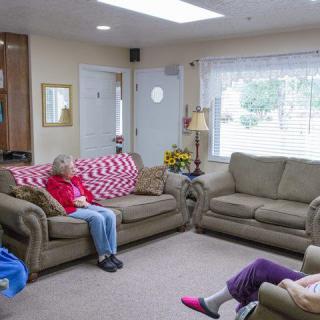
- The facility has a welcoming, home-like atmosphere.
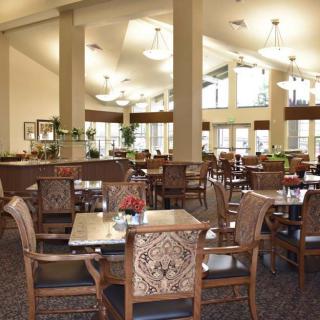
- The staff ensure residents receive their medications and are provided with healthy meals.
Cons
 The facility has poor and rude management.
- The staff are described as very unprofessional with reports of sketchy practices, leading some to say they wouldn’t bring their loved ones there.
- The place is deemed not suitable for elderly family members due to bad management that treats its employees poorly.
Review
A Touch Of Grace in Medford is best suited for families seeking a memory-care setting that feels personal, attentive, and reliably well-run. The community earns its reputation through a home-like atmosphere, clean surroundings, and staff who residents and their families describe as genuinely caring. For memory care, the emphasis is on safeguarding dignity while keeping routines familiar, promoting small daily successes, and fostering social engagement. When the care team is described as warm and approachable, and the facility is consistently labeled as well-managed, it becomes a practical option for seniors who respond to steady, compassionate supervision rather than highly clinical or one-note programming. This is a setting where the human connection is a central asset.
Those who may want to consider alternatives are families that prioritize consistent administrative stability and transparent leadership over every other consideration. Several reviews flag management as a potential weakness, calling out rude or unprofessional behavior by leaders. That combination can be a red flag if, in practice, it translates into inconsistent problem-solving, uneven staff supervision, or slow responsiveness to concerns. For families needing highly structured clinical oversight, rigorous escalation processes, or a leadership culture that demonstrably supports staff in real time, it’s prudent to compare with other memory-care providers that publish clear governance practices and turnover data. A visit and direct conversations with the owner or administrator can illuminate whether leadership has matured beyond past issues.
On the pro side, the strongest case rests with the caregiving environment. Reviewers consistently highlight supportive, friendly staff and a culture of genuine care, with residents appearing happy and well looked after. The facility’s cleanliness and the perceived quality of daily care, medication management, healthy meals, and attentive supervision, are repeatedly referenced as core strengths. The facility also benefits from favorable relationships with other healthcare providers and a reputation for meeting high care standards. The combination of a receptive staff, a clean, orderly setting, and demonstrable kindness creates a foundation that can offset gaps in other areas when families are weighing day-to-day quality of life for a loved one.
However, the reported concerns about management cannot be dismissed, and they complicate the balance of strengths. A few reviews portray the leadership as inconsistent or even problematic, which raises questions about how quickly issues are addressed and how staff morale is nurtured over time. The offset here hinges on recent stability: if leadership has turned a corner, if owner involvement has increased, and if staff turnover has decreased, the pros become more persuasive. Prospective families should seek concrete assurances: current leadership’s approach to caregiver supervision, grievance handling, ongoing training, and a transparent communication protocol for families. Without those assurances, the risk of friction remains a meaningful consideration.
From a practical standpoint, several operational details matter when evaluating A Touch Of Grace for memory-care needs. Medication management appears competent, with caregivers involved in daily routines and a focus on nutritionally sound meals. The home-like atmosphere and the ability for families to visit unannounced without friction are notable positives for those who value openness and ongoing family involvement. Prospective residents should ask about staffing ratios during peak activity times, scope of memory-care programming (cognitive engagement, orientation activities, and safety features), and how emergencies are escalated. Also worth exploring is how care plans are developed and updated, who writes them, and how families are kept informed about changes in health status or daily routines.
In the end, A Touch Of Grace offers a compelling blend of warmth, attentiveness, and practical care for memory-impaired seniors who respond to a steady, compassionate approach. The strongest argument rests on the consistent, caring staff and a clean, well-run milieu that supports daily living and dignity. The caveat is leadership quality: prospective families should verify current management stability, responsiveness, and accountability before committing, especially if prior experiences with inconsistent administration have affected trust. If leadership demonstrates reliable, proactive engagement and families complete a thorough on-site assessment, this community can be an excellent match for a loved one who thrives on personal connection within a structured, supportive framework.
 Board and Care Home
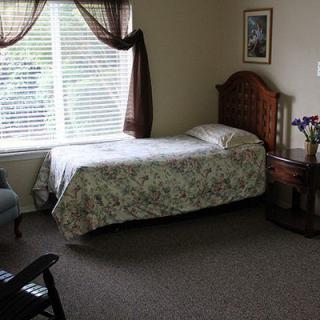
 Private
 Private bathrooms
 Rogue Valley International (2 miles away)
 Diabetic care





 Exploring Palliative Care in the Home: A Comprehensive Overview
 Comprehensive Insights into Palliative Home Care: What It Is and What to Expect
 Skilled Nursing Facilities vs. Nursing Homes: Making Sense of the Differences