
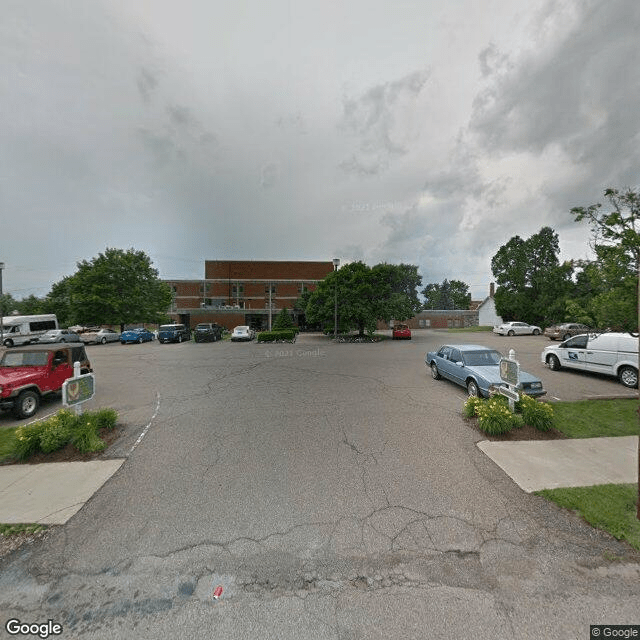
201 N Main St, Mount Vernon, OH 43050
To contact a resident: (740) 397-3897
For more information about senior living options: (866) 208-4318
Living Center Inc Costs & Pricing
Living Center Inc offers competitive pricing for its accommodations compared to both Morrow County and the broader state of Ohio. For a one-bedroom unit, residents can expect to pay $2,311, significantly lower than the county average of $3,303 and the statewide average of $3,712. The studio option is also attractively priced at $2,783, again undercutting the county rate of $3,303 and the state rate of $3,727. Interestingly, the two-bedroom units are priced at $3,814 in alignment with Morrow County's pricing but remain higher than Ohio's average of $3,501. Overall, Living Center Inc provides a favorable financial landscape for potential residents seeking quality living arrangements while offering considerable savings compared to nearby alternatives.
| Floor plans | Living Center Inc | Morrow County | Ohio |
|---|---|---|---|
| 1 Bedroom | $2,311 | $3,303 | $3,712 |
| Studio | $2,783 | $3,303 | $3,727 |
| 2 Bedrooms | $3,814 | $3,814 | $3,501 |
Assisted Living communities with a similar price nearby
-
from +$243 / mo

Mansfield Place
$2,554 to $4,134 / month21.8 miles away -
from +$414 / mo
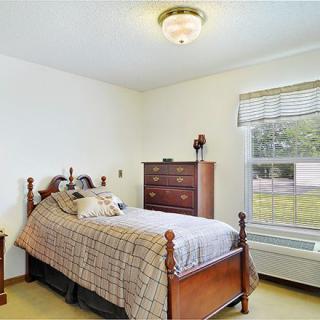
Hearth Brook
$2,725 to $2,950 / month21.5 miles away -
from -$211 / mo
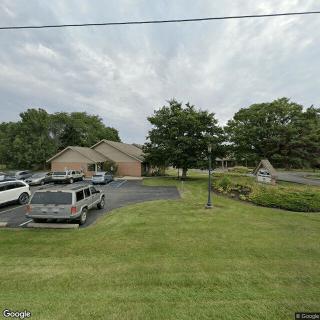
SharonBrooke Assisted Living
$2,100 to $3,200 / month22.4 miles away -
from +$214 / mo

The Waterford At Mansfield
$2,525 to $4,295 / month22.8 miles away -
from -$151 / mo

Randall Residence of Newark
$2,160 to $4,000 / month22.2 miles away
Overall Review of Living Center Inc
Pros
 The staff are nice, friendly, caring, and helpful, treating residents like family.
- The entire team—from housekeeping to PT to nursing—provides attentive, compassionate care.
- Check-in and settling in are easy thanks to everyone's help.
- Residents form bonds and share smiles, with caregivers who are warm and supportive.
- Nurses offer warmth through hugs and even tears during departures.
- The center follows up after discharge with calls to check on recovery.
- The Levering family's long history in health care is highlighted as a reassuring part of the care.
Cons
 The worst part was getting ready to leave.
- Their insurance booted them out, forcing an early departure.
- They were sad to leave new friends so quickly.
Review
This community is best suited for seniors who want a rehabilitation-forward environment where staff treat residents like family and everyday care feels personal and attentive. It shines for individuals transitioning from hospital care who value a warm, relationship-centered culture, easy check-in processes, and a welcoming atmosphere that makes recovery and reorientation feel supported. The strongest fit is someone who prioritizes meaningful human contact from caregivers across the spectrum, from housekeeping and dining staff to therapists and nurses, along with steady communication with family. Those seeking a facility with intensive, around-the-clock medical management, or specialized memory-care programming, may find the fit less optimal and should explore alternatives.
Carefully consider alternatives for residents with high medical acuity or complex clinical needs that demand constant supervision. If the priority is a setting with extensive, on-site medical programming beyond rehabilitation sessions or a community that offers specialized memory-care services, another option may be more appropriate. Individuals who prize a broad menu of social activities, varied enrichment programming, or a facility with a large campus footprint should assess whether this community’s offerings meet those expectations. Additionally, because discharge timing can be influenced by insurance coverage, families should plan for potential stay length variability and have a clear post-acute plan.
The principal advantages center on a consistently warm, hands-on staff culture and a proven focus on rehabilitation. Residents benefit from attentive support across all staff roles, creating a sense that care is coordinated and personal. The nursing and therapy teams are highlighted as approachable and well-integrated, contributing to smoother recoveries after procedures like hip surgery. The intake and settling-in process is described as easy, with staff who help new residents feel comfortable quickly. The emotional warmth, present in hugs, shared moments, and ongoing check-ins, helps mitigate anxiety during transition and fosters faster early engagement in therapy.
These strengths offset certain drawbacks by delivering tangible, functional gains and reassurance. The strongest offset comes from the rehab-centric approach itself: clear pathways, regular PT and nursing touchpoints, and consistent, genuine communication reduce the risk of frustration and readmission. Ongoing post-discharge outreach demonstrates a commitment to continuity of care, helping families feel supported as residents return home or transition to next-care settings. Yet the primary con, discharge driven by insurance timelines, remains a factor to confront. That reality underscores the need for careful financial planning and explicit discussions about length-of-stay policies before admission.
Families should verify several practical details during tours and conversations. Inquire about current therapy staffing levels, the daily therapy schedule, and how weekends are handled. Ask about staff-to-resident ratios across shifts, the availability of a dedicated rehab wing if applicable, and how transitions to aftercare are coordinated with external providers.Clarify what is included in the monthly rate (therapy hours, transportation, meals, and activities) and what costs could arise if a stay is shortened or extended. Seek recent references from other families about both rehab outcomes and how well the community communicates during the discharge process. Understanding these specifics will illuminate how well the warm culture translates into ongoing, reliable outcomes.
In the end, this Mount Vernon option stands out for families seeking a compassionate, rehab-focused environment with a family-like culture and strong bedside presence. It is a compelling choice for those who measure success by daily interactions, progress in functional goals, and reliable post-discharge contact. However, for residents needing sustained, high-acuity medical management, expansive social programming, or dementia-specific services, alternatives should be explored to ensure alignment with long-term care needs and financial realities. A thoughtful visit, careful questions about care goals, and a clear comparison with neighboring communities will reveal whether this setting can meet the anticipated trajectory of recovery and daily living.
 Assisted Living
 Activities on-site
 Devotional services off-site
 Indoor common areas
 Ambulatory care
 Diabetic care
 Meals provided



 An Extensive Exploration of the VA Aid and Attendance Benefit
 Senior Transition Services: Understanding Their Role, Cost, and Importance
 Exploring the Path to Senior Living: A Comprehensive Look at Independent Living and Assisted Living