
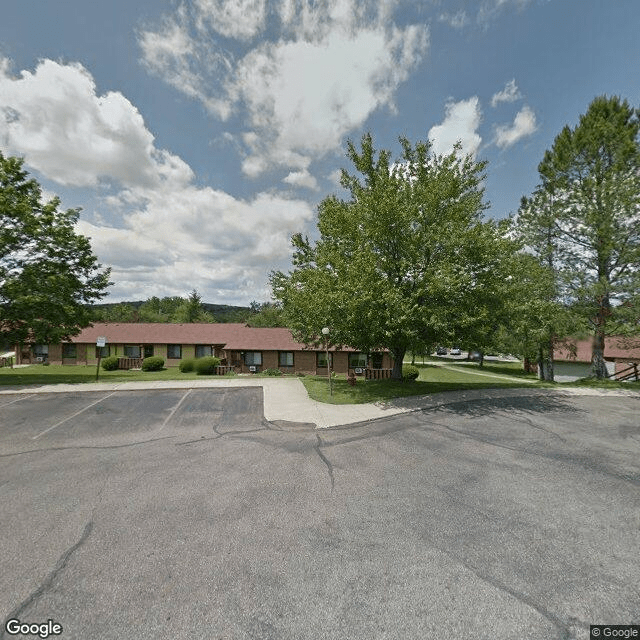
1000 Beech St, Mount Vernon, OH 43050
To contact a resident: (740) 392-4992
For more information about senior living options: (866) 208-4318
Overall Review of Hiawatha Senior Village
Pros
 Her family cleaned and left the apartment in proper condition.
- The reviewer believes improvements to the apartment would be welcome.
Cons
 The deposit was not refunded for weeks despite assurances from the owner.
- The receptionist was the most rude person experienced by the reviewer.
- The company is terrible and not worth recommending to anyone to rent from them.
- They take advantage of seniors' money and threaten eviction if rent isn't paid.
- They refuse to lock the rec room doors at night, leaving personal information accessible.
- The rec room is no longer allowed for senior gatherings and is left unlocked.
- The owners are very rude and disrespectful, and an audit for stealing from seniors is anticipated.
- Management and maintenance are not available in emergencies, and move-out cleaning and repairs are charged at inflated rates.
Review
Hiawatha Senior Village in Mount Vernon is best suited for residents who can tolerate a highly hands-on, adversarial-feeling management culture and who have outside advocacy to supervise finances and paperwork. The community does not present as a responsive, service-oriented environment; rather, it appeals to those whose families are prepared to scrutinize deposits, leases, and routine charges and to intervene when rules and practices feel punitive or unclear. For a senior who expects dependable maintenance, respectful staff, and transparent financial handling, this village is unlikely to meet those basic expectations.
Explicitly, this is a setting many should consider alternatives. Seniors who rely on predictable rent, prompt maintenance, and a sense of security in daily operations will want to look elsewhere. Families seeking transparent deposit refunds, consistently courteous administration, and a safe, well-maintained common area will find the few redeeming moments here overshadowed by persistent concerns about how residents are treated, how funds are managed, and how issues are resolved. For anyone without strong outside advocacy, the risk of ongoing frustration and financial ambiguity is too high to ignore.
The limited positives do not meaningfully offset the most painful drawbacks. Some tenants appear to have endured long tenures, which may be taken as a sign that moving incurs its own costs, but that endurance does not translate into a reliable experience for new residents. The operational climate is described as rigid and sometimes hostile to residents’ needs, with policies that can feel punitive or arbitrary. In practical terms, the sparse advantages, when they surface, are insufficient to counter the harm caused by opaque financial handling, contentious lease enforcement, and a pattern of minimal responsiveness from management and maintenance, especially in emergencies or urgent situations.
Primary concerns hit at the core of daily living and financial trust. The most troubling episodes revolve around money: stories of deposits not being refunded after a family funeral, and rent practices that appear to adjust mid-contract with threats of eviction for nonpayment. Such experiences erode confidence in the community’s stewardship of residents’ lifetime savings and daily expenses. Privacy and safety habits also raise alarms: personal information and office materials reportedly sit in open areas, rec rooms are left unlocked, and residents are discouraged from gathering in spaces meant for communal use. The sense that paperwork and contractual terms are uncertain or inconsistently enforced compounds anxiety around aging in place here.
Beyond finances and safety, a culture of restrictive rules and perceived busybody oversight colors every interaction. Residents describe “petty rules” and a climate that makes people feel old rather than valued, with limited flexibility for reasonable personal modifications to living spaces. When emergencies arise, management and maintenance are reportedly unavailable, a reality that cannot be ignored by anyone considering assisted living or even basic senior housing. Move-out charges, claiming inflated cleaning and repair costs, further sting departing residents and erode trust in the community’s stated commitments. The combination of these factors creates an environment where seniors and their families must stay perpetually vigilant to protect interests and well-being.
In weighing the decision, the prudent path is to steer toward alternatives unless one is prepared for aggressive outside oversight and a willingness to accept an uncertain, resource-constrained experience. For families evaluating options, prioritize communities with transparent financial practices, consistently accessible management, prompt maintenance, and a culture that treats residents with dignity and respect. If the decision is to pursue Hiawatha Senior Village, approach with a clear plan: designate a trusted advocate to handle all leasing terms, deposits, and documentation; insist on written policies with enforceable timelines; and require a detailed emergency-response protocol and accountability for staff. Otherwise, it is prudent to focus on communities where resident well-being and financial integrity are non-negotiable standards.
 Active Adult Communities (55+)
 Activities on-site
 Devotional services off-site
 Indoor common areas
 Ambulatory care
 Diabetic care
 Meals provided





 Understanding the Nuances of Palliative Care and Hospice: A Comprehensive Exploration
 Fecal Incontinence in Older Adults: A Comprehensive Guide
 Nurturing Well-Being Through Gardening: A Detailed Guide for Senior Enthusiasts