
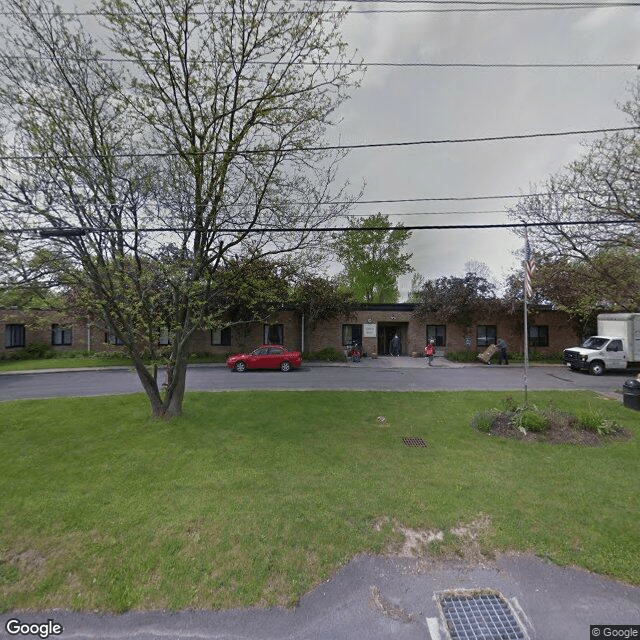
8939 Oakland Street, Weedsport, NY 13166
For more information about senior living options: (866) 208-4318
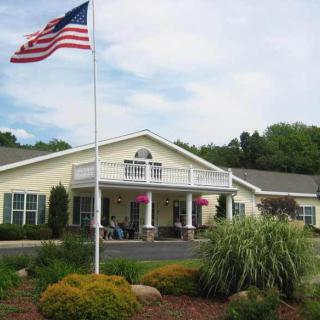
Overall Review of Evergreen Heights
Pros
 The staff are nice.
- There are plenty of activities.
- Meals are home-cooked by volunteers.
- An elderly resident has thrived there.
- The resident only needs minimal help.
Cons
 The administrator is more concerned with keeping beds full than addressing issues with residents who refuse to shower, instigate fights, and scream as they wander the halls and property at all hours, usually high on illegal drugs.
- The good staff catch all the flack, while the staff that shirks their duties get all the rewards.
- The good ones get fired, and the great ones are forced to quit.
- The menu determines the day of the week, with the same meal served every week.
- The dietitian doesn’t care about residents’ food allergies.
Review
Evergreen Heights in Weedsport, NY is best suited for seniors who are comparatively independent and value social engagement, with families able to stay actively involved to offset questions about day-to-day management. The community’s redeeming feature appears to be the presence of friendly staff and a steady rhythm of activities that keep residents engaged. A narrative in the reviews suggests that, for some residents, companionship and home-style meals, often organized or supported by volunteers, deliver meaningful quality of life. Families with modest care needs who want a lively social calendar and are prepared to advocate for basic safety and consistency will find this setting workable.
However, those with significant safety or medical needs should seriously consider alternatives. The reviews describe ongoing concerns about behavior and supervision, residents who refuse to shower, instigate fights, or wander at all hours, sometimes under the influence of illegal substances. This signals potential gaps in behavioral management, oversight, and intervention when crises arise. For seniors with dementia, wandering tendencies, aggressive or disruptive behaviors, or complex mobility requirements, Evergreen Heights may not offer the level of supervision or clinical responsiveness that such conditions demand. Families prioritizing a stringent safety net and predictable routines will likely want to look elsewhere.
The positives do not fully offset the major drawbacks. On the plus side, the staff is frequently described as nice and responsive in ordinary moments, and there is a steady stream of activities and social opportunities that can lift mood and provide meaningful interaction. The notion of home-cooked meals prepared by volunteers adds a comforting, family-like feel to daily life for some residents. Yet these strengths struggle to compensate for concerns about administration’s priorities, turnover among frontline workers, and perceived inequities in how accountability is enforced. When the focus appears to be on occupancy metrics rather than addressing resident-specific issues, trust and consistency in care can erode quickly.
Management dynamics emerge as a decisive fault line. Reported patterns, good staff bearing the brunt of criticism while underperforming colleagues are not retained, or even pushed out, create an unstable care environment characterized by uneven service quality. The implication is not merely occasional lapses but a culture where reliability and follow-through may vary by shift, day, or who is on duty. For families, that translates into a higher burden of monitoring, frequent inquiries, and a willingness to push for answers that should be standard operating procedure. Such a climate makes it harder to predict daily experience or to rely on steady routines essential for health and safety.
The lived experiences among reviewers diverge sharply. One account lauds a caring environment where an elderly relative thrives, implying that in the right circumstances Evergreen Heights can feel almost like a second home with sufficient support and affection. The other accounts, though, paint a picture of a facility wrestling with safety, consistency, and personalization, elements that increasingly matter as care needs rise. This split signals that outcomes at Evergreen Heights may hinge on staffing levels, the specific shift, and the ability of families to advocate effectively. Prospective residents should weigh the scale of social opportunity against the risk of management and safety gaps.
Bottom-line guidance centers on a disciplined decision process. Visit multiple times, observe interactions during meals and activities, and request unfiltered conversations with front-line staff and a nurse or administrator about supervision ratios, incident history, and how behavioral issues are managed. Ask for transparent staffing schedules, turnover data, and real-world examples of how dining requests or dietary restrictions are handled. For families with residents who are relatively stable, socially oriented, and able to participate in ongoing advocacy, Evergreen Heights may be a reasonable match. For anyone whose loved one requires robust clinical oversight, strict safety protocols, or highly personalized care plans, exploring alternatives with stronger risk management and higher consistency is advisable.
 60 resident community capacity
 Assisted Living
 Activities on-site
 Air-conditioning
 Beauty salon
 Cable or satellite TV
 Computer center
 Devotional services off-site
 Dining room
 Fitness room
 Fully furnished
 Gaming room
 Garden
 Housekeeping services
 Indoor common areas
 Kitchenette
 Move-in coordination
 Outdoor space
 Private bathrooms
 Restaurant-style dining
 Small library
 Telephone
 Wellness center
 Wi-Fi/high-speed internet available
 Syracuse-Hancock International (24 miles away)
 Community operated transportation
 12-16 hour nursing
 24-hour call system
 Ambulatory care
 Assistance with bathing
 Assistance with dressing
 Assistance with transfers
 Diabetes diet
 Diabetic care
 Medication management
 Mental wellness program
 Special dietary restrictions
 Concierge services
 Planned day trips


 Assisted Living and Memory Care: Understanding Their Core Differences
 Beyond the Bingo Hall: 50+ Enriching Activities for Seniors in Assisted Living
 Understanding the Distinctions: Assisted Living and Memory Care Explained