

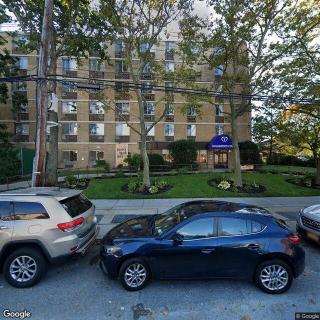
18618 Hillside Ave, Jamaica, NY 11432
To contact a resident: (718) 468-2500
For more information about senior living options: (866) 208-4318
Overall Review of Personal-Touch Home Care Inc
Pros
 The coordinator helped the kid get the right services.
- The kid is verbal and has improved socially.
- The guidance provided by the agency helped set them on the right path.
- Two caregivers at Personal Touch Home Care were particularly liked.
- The school was very good and excellent.
Cons
 The agency was the worst ever and very unprofessional.
- The agency was terrible and irresponsible, and it was hard to reach, leaving customers very disappointed.
- The other caregivers did nothing.
- There was a waiting list to enter the program.
Review
Personal-Touch Home Care Inc in Jamaica, NY is best suited for families seeking long-term, in-home support for a child or young person with developmental needs who can work with a stable, relationship-driven coordinator and who can tolerate program wait times. The defining strength is continuity: the same coordinator has been with the family for eight years, guiding them to the right services as needs evolve. That kind of sustained advocacy matters when navigating complex care options, and it often translates into tangible gains for a child, including better communication and social engagement as seen in a reported case where progress tracked back to timely, focused guidance.
But this agency is not for everyone. Families that prize rapid, glass-clean communication and consistently high caregiver performance from every visit may want to consider alternatives. The reviews reveal a mixed experience with responsiveness and professionalism: some families encountered difficulty reaching the agency or obtaining timely information, with one or two accounts labeling the operation as “unprofessional” or “terrible” in terms of consistency and reliability. For households where immediate, dependable back-and-forth is non-negotiable, other providers or larger organizations with structured client services may deliver greater predictability.
The strongest pro, the long-tenured coordinator, sometimes compensates for other shortcomings, but it does not fully erase risk. When the assigned caregiver team is praised (a couple of caregivers stood out as genuinely helpful), that depth of trust and reliability can make a real difference in daily life and overall progress. However, the flip side is stark: other caregivers were described as not doing enough, which introduces inconsistency into day-to-day support. In practice, the coordinator’s advocacy can bridge gaps, but families should not assume uniform quality across all staff or error-free operations.
Access to specialized programs adds another layer of complexity. Families are advised to inquire early about programs like Horizon or Nest, especially for children who are intellectually advanced or have particular diagnoses. The existence of a waiting list means intake timing can be unpredictable, potentially delaying critical services. This is a meaningful caveat for families planning around school enrollments, therapy milestones, or transitional needs. Prospective clients should approach intake with a concrete timeline, a request for program-specific wait estimates, and a plan B if wait times stretch.
From a decision-making standpoint, the agency’s value hinges on the right fit: a family that prioritizes sustained advocacy and personalized care, and who can tolerate variability in staffing and possible delays, will likely get meaningful benefit. Conversely, when the key priority is consistent, prompt, and uniform caregiver performance, or when program access must be guaranteed within a tight schedule, alternatives are worth exploring. The reality is that this provider can deliver exceptional, tailored support through a trusted coordinator, but it requires accepting some level of risk around responsiveness and caregiver consistency.
For families proceeding with Personal-Touch Home Care, a practical path is essential. Initiate with a candid intake discussion centered on the current needs, the expectations for caregiver engagement, and the anticipated timeline for any targeted programs. Request a specific caregiver match and a clear schedule, plus a written plan detailing who will be the day-to-day contact and how communications will be handled. Seek references from other families with similar needs and ask for concrete response-time benchmarks. Finally, evaluate the experiences during a defined trial period and be prepared with alternatives or supplemental supports if gaps in staffing or access arise.
 John F Kennedy International (5 miles away)






 Comprehensive Look at Senior Blood Pressure Charts: Normal and Elevated Levels by Age
 Top Canine Companions for Older Adults
 Comprehensive Guide to Blood Pressure Charts for Older Adults: Understanding Normal and High Readings by Age