
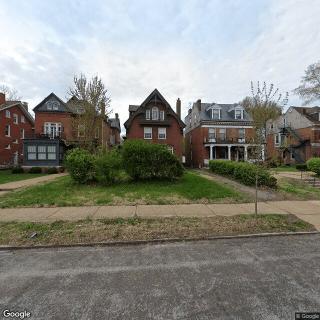
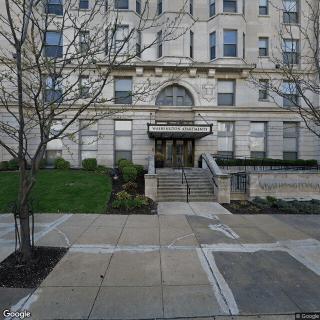
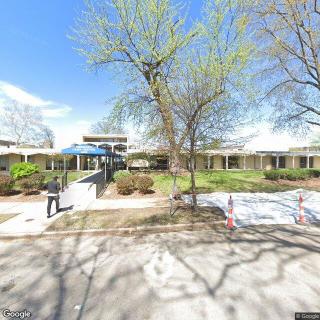
5117 Waterman Boulevard, St. Louis, MO 63108
For more information about senior living options: (866) 208-4318
Overall Review of Amanda Luckett Murphy Hopewell Center Rcf
Pros
 They describe the former doctor as the best they've ever had.
Cons
 They will only make mental health issues worse.
- They lie about people and play with those who have severe mental issues.
- They push patients onto a lot of medications.
- The doctors don't know what they are doing.
- The doctors' office should be shut down.
- They fired the best doctor the patient had, with no notice.
- The doctors are hard to reach and do not seem to care about their clients.
- Refilling medications has been a nightmare.
Review
Amanda Luckett Murphy Hopewell Center RCF is best suited for residents who need a structured living environment with steady daily supports and an ongoing, nurse-practitioner–led medical cadence. The setting leans on caseworkers and a nursing provider model to manage day-to-day care, social engagement, and routine health concerns, while external psychiatric specialists can be used as needed. This arrangement works best for individuals who can tolerate some variability in physician coverage and who already coordinate mental-health care with outside clinicians. It is not a good fit for seniors whose primary need is highly reliable, physician-led medical management or who require rapid, frequent med adjustments with immediate access to a physician.
Those weighing alternatives should focus on stability of medical leadership and predictability of access. If a resident’s psychiatric care depends on a consistent physician presence, a guaranteed, timely med refill process, and proactive communication during clinician turnover, another option is worth pursuing. Facilities with continuous physician staffing, clearer transfer protocols during leadership changes, and more transparent notification about provider shifts are likely to deliver greater peace of mind for families managing complex medication regimens or chronic psychiatric conditions.
The strongest attribute here is the built-in structure: a residence with routine supports and an NP-driven medical framework that can keep everyday health questions moving without forcing families into constant scheduling battles. Caseworkers appear to shoulder substantial responsibilities, helping coordinate services and maintain a sense of continuity in daily life. For residents who benefit from predictable routines and attention from a stable, non-physician care team, this stability can translate into steadier day-to-day functioning and fewer gaps in basic support.
Yet the most consequential drawbacks overwhelm these positives. Documented turnover in clinicians, most notably the departure of long-standing doctors, creates chronic uncertainty about who is directing mental-health care and who handles medication decisions. Communication gaps compound the problem: repeated difficulties reaching providers, lack of timely med refills, and delayed responses to urgent questions all elevate risk and stress for residents and families. The shift to a nurse-practitioner–based model, while potentially beneficial for accessibility, appears to come with limited continuity when a physician leaves, and patients are left waiting for new evaluations and prescriptions.
In practical terms, the pros do not sufficiently offset the core concerns. A care model that relies heavily on NP oversight and case management can work when physician leadership remains stable, but the repeated need to adapt to new providers, unclear transfer processes, and inconsistent med-management routines erodes confidence and safety. For residents with complex psychiatric histories, or those who depend on timely psychotropic adjustments, the current pattern raises legitimate worries about continuity and responsiveness. The gaps in communication and scheduling may undermine overall well-being and treatment adherence, making the facility a compromise rather than a clear, superior choice.
Families considering this center should act with a disciplined due-diligence mindset. Verify who is currently leading medical care, what the official coverage plan is during physician changes, and the exact process for med refills and urgent prescriptions. Request to meet the NP and the primary caseworker team, and obtain a written outline of how transitions are handled when a physician departs. If choosing to proceed, insist on a documented crisis plan, predictable med-management timelines, and a concrete accountability pathway for unanswered calls. In many cases, families will find better alignment with alternatives that guarantee physician continuity and faster, clearer communication. For those who proceed here, treat the NP-led framework as a supportive backbone rather than a substitute for stable medical leadership, and build a proactive, external coordination plan to safeguard ongoing psychiatric care.
 12 resident community capacity
 Assisted Living
 Board and Care Home
 Cable or satellite TV
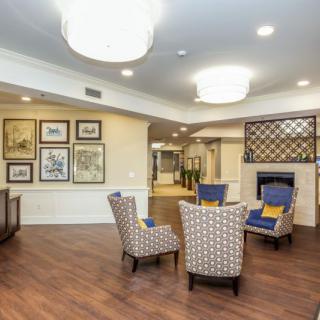
 Dining room
 Fully furnished
 Garden
 Housekeeping services
 Move-in coordination
 Outdoor space
 Telephone
 Wi-Fi/high-speed internet available
 Lambert-St Louis International (8 miles away)
 24-hour supervision
 Activities of daily living assistance
 Assistance with bathing
 Assistance with dressing
 Assistance with transfers
 Diabetes diet
 Meal preparation and service
 Medication management
 Special dietary restrictions
 Transportation arrangement (medical)
 Transportation to doctors appointments


 Comprehensive Insights into Activities of Daily Living (ADLs) and Their Assessment
 Medicare Coverage for Assisted Living: An In-Depth Exploration
 Your Comprehensive Guide to Luxury Assisted Living: Elevated Facilities, Amenities, and Costs