Overall Review of Heart Fields Assisted Living At Frederick
common
Caring, responsive staff matter most
Residents and families repeatedly describe staff as caring and responsive to needs.
Many reviews focus on how supported residents and families feel, describing staff who are kind, friendly, and attentive. Several residents’ families say communication is responsive and that concerns get handled. A number of reviewers also mention day-to-day familiarity and a more personal, smaller-community feel.
common
Activities keep residents engaged
Reviews repeatedly highlight a wide mix of activities and social programs.
Residents are described as having plenty to do, with regular scheduled activities and outings alongside group events. Reviews mention musical performances, arts and crafts, exercise, games, and road trips, along with staff helping residents participate. For memory care and dementia progression, reviewers also describe programming that supports engagement and comfort.
common
Food is a frequent bright spot
Meals come up often, with residents described as enjoying the food.
Several reviews praise meal quality and variety, with some families specifically saying food is excellent and that residents feel supported at mealtimes. Others describe accommodating special dietary needs and tailoring meals to individual preferences. A reviewer also mentions staff preparing favorite breakfast items, reinforcing the attention residents feel.
differentiator
Convenient location for families
Families value the community’s convenient location in Frederick.
Multiple reviews describe the location as a key factor for choosing or visiting the community, including convenience within the Worman’s Mill area and for family members in town. Others also note the facility is in a nice location, and mention being able to handle medical appointments with provided transportation. Combined, the reviews suggest location helps reduce the friction of staying involved.
caveat
Some families raise staffing and care concerns
While many reviews are positive, a few residents’ families report serious concerns about care and staffing.
A small number of reviews describe medication mismanagement, low accountability, and problems with how care was handled. These same reviews also mention communication delays and question staffing levels, with residents seemingly not getting enough interaction. Other reviews counter this with stories of peace of mind and timely support, so these concerns appear as a minority perspective.
How we summarize
We summarize when many written reviews mention each theme; a review can touch several themes, and only frequently mentioned themes are displayed.
Features
Housing
52 resident community capacity
1-bedroom apartments
2-bedroom apartments
Studio apartments
Types of Care
Assisted Living
Memory Care
Amenities
Air-conditioning
Beautician on-site
Beauty salon
Cable or satellite TV
Computer center
Dining room
Fitness room
Fully furnished
Gaming room
Garden
Guasts at mealtime
Guest parking
Housekeeping services
Kitchenette
Laundry
Move-in coordination
Outdoor space
Pet friendly
Private bathrooms
Respite or short term stays offered
Restaurant-style dining
Small library
Swimming pool
TV room
Telephone
Tennis courts
Wellness center
Wi-Fi/high-speed internet available
Transportation
Community operated transportation
Transportation & parking
Transportation arrangement
Transportation arrangement (non-medical)
Transportation to doctors appointments
Care Services
12-16 hour nursing
24-hour call system
24-hour supervision
Activities of daily living assistance
Assistance with bathing
Assistance with dressing
Assistance with transfers
Coordination with health care providers
Dementia waiver
Diabetes diet
Hospice waiver
Meal preparation and service
Medication management
Mental wellness program
Mild cognitive impairment
Psychiatric care
Special dietary restrictions
Specialized memory care programming
Transportation arrangement (medical)
Transportation to doctors appointments
Dining
Diabetes diet
Special dietary restrictions
Activities
Activities off-site
Arts and crafts
Community-sponsored activities
Concierge services
Cooking club
Fitness programs
Games
Live musical performances
Planned day trips
Resident-run activities
Scheduled daily activities
Stories
Languages Spoken
English
Nearby Places of Interest
Restaurants
Pasgualo's Italian Pizza (0.2 miles)
Plaza Mexico Restaurant (0.7 miles)
Chick-Fil-A (0.8 miles)
Roy Rogers (0.8 miles)
IHOP (1.1 miles)
Burger King (1.3 miles)
Chipotle Mexican Grill (1.3 miles)
Cafes
Panera Bread (0.6 miles)
Gravel and Grind (2.8 miles)
Starbucks (2.9 miles)
Frederick Coffee Co & Cafe (3 miles)
Frederick Social (3.3 miles)
Pharmacies
CVS Pharmacy (0.7 miles)
Wegmans (1.5 miles)
Valogic (1.8 miles)
Frederick Community Pharmacy (1.9 miles)
Walgreens (2.2 miles)
Walkersville Pharmacy (2.7 miles)
CVS Pharmacy (2.8 miles)
Physicians
Baltimore Imaging Centers (1.5 miles)
Orthopaedic Specialists of Frederick (1.5 miles)
Frederick Oncology Hematology Associates PC (1.5 miles)
Heart Fields Assisted Living At Frederick is equipped with a comprehensive range of features that effectively support residents coping with dementia or Alzheimer's disease. The 24-hour supervision ensures constant oversight, enhancing safety and providing immediate assistance as needed. Personalized help with activities of daily living, such as bathing and dressing, fosters independence while maintaining dignity. The coordination with health care providers and specialized memory care programming addresses individual health needs comprehensively, allowing for tailored interventions. Meal preparation and service are thoughtfully designed to accommodate dietary requirements, while medication management reduces the risk of errors. Additionally, the mental wellness program targets cognitive functioning through engaging activities aimed at residents experiencing mild cognitive impairment. With structured transportation arrangements for medical visits, residents can access necessary healthcare services seamlessly, promoting overall well-being and quality of life.
Nearby Communities
HeartFields at Frederick
Frederick, MD
4.6 from 73 reviews
$5,300 to $6,045 / month
Friendly staff delivering personalized care in a clean, welcoming environment.
Silverado Frederick
Frederick, MD
4.7 from 43 reviews
Active residents with a friendly, well-trained staff in a clean, brand-new facility.
Right At Home
Frederick, MD
4.6 from 29 reviews
Consistently excellent service from the core staff member.
Devotion Assisted Living
Walkersville, MD
4.5 from 46 reviews
Immaculate cleanliness and attentive staff delivering high-quality, compassionate care.
Wormald Companies
Frederick, MD
3.7 from 23 reviews
Specialized diabetic care
Warm Heart Family Assistance Living
Frederick, MD
3.4 from 10 reviews
Friendly staff and convenient Frederick location.
Autumn Lake Healthcare at Glade Valley
Walkersville, MD
4.4 from 123 reviews
Rehab staff tailor exercises and communicate with families
Homewood at Frederick
Frederick, MD
4 from 48 reviews
Village Crossing at Worman's Mill
Frederick, MD
4.8 from 42 reviews
$4,500 / month
Memory-care focus with well-appointed apartments and engaging on-site activities.
Dementia, including Alzheimer’s disease, is often mischaracterized in terms of lethality as it leads to complications that can be fatal rather than being a direct cause of death; it causes a progressive decline in cognitive and physical health, making patients vulnerable to infections and other health crises. Effective management of nutrition, hydration, and communication is crucial in patient care, with palliative care becoming vital in advanced stages to enhance comfort and quality of life while caregivers play a key role amidst the challenges posed by the disease.
Reminiscence therapy helps individuals with dementia recall past memories through structured discussions and meaningful objects, enhancing mood, relationships, and sense of identity while celebrating their lives. It can be practiced in formal settings or at home, requiring sensitivity to personal histories and cultural backgrounds.
Reminiscence therapy is a structured method for older adults, especially those with dementia, to share life stories using prompts and sensory cues, fostering emotional well-being, social engagement, and self-identity. It aims to improve quality of life by enhancing interpersonal connections and cognitive stimulation while requiring careful facilitation to avoid distressing memories.
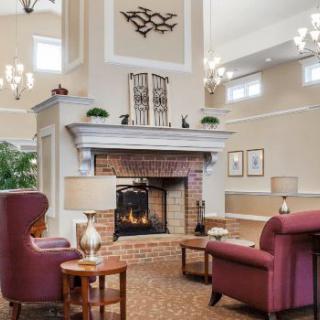
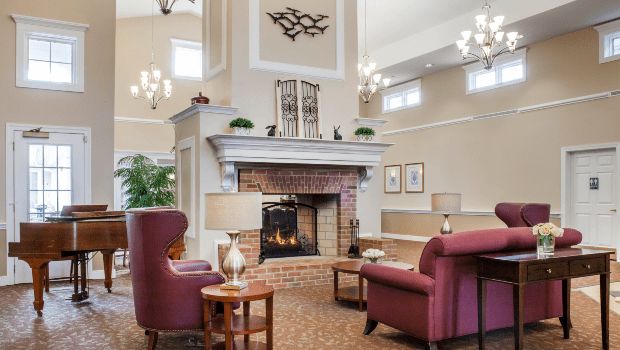
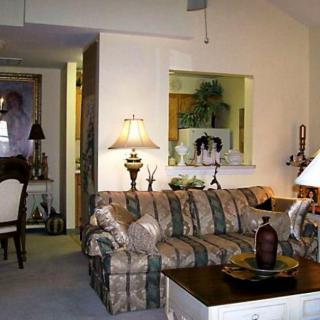
Interior, Decor, Living Room, Chandelier, and Fireplace
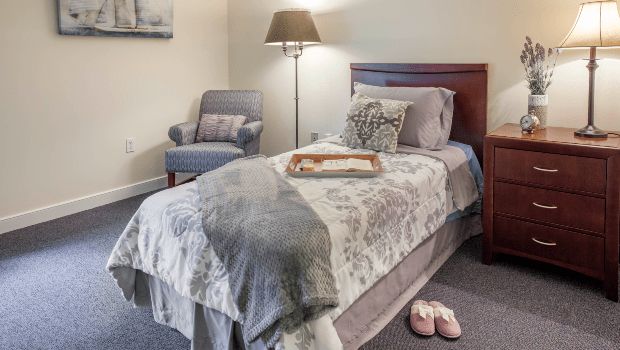
Bedroom
Get PricingAsk A QuestionSchedule A TourContact Senior Advisor
By clicking submit, you agree to our Partner's Terms of Use. You
also consent to receive calls and texts, which may be autodialed, from our Partner. Your consent is not a condition to
using our Partner's service. Please visit our Partner's Privacy Policy for information about their privacy practices.

 52 resident community capacity
 1-bedroom apartments
 Assisted Living
 Memory Care
 Air-conditioning
 Beautician on-site
 Cable or satellite TV
 Computer center
 Dining room
 Fitness room
 Fully furnished
 Gaming room
 Garden
 Guest parking
 Housekeeping services
 Kitchenette
 Laundry
 Move-in coordination
 Outdoor space
 Pet friendly
 Private bathrooms
 Respite or short term stays offered
 Restaurant-style dining
 Small library
 Swimming pool
 Telephone
 Tennis courts
 Wellness center
 Wi-Fi/high-speed internet available
 Community operated transportation
 12-16 hour nursing
 24-hour call system
 Activities of daily living assistance
 Assistance with bathing
 Assistance with dressing
 Assistance with transfers
 Diabetes diet
 Hospice waiver
 Medication management
 Mental wellness program
 Psychiatric care
 Special dietary restrictions
 Transportation arrangement (medical)
 Arts and crafts
 Concierge services
 Cooking club
 Games
Games Live musical performances
 Planned day trips
 Stories
 English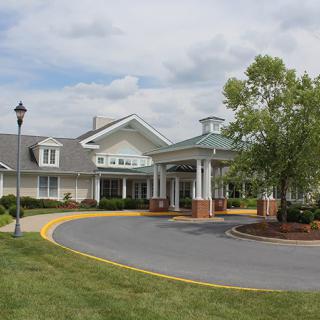
 Friendly staff delivering personalized care in a clean, welcoming environment.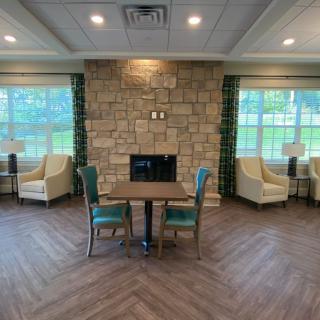



 Are Dementia and Alzheimer's Disease Lethal? A Comprehensive Exploration
 Exploring the Power of Reminiscence Therapy for Individuals With Dementia
 An In-Depth Look at Reminiscence Therapy in Dementia Care