
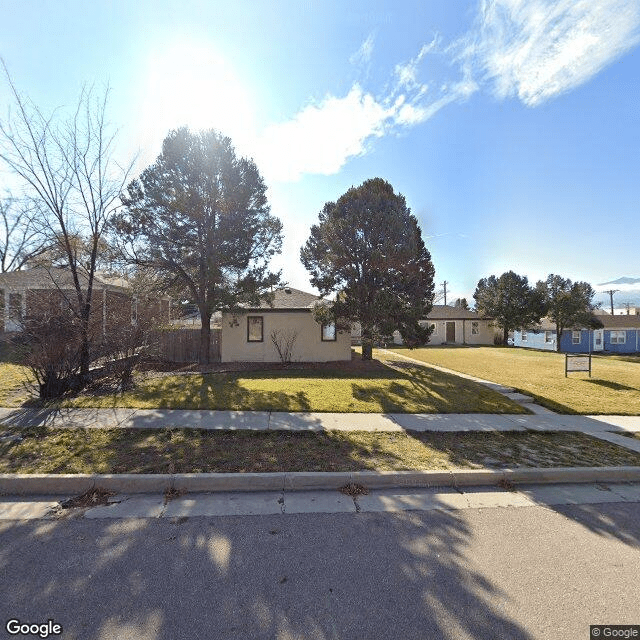
1209 E Caramillo St, Colorado Springs, CO 80909
To contact a resident: (719) 473-6339
For more information about senior living options: (866) 208-4318
Overall Review of Crestview Manor II
Pros
 Crestview's staff provide a warm, happy, and safe environment for residents.
 - The Care Director, Nancy Ruminaki, is knowledgeable, perceptive, and caring, and she hires excellent caregivers.
- Nancy initiates conversations that help meet residents' needs, demonstrating thoughtful, personalized care.
- Each Crestview house offers a home-like environment where residents have their own bedrooms but share meals and socialize.
- In-house caregivers get to know residents in a way that's not possible at larger facilities, enabling personalized attention.
- Crestview provides 24-hour care, with staff supporting residents on short walks they enjoy and ensuring rooms have everything they need.
- The owners are caring and friendly, and families are very happy with Crestview's care.
Cons
 Rick is notorious among delivery drivers for never tipping, even on large deliveries, and for complaining about incomplete orders.
- There's a reason he's increasingly having difficulty getting his deliveries fulfilled.
- No tip, no trip, Rick.
Review
Crestview Manor II is best suited for families seeking a truly home-like, small-scale assisted living experience in Colorado Springs, where staff know residents personally and care feels tailored rather than institutional. The property clusters residents into individual bedrooms within houses, with meals shared at a kitchen table and social life unfolding in living areas. This arrangement favors daily life that is predictable, warm, and relationship-rich, rather than hierarchical or clinical. For seniors who prize personal connection, safety, and a calm, neighborly atmosphere, Crestview Manor II delivers with notable consistency.
Those weighing alternatives should consider whether a larger, more traditional campus with expansive programming and higher-acuity medical capabilities better fits the care plan. The small-house model inherently limits on-site specialists and formalized activity rosters, which can leave some families feeling underserved if 24-hour supervision isn’t enough or if complex medical needs emerge. Additionally, the governance and ownership dynamics may matter to families who want transparent, robust vendor relationships and a clearly documented operating framework. In short, it works well for everyday care but may fall short for those requiring broader medical infrastructure or corporate-backed governance.
The strongest pros cluster around personalized, dependable caregiving and the intimate environment. A standout feature is the Care Director, Nancy Ruminaki, whose knowledge, perceptiveness, and hands-on coordination help align care with family expectations. The house-level caregiving model enables staff to learn residents’ routines, preferences, and communication cues in a way that crowded campuses simply cannot match. Residents benefit from short, enjoyable walks, rooms equipped with essential comforts, and meals that reinforce social bonds. The overall tone from families suggests ongoing, genuine engagement from the owners, who are described as caring and approachable, reinforcing a sense of a family-owned, resident-first operation.
The most tangible downside centers on ownership behavior rather than day-to-day resident care. One review depicts inconsistent tipping and frustration with deliveries, which hints at governance or customer-service practices that some families will want to probe. While this does not automatically compromise the care experience, it signals potential fragility in vendor management and financial transparency. The limited scale also means fewer on-site amenities and a slower pace for expanding services if care needs rise, a factor families should weigh against the price and the comfort of the home-like setting. These concerns do not erase the positive daily living experience, but they are legitimate considerations for long-term planning.
Balancing the positives and the drawbacks, Crestview Manor II’s core strengths routinely translate into meaningful daily life for residents: steady, compassionate caregiving; a familiar, home-like rhythm; and consistent staff engagement. The intimate structure makes monitoring mood, energy, and safety straightforward, while caregiver continuity builds trust and reduces miscommunication. The 24-hour presence and gentle activity options, like short walks, support physical well-being while preserving autonomy in a low-stress environment. Families seeking a resiliency test might still pass on this option, but the better-than-average caregiving clarity helps offset the owner-related concerns when judged against actual day-to-day experience.
In practical terms, Crestview Manor II serves as a solid, well-considered choice for families prioritizing individualized, human-centered care in a small Colorado Springs community. It is especially well-suited for seniors who thrive on intimate interaction, predictable routines, and a strong sense of belonging within a supportive staff. Alternatives are worth exploring for those who require more robust medical oversight, memory-care specialization, or governance transparency. For those who decide Crestview is the right path, a thorough tour is essential: speak with Nancy Ruminaki, request specifics on caregiver-to-resident ratios, review any incident logs, and confirm how vendor relationships are managed. With disciplined evaluation, Crestview Manor II can offer both peace of mind and genuinely enriched daily living.
 Board and Care Home
 City of Colorado Springs Muni (6 miles away)

 A Detailed Exploration of Living Wills and Advance Directives
 Comprehensive Guide to Medicare Coverage for Hospice Care
 Caring for Those Who Care: Recognizing, Understanding, and Overcoming Caregiver Burnout