
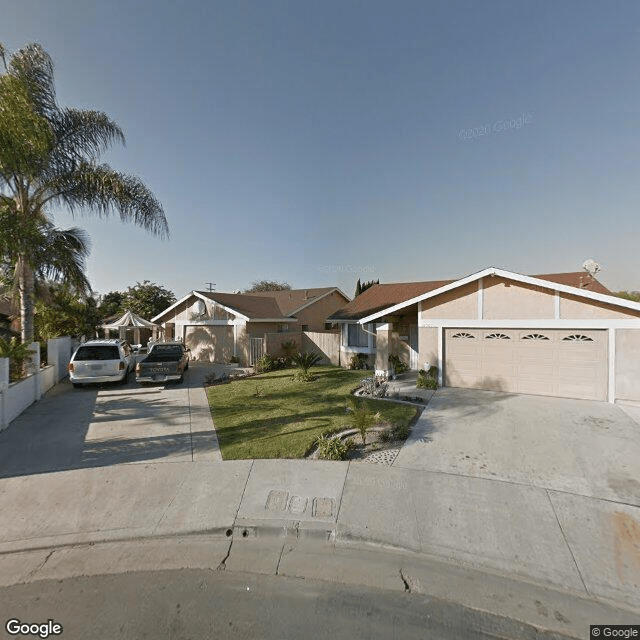
11503 Thomas Place, Norwalk, CA 90650
For more information about senior living options: (866) 208-4318
Loving Arms Residential Care For Seniors II Costs & Pricing
Loving Arms Residential Care For Seniors II offers competitive pricing for its services when compared to both Los Angeles County and the broader state of California. The monthly cost for a semi-private room at Loving Arms is $2,750, which is significantly lower than the county average of $3,349 and the state average of $3,333. For those seeking a private room, Loving Arms charges $3,250, again favorably positioned against the county price of $4,197 and the state price of $3,939. Additionally, their studio option at $3,500 remains more economical than the Los Angeles County average of $4,172 and California's average of $4,145. These attractive rates reflect Loving Arms' commitment to providing quality care while keeping affordability in mind for seniors and their families.
| Floor plans | Loving Arms Residential Care For Seniors II | Los Angeles County | California |
|---|---|---|---|
| Semi-Private | $2,750 | $3,349 | $3,333 |
| Private | $3,250 | $4,197 | $3,939 |
| Studio | $3,500 | $4,172 | $4,145 |
Memory care communities with a similar price nearby
-
About the same
Candlewood Care Home III
$2,800 to $3,400 / month20.8 miles away -
from -$350 / mo
Living Well Care Home
$2,400 to $3,200 / month8.9 miles away -
About the same
Leah Loving Elderly Care
$2,800 to $3,000 / month17.0 miles away -
About the same
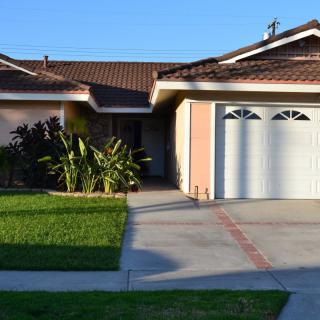
Loving Care Senior Home
$2,700 to $3,500 / month17.5 miles away -
from -$450 / mo
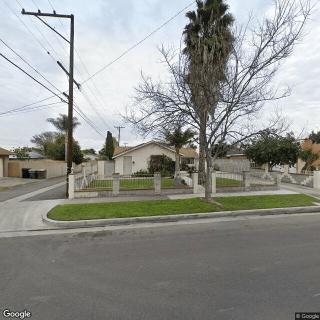
Bronwyn Residential Care
$2,300 to $3,500 / month9.1 miles away
Overall Review of Loving Arms Residential Care For Seniors II
Pros
 They appreciated the caregivers who provided personalized care and compassionate love to Dad.
- They valued the homelike environment, with three connected homes on a cul-de-sac and back patios for family visits.
- They felt their whole family was cared for, and staff worked hard to keep Dad comfortable in his last weeks.
- They found the staff—caregivers, administrator, and nurse—attentive, helpful, and truly caring, with proactive follow-up.
- They noted the cleanliness and well-planned rooms, many with hospital beds already in place.
- They appreciated the safe, quiet cul-de-sac setting and overall sense of security.
- They valued the awake nighttime caregiver as a key selling point.
- They would recommend Loving Arms Residential Care for those seeking a small, intimate assisted living environment.
Review
Loving Arms Residential Care For Seniors II is best suited for families seeking a genuinely intimate, small-scale assisted living option where caregivers deliver highly personalized attention in a homelike setting. It caters to residents who value consistent relationships with staff, frequent family involvement, and a quiet, secure atmosphere over a bustling campus. The three connected houses on a cul-de-sac create a neighborhood vibe that supports steady staffing and continuity of care, while the ability for families to sit with their loved one on the back patios reinforces a sense of belonging and daily connection. An awake nighttime caregiver adds a practical layer of reassurance for residents who wake or need extra supervision during the night.
Those who may want to consider alternatives are typically families prioritizing broader medical services or more expansive social programming. The layout and focus here emphasize warmth and familiarity rather than a wide array of on-site therapies or memory-care specialization. For residents requiring intensive clinical oversight, complex medical management, or highly structured activity schedules, a larger community with more certified professionals and a broader activity roster may be a better fit. Additionally, families seeking a seamless transition across multiple care levels or rapid scalability as needs change might find a bigger campus with more resources preferable.
The strongest positives hinge on deeply attentive, personalized care that feels genuinely compassionate. Caregivers, administrators, and a nurse are perceived as highly engaged, moving with ease between houses to respond to needs and reassure families. The setting itself reinforces this ethos: a clean, well-maintained environment with rooms already equipped with hospital beds when appropriate; a safe cul-de-sac layout that reduces stress around traffic or wandering; and thoughtful communal spaces like a courtyard and a back patio that invite regular, low-pressure family participation. These elements collectively create a sense of security and trust that is hard to match in larger facilities.
Another key strength is the practical daily rhythm this community supports. The homes’ proximity and the staff’s mobility mean response times feel fast, with caregivers who know routines intimately and adjust to evolving preferences. The combination of a small footprint and intimate care translates into fewer barriers for residents to settle in and feel at home quickly. Families appreciate not having to scramble for staff attention or for basic needs to be met; the environment reinforces dignity and autonomy while still providing steady supervision and support.
Proactive communication stands out as a standout benefit. Administrators and caregivers don’t wait for questions; they provide ongoing updates about a loved one’s status and progress. Even after a move-in, there is a consistent practice of checking in and offering follow-up, which reduces anxiety for families who cannot be on site full-time. The physical layout, courtyard, back patios, and a secluded cul-de-sac, complements this culture by enabling informal, meaningful connections during visits. For families that value being kept in the loop and welcomed into daily caregiving, this transparency is as valuable as any tangible amenity.
In sum, Loving Arms Residential Care For Seniors II earns its strength by delivering a warm, tightly coordinated, and family-friendly experience in a compact, home-like setting. It shines for residents who thrive on personal attention, straightforward routines, and frequent, meaningful family engagement, all supported by a capable staff and a safe, comfortable physical environment. The trade-off is a setting that may feel limited for those needing intensive medical management or expansive social programming. When evaluating options, prioritize the resident’s care needs and desired pace of daily life: if intimacy, trust, and active family involvement are paramount, this community stands out as a practical, well-considered choice. If broader clinical services and larger-scale programming are non-negotiable, alternatives deserve serious consideration.
 6 resident community capacity
 Assisted Living
 Board and Care Home
 Memory Care
 Cable or satellite TV
 Dining room
 Full kitchen
 Fully furnished
 Garden
 Guest parking
 Housekeeping services
 Laundry
 Move-in coordination
 Outdoor space
 Overnight guests
 Party space
 Private
 Respite or short term stays offered
 Telephone
 VA Benefits Consultation
 Wi-Fi/high-speed internet available
 Long Beach (Daugherty) (8 miles away)
 Transportation & parking
 24-hour supervision
 Activities of daily living assistance
 Ambulatory care
 Assistance with bathing
 Assistance with dressing
 Assistance with transfers
 Companion care
 Diabetes diet
 Diabetic care
 Hospice care
 Meal preparation and service
 Medication management
 Physical therapy
 Special dietary restrictions
 Transportation arrangement (medical)
 Arts and crafts
 Book club
 Educational speakers / life long learning
 Games
Games Live musical performances
 Religious services





 An In-Depth Look at Reminiscence Therapy in Dementia Care
 Dementia-Related Hallucinations: Causes, Experiences, and Practical Approaches
 Illuminating Insights About Alzheimer's Disease: Ten Crucial Realities