
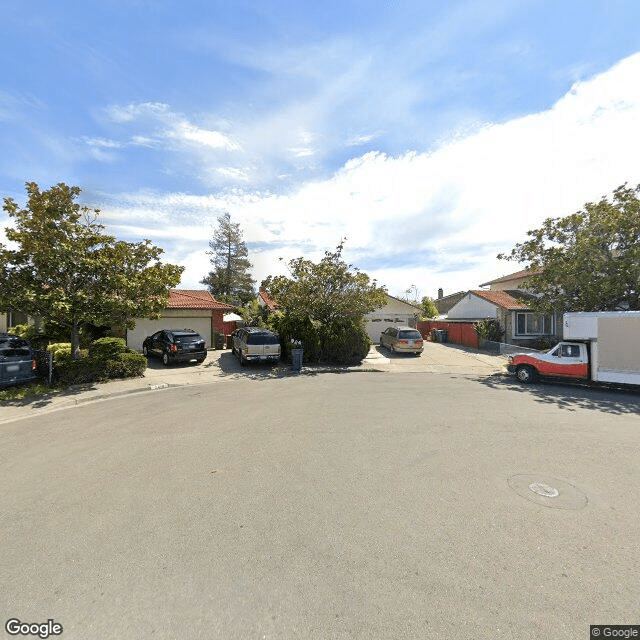
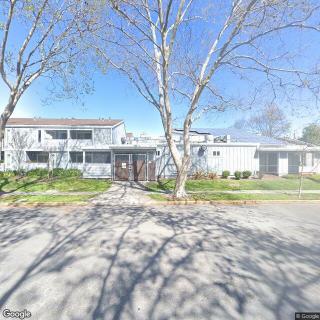
2420 Columbine Court, Hayward, CA 94545
For more information about senior living options: (866) 208-4318
Elle's Home Costs & Pricing
Elle's Home offers competitive pricing for its services, particularly when compared to both Alameda County and the broader state of California. For a semi-private room, residents pay $2,500 per month, which is significantly lower than the county's average of $3,273 and the state average of $3,333. Similarly, in a private room setting, Elle's Home charges $3,000 monthly, again undercutting Alameda County's typical cost of $3,748 and California's average of $3,939. These price points reflect Elle's Home commitment to providing affordable yet high-quality care in a welcoming environment that stands out in a challenging market.
| Floor plans | Elle's Home | Alameda County | California |
|---|---|---|---|
| Semi-Private | $2,500 | $3,273 | $3,333 |
| Private | $3,000 | $3,748 | $3,939 |
Assisted Living communities with a similar price nearby
-
About the same
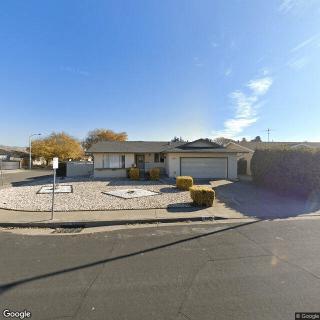
Ava Bella Care Home
$2,500 to $3,000 / month2.5 miles away -
About the same

San Carlos Elms
$2,500 to $5,880 / month12.3 miles away -
from -$200 / mo
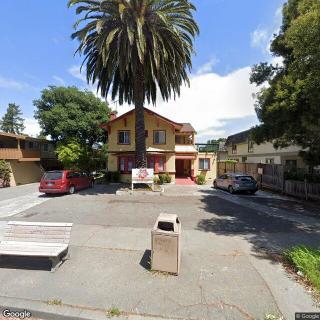
Jla Healthcare Services
$2,300 to $3,200 / month15.0 miles away -
from -$278 / mo
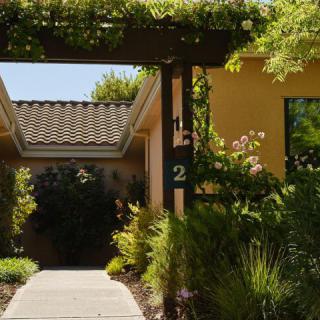
The Forum At Rancho San Antonio
$2,222 / month19.7 miles away -
from +$300 / mo

Peninsula Reflections
$2,800 to $9,040 / month20.2 miles away
Overall Review of Elle's Home
Pros
 Joy's Care Home is a wonderful place for elderly residential care.
- The facility is extremely clean, well run, and well managed.
- Joy Sanchez is an outstanding owner and caregiver.
- The staff are friendly, knowledgeable, very patient, and caring.
- The care provided to residents is kind and patient.
Review
Elle’s Home in Hayward presents itself as a strong option for families seeking a small, home-like senior residence where daily routines can run with careful oversight and genuine personal attention. The model is best suited for seniors who thrive in intimate settings, where caregivers are able to offer consistent, hands-on support without the bustle of a large facility. However, public feedback specific to Elle’s Home is limited, and the only available detailed review pertains to a nearby, like-type setting rather than this exact address. That reality should be weighed carefully: expectations should align with what a small residential home can reliably deliver in staffing, programming, and medical coordination.
This option may not be ideal for families with residents who require intensive medical oversight, complex nursing care, or specialized memory-care programming. For seniors needing 24/7 on-site nursing, frequent physician coordination, or structured, intensive therapeutic activities, a larger community with dedicated memory care wings or hospital partnerships could provide more consistent coverage. In short, Elle’s Home can shine for those who want highly personalized attention in a compact, relaxed environment, but it may fall short for cases demanding robust medical infrastructure.
The positive signals suggested by comparable small residential homes, the kind of environment Elle’s Home would aspire to emulate, center on cleanliness, orderly operation, and a caregiver team that feels approachable and patient. A well-managed setting typically translates into smoother daily transitions, fewer scheduling glitches, and less confusion for residents and families alike. When a home appears to be under thoughtful leadership, with staff who communicate calmly and respectfully, families often experience less anxiety around daily care tasks and emergencies. The absence of red flags in this domain is a meaningful strength to recognize.
Yet several potential drawbacks require clear mitigation to offset the best-case picture. Limited, exterior feedback means families should pursue a rigorous due-diligence process: verify licensing status, confirm staffing ratios, and request a transparent care plan for each resident. Small homes can drift when turnover rises or when consistent medical oversight is not embedded in daily routines. Costs, deposit structures, and policies for respite care or temporary transitions should be spelled out in writing. Without a documented framework for care planning, medication management, and emergency response, the perceived warmth of a small home may not translate into sustained, reliable safety.
To practically evaluate Elle’s Home, families should conduct a thorough, structured site visit and interrogation. Demand a private tour outside peak hours to observe staff-to-resident interactions, cleanliness, and safety features. Request copies of the latest licensed certifications, inspection results, and any deviation history. Inquire about care planning processes, how often plans are updated, how medications are administered and reconciled, and how medical emergencies are handled after hours. Speak with prospective staff about training, including dementia care, fall prevention, and emergency procedures. If possible, talk to current or former residents’ families to glean firsthand continuity of care and communication quality.
Ultimately, Elle’s Home could be a compelling choice for families prioritizing a small, attentive setting where caregivers have the time and space to know the resident well. The benchmark drawn from the available review of a similar operation highlights the value of a pristine environment, steady leadership, and patient, knowledgeable staff as the core strengths to seek. For those with more complex medical needs or a demand for broad programming and on-site nursing, alternatives, ranging from larger assisted living to memory-care-focused communities, should be strongly considered. The prudent path is a direct, apples-to-apples comparison: inspect documentation, verify staffing commitments, and compare cost structures across a short list of options before deciding that Elle’s Home is the definitive fit.
 6 resident community capacity
 Assisted Living
 Board and Care Home
 Activities off-site
 Bath tubs
 Cable or satellite TV
 Dining room
 Fully furnished
 Garden
 Housekeeping services
 Indoor common areas
 Move-in coordination
 Outdoor common areas
 Private
 Respite or short term stays offered
 Telephone
 Wi-Fi/high-speed internet available
 Metropolitan Oakland International (10 miles away)
 24-hour supervision
 Ambulatory care
 Assistance with bathing
 Assistance with dressing
 Assistance with transfers
 Diabetes diet
 Diabetic care
 High acuity care
 Incontinence care
 Meal preparation and service
 Medication management
 Special dietary restrictions
 Transportation arrangement (medical)
 Transportation to doctors appointments



 Assisted Living and Memory Care: Understanding Their Core Differences
 Beyond the Bingo Hall: 50+ Enriching Activities for Seniors in Assisted Living
 Understanding the Distinctions: Assisted Living and Memory Care Explained