Residents and families consistently describe staff as caring and attentive.
Many reviewers say the staff is genuinely caring and supportive, including being responsive to questions during visits and helping loved ones locate one another. Several families also describe the care team as attentive to residents’ well-being and safety, with a positive, personable approach.
common2 reviews mention this
Care is described as personalized
Reviews describe care that supports daily comfort and individual needs.
Some reviewers credit the community with looking after residents’ health and making adjustments, including supporting mobility after injury and addressing dietary needs. Others also describe memory care as attentive and supportive, with families saying they feel confident about safety and day-to-day oversight.
common2 reviews mention this
Activities help residents stay engaged
Residents’ days are described as supported with frequent activities.
Multiple reviews mention having plenty of things to do, including opportunities to stay engaged and a variety of events for residents. Some reviewers also describe mental and emotional support in memory care, with activities and family connection encouraged.
common2 reviews mention this
Food quality gets repeated praise
Families mention meals as a strong part of the experience.
Several reviewers highlight the food as a step above and describe meals positively, including enjoying options that meet residents’ needs. One reviewer specifically notes a wish for improvement to food while still saying their family member enjoys certain meals.
caveat2 reviews mention this
Pricing frustrations and possible add-ons
Some reviews raise concerns about pricing changes and charges.
A few reviewers describe their quoted costs increasing after move-in steps were underway, including claims of a bait-and-switch experience. Others describe situations where doctor-ordered services led to additional charges, and one review also criticizes the overall cost compared with other assisted living options.
How we summarize
Counts show how many written reviews mention each theme; a review can touch several themes, and only frequently mentioned themes are displayed.
Features
Types of Care
Assisted Living
Independent Living
Memory Care
Amenities
Activities on-site
Devotional services off-site
Indoor common areas
Transportation
Tucson International (14 miles away)
Care Services
Ambulatory care
Diabetic care
Dining
Meals provided
Activities
Activities on-site
Devotional activities offsite
Nearby Places of Interest
This area of Tucson, Arizona, offers a convenient and diverse array of amenities for those considering senior living. With multiple physicians' offices nearby, including oncology and internal medicine practices, as well as a women's health center and orthopedic institute, residents will have access to quality healthcare services within a short distance. Northwest Medical Center is also in close proximity for any hospital needs. Additionally, there are several dining options ranging from fast food to sit-down restaurants like Applebee's and Sushi Garden. Plenty of pharmacies are available for medication needs, and parks such as Rilito River Park provide opportunities for outdoor recreation and relaxation. For entertainment, AMC Foothills 15 theater is a short drive away. Places of worship like Beautiful Savior Lutheran Church offer spiritual support, while cafes like Dutch Bros Coffee provide social settings for meeting with friends or family. Overall, this area combines convenience with a variety of services that cater to the needs of seniors looking for a comfortable living environment in Tucson.
Physicians
Arizona Oncology (0 miles)
Casas Adobe Physicians (0.2 miles)
Casas Adobes Internal Medicine (0.2 miles)
Tucson Endocrine Associates (0.2 miles)
MHC Obstetrics & Women's Health (0.2 miles)
Southern Arizona Center For Minimally Invasive Surgery (0.4 miles)
Tucson Orthopaedic Institute (0.4 miles)
Hospitals
Northwest Medical Center (0.3 miles)
Nw Medical Hospital (0.3 miles)
Restaurants
McDonald's (0.7 miles)
Applebee's (1.5 miles)
Sushi Garden (1.7 miles)
Pappoules (1.8 miles)
Mr. An's Teppan Steak & Seafood Sushi Bar (2 miles)
Sundown syndrome, or sundowning, is a phenomenon in dementia patients characterized by increased confusion and agitation during late afternoon and evening, influenced by factors like disrupted circadian rhythms and fatigue. Effective caregiver strategies include establishing routines and managing environmental light while addressing caregiver stress through support services.
Delirium is a rapidly onset, reversible cognitive disturbance often caused by acute medical issues, while dementia is a gradual and irreversible decline due to chronic neurodegenerative diseases. Accurate differentiation between the two is essential for appropriate treatment and management in older adults.
Dementia, including Alzheimer’s disease, is often mischaracterized in terms of lethality as it leads to complications that can be fatal rather than being a direct cause of death; it causes a progressive decline in cognitive and physical health, making patients vulnerable to infections and other health crises. Effective management of nutrition, hydration, and communication is crucial in patient care, with palliative care becoming vital in advanced stages to enhance comfort and quality of life while caregivers play a key role amidst the challenges posed by the disease.
Get PricingAsk A QuestionSchedule A TourContact Senior Advisor
By clicking submit, you agree to our Partner's Terms of Use. You
also consent to receive calls and texts, which may be autodialed, from our Partner. Your consent is not a condition to
using our Partner's service. Please visit our Partner's Privacy Policy for information about their privacy practices.



 Assisted Living
 Independent Living
 Memory Care
 Activities on-site
 Devotional services off-site
 Indoor common areas
 Tucson International (14 miles away)
 Ambulatory care
 Diabetic care
 Meals provided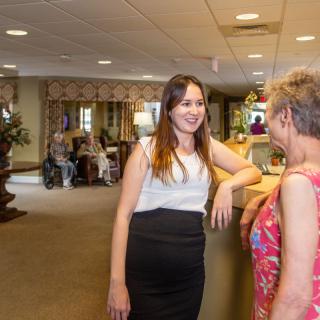
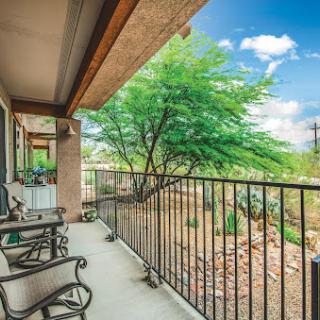
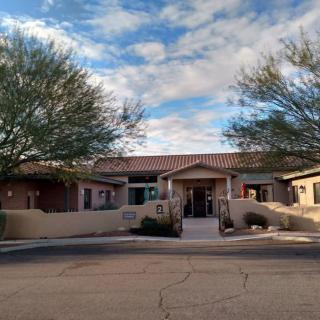
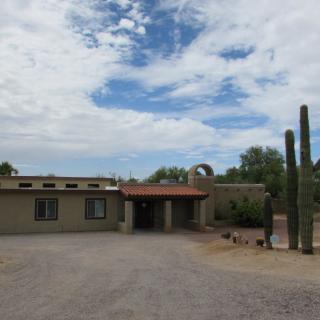
 Caring staff with engaging activities in a clean, welcoming memory-care environment.



 Comprehending Evening Confusion in Dementia: Causes, Manifestations, and Support
 Delirium and Dementia: Unraveling the Key Differences
 Are Dementia and Alzheimer's Disease Lethal? A Comprehensive Exploration