
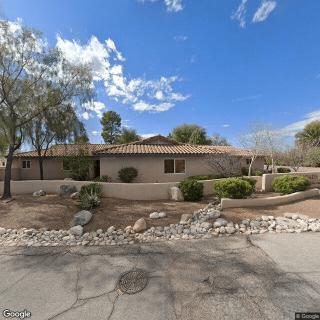
685 West Roller Coaster Road, Tucson, AZ 85704
For more information about senior living options: (866) 208-4318
Overall Review of Ridgecrest I
Pros
 Paul and the staff are true caregivers who provided exceptional care for her.
- Their attention and kindness far exceed the level of care she had received at previous places.
- She is very happy there.
- Her family enjoys visiting her.
- The facility is great for dementia patients.
Cons
 She can be very hard to handle sometimes.
Review
Ridgecrest I in Tucson, AZ is best suited for families seeking hands-on, dementia-capable support delivered with steady compassion. The community shines when a loved one requires a patient, watchful presence and caregivers who treat daily routines as meaningful care rather than mere supervision. It is particularly appropriate for residents whose behavior or needs can challenge caregivers but who still respond well to calm, respectful management and low-stress engagement. Families that value steady caregiver relationships, clear communication, and a home-like feel will find Ridgecrest I aligns with those priorities. In short, this is a dementia-forward option where the emphasis is on relationship-based care rather than high-intensity medical programming.
Alternatives may be worth considering for those demanding stronger medical oversight, a broader activity schedule, or a more formal environment with marshaled clinical resources. If a loved one requires intensive, 24/7 medical intervention, rapid access to specialized treatment, or highly structured programming beyond what Ridgecrest I routinely provides, another facility could be a better fit. For families wanting a resort-style atmosphere, expansive campus amenities, or a broader menu of therapeutic services, the contrast may be noticeable. In such cases, a visit to several communities with a clear outline of medical capabilities and care plans is prudent.
Pros that stand out center on the caregiving ethic. Comments repeatedly affirm that Paul and the staff are true caregivers who deliver exceptional care for a loved one, with attention and kindness that surpasses prior placements. That level of personal investment translates into safer daily routines, more consistent redirection, and a sense of dignity for residents. The safety net of compassionate attention reduces anxiety for families and creates confidence that the care plan will be executed with continuity. For dementia care, this human-centric approach often matters more than glossy amenities or sterile efficiency.
Another strong pro is the lived experience of families visiting. One reviewer notes that their mother is very happy and the family loves visiting, signaling a stable, welcoming environment. The staff’s approach to behavior that can be challenging, described in strong terms as avoiding unnecessary medication, suggests a philosophy of restraint and nonpharmacologic management. For dementia residents, such an orientation can mean fewer sedating interventions and more opportunities to participate in daily activities and meaningful interactions. The combination of caregiver consistency and a supportive social climate can slow the decline in some aspects of quality of life.
Still, the light cast by the positives is tempered by a notable caveat: one family awarded the community a one-star rating. That outlier indicates that even with strong caregiving, experiences can diverge, and specifics matter. The reviews do not spell out the exact shortcomings, but potential gaps could include variability in staffing levels at shift changes, differences in how care plans are communicated, or expectations around the scope of dementia programming. Prospective residents should verify staffing stability, care-planning transparency, and the availability of 24/7 medical oversight during tours to ensure alignment with personal expectations.
Overall, Ridgecrest I presents a compelling option for dementia-focused care where the priority is attentive, respectful caregiving that families can trust. The key pros, genuine caregiver commitment, family-friendly visitability, and a nonmedicating stance toward difficult behaviors, tend to offset the primary concern raised by the one-star rating when matched with a resident profile that fits dementia care needs. For families choosing Ridgecrest I, the recommended next steps are to schedule a thorough tour, meet the caregiving team, review individual care plans, and confirm the facility’s capability to handle the resident’s specific medical and daily living requirements. When those boxes are checked, Ridgecrest I becomes a dependable, practical choice in the Tucson landscape.
 10 resident community capacity
 Assisted Living
 Board and Care Home
 Cable or satellite TV
 Dining room
 Fully furnished
 Garden
 Housekeeping services
 Move-in coordination
 Outdoor space
 Telephone
 Wi-Fi/high-speed internet available
 Tucson International (14 miles away)
 24-hour supervision
 Activities of daily living assistance
 Assistance with bathing
 Assistance with dressing
 Assistance with transfers
 Diabetes diet
 Meal preparation and service
 Medication management
 Special dietary restrictions
 Transportation arrangement (medical)
 Transportation to doctors appointments

 Comprehensive Insights into Activities of Daily Living (ADLs) and Their Assessment
 Guiding Elderly Parents Who Refuse Assisted Living: 6 Practical Steps
 Your Comprehensive Guide to Luxury Assisted Living: Elevated Facilities, Amenities, and Costs