
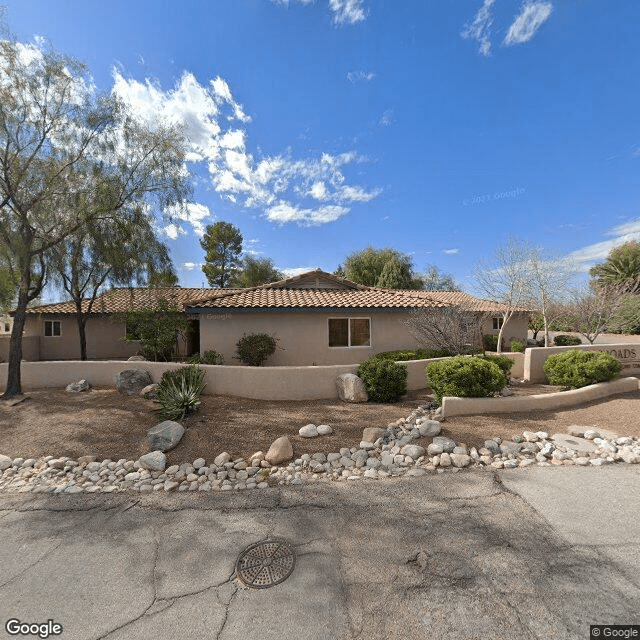
5833 North Escondido Lane, Tucson, AZ 85704
To contact a resident: (520) 293-6788
For more information about senior living options: (866) 208-4318
Crossroads Adult Care Homes Costs & Pricing
Crossroads Adult Care Homes offers competitive pricing for its accommodations, with semi-private rooms available at $3,250 per month, which is notably higher than the average rates in Pima County and across Arizona. In comparison, semi-private rooms in Pima County are priced at approximately $2,805, while statewide rates hover around $2,820. For those seeking more privacy, the cost for a private room at Crossroads is $3,900 per month. This also exceeds the averages found in both Pima County and Arizona overall, where private rooms are offered at about $3,332 and $3,345 respectively. While Crossroads may position itself above local benchmarks, many residents find value in the personalized care and supportive environment that accompany their stay.
| Floor plans | Crossroads Adult Care Homes | Pima County | Arizona |
|---|---|---|---|
| Semi-Private | $3,250 | $2,805 | $2,820 |
| Private | $3,900 | $3,332 | $3,345 |
Senior living communities with a similar price nearby
-
from -$450 / mo
Abella Manor Senior Care, LLC
$2,800 to $3,200 / month12.6 miles away -
from -$100 / mo

Casa De Buena Vida
$3,150 to $3,450 / month0.8 miles away -
About the same

Academy Villas
$3,200 to $7,000 / month22.1 miles away -
from +$350 / mo

The Ranch Estates of Tucson
$3,600 to $4,840 / month1.7 miles away -
from -$250 / mo
Lisa's Loft
$3,000 to $4,000 / month14.3 miles away
Overall Review of Crossroads Adult Care Homes
Pros
 Crossroads is truly a gem.
- It is one of the best assisted living facilities in Tucson.
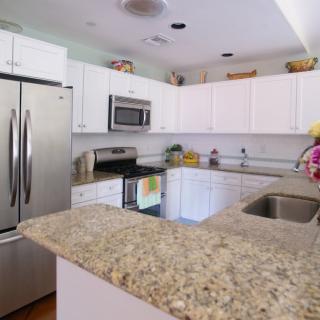
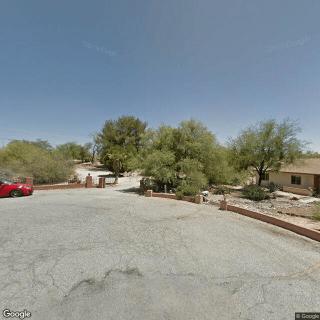
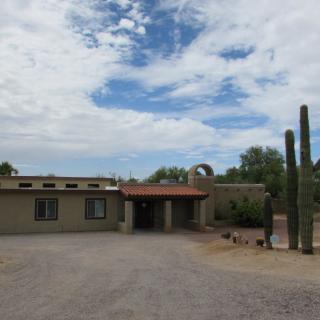
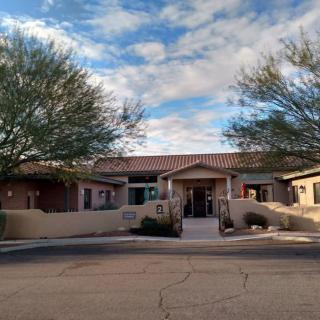
- The grounds are beautiful, and the houses are clean and pleasant.
- The meals are prepared from fresh ingredients with love.
- The staff takes their jobs very seriously and cares about residents as if they are their own family.
- The facility goes above and beyond, especially during the pandemic.
- The caregivers are the best in Tucson and genuinely kind and helpful.
- Crossroads feels like a place filled with love, respect, and dignity for residents and employees alike.
- The rooms are larger than at other facilities, and the place is very clean.
- Families feel comfortable sending their loved ones to Crossroads.
Cons
 The care is terrible due to poor management, disorganization, and non-existent communication.
- The director does not appear to manage the staff, and there is effectively no one else in charge.
- Crossroads experiences a revolving door of temps and staff who don’t stay long enough to know what’s going on.
- The best caregivers leave shortly after they are hired, creating gaps in care.
- Simple care requests are ignored, leading to issues like residents receiving pounds of candy.
- There is no ongoing monitoring of daily living activities for residents with severe dementia, causing preventable harm.
- A caregiver arrived at work intoxicated, and there was no proactive management response.
- There is a lack of proactive communication from the facility, aside from monthly invoices.
- The facility failed to get COVID boosters for residents for an extended period.
- Prescription orders and clinical directives often fail to reach the right place, requiring families to chase staff.
- Crossroads is mismanaged to the point of being dangerous.
Review
Crossroads Adult Care Homes in Tucson is best suited for families seeking a small, home-like, family-owned environment where compassionate, personalized care remains possible and where loved ones benefit from a warm, attentive staff that truly treats residents like family. The setting, with pleasant grounds and well-kept houses, supports a comfortable daily rhythm, and memory-care units can deliver meaningful attentiveness for residents with dementia. When families are able to stay closely involved, ask detailed questions, and maintain a steady line of communication, Crossroads can be a place that feels like a reassuring, near-home option rather than a clinical facility.
Those who should strongly consider alternatives are families facing high medical fragility or complex clinical needs that demand unwavering oversight, consistent staffing, and rapid, documented communication. If a resident depends on reliable adherence to ADLs, strict nutrition and hydration monitoring, timely medication management, and proactive safeguarding against safety lapses, the risk profile at Crossroads becomes significant. Reports of staff turnover, a revolving door of temps, and intermittent management oversight raise red flags for anyone needing predictable routines, rigorous documentation, and rapid escalation when problems arise. In short, for families prioritizing clinical reliability over intimate, homey ambiance, other Tucson options tend to be a wiser choice.
On the upside, the facility earns credibility through tangible positives. The grounds are beautiful, and the homes feel clean and welcoming. Several reviewers highlight fresh, well-prepared meals and a genuine sense of warmth from caregivers, with dementia residents receiving attentive, compassionate care in the memory-care setting. The staff who stay can be described as kind, patient, and deeply dedicated, traits that many families value highly when weighing a placement. Instances where Crossroads is praised as a “gem” or as an environment where staff go above and beyond during challenging periods reinforce the potential for a high-touch, family-centered experience when leadership and consistency align with the residents’ needs.
However, the constellation of serious governance and communications issues cannot be ignored. Multiple accounts describe mismanagement and disorganization that cascade into daily care. Internal communication is frequently cited as non-existent or inconsistently disseminated, with key instructions, care plans, and even basic reminders slipping through the cracks. The staffing picture is often unstable, with long delays in returning calls and a visible pattern of temporary workers who lack continuity with residents’ histories. Several families report distressing lapses in basic care, hydration, dental hygiene, and ADL supervision, that can compound medical risks for residents with dementia or other chronic conditions. The most alarming anecdotes describe intoxicated caregivers on shift, little proactive management, and delayed responses to urgent issues, culminating in experiences that feel dangerously out of step with safe elder care.
The key to whether pros can offset these cons lies in how robust a family’s involvement can be kept and how carefully the operation can be managed day-to-day. If Crossroads can implement stable staffing, maintain transparent communication, and establish clear, consistently enforced care plans with rapid escalation when deviations occur, its strengths, personal attention, warm caregiver relationships, and a nurturing environment, remain highly compelling. Yet the reality many families face is a need for steady clinical governance that supports residents when complex medical issues arise and for a home-like setting that does not sacrifice safety or accountability. For many in Tucson, the decision hinges on whether the family can tolerate ongoing vigilance and actively drive quality improvements or whether a more structured, highly supervised facility would deliver peace of mind with fewer risk factors.
For families choosing Crossroads, practical due diligence is non-negotiable. Schedule multiple, extended visits at varying hours; demand direct access to leadership and a clear point of contact for daily care questions. Request a transparent, current care plan that links to documented ADL requirements, hydration and nutrition monitoring, and oral hygiene oversight; review incident logs and any corrective action plans; verify staffing ratios and turnover rates; and insist on a stable caregiving team assigned to the resident with predictable handoffs. Ask to speak with the on-site medical director or primary nurse practitioner about how prescriptions and medical orders are reconciled and communicated. Establish a formal family liaison, and set up weekly conferences to review progress, concerns, and milestones. If these assurances cannot be secured, or if communication remains unreliable despite consistent effort, the prudent move is to pursue a facility with a stronger track record of reliable oversight and proactive problem-solving.
 Board and Care Home
 Activities on-site
 Devotional services off-site
 Indoor common areas
 Private
 Tucson International (14 miles away)
 Diabetic care
 Incontinence care
 Medication management
 Meals provided


 Understanding the Nuances of Palliative Care and Hospice: A Comprehensive Exploration
 Fecal Incontinence in Older Adults: A Comprehensive Guide
 Nurturing Well-Being Through Gardening: A Detailed Guide for Senior Enthusiasts