

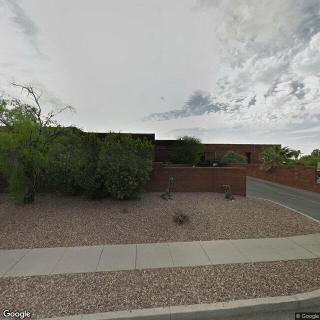
1304 West Sonora, Tucson, AZ 85745
For more information about senior living options: (866) 208-4318
Casa Theresita V Costs & Pricing
Casa Theresita V offers competitive pricing for its residents compared to the broader market in Pima County and the state of Arizona. For instance, their semi-private rooms are priced at $1,800 per month, significantly lower than the county average of $2,805 and state average of $2,820. Similarly, both the studio and private room options at Casa Theresita V are available for $2,500 each, which is notably more affordable than the Pima County averages of $3,786 for studios and $3,332 for private rooms. This pricing strategy underscores Casa Theresita V's commitment to providing accessible housing solutions while ensuring high-quality care within a community-oriented environment.
| Floor plans | Casa Theresita V | Pima County | Arizona |
|---|---|---|---|
| Semi-Private | $1,800 | $2,805 | $2,820 |
| Studio | $2,500 | $3,786 | $3,829 |
| Private | $2,500 | $3,332 | $3,345 |
Memory care communities with a similar price nearby
-
from -$250 / mo

Arroyo Gardens
$1,550 to $5,330 / month24.7 miles away -
from +$328 / mo

Sunrise at River Road
$2,128 to $3,530 / month4.9 miles away -
About the same

Sherwood Village Assisted Living & Memory Care
$1,750 to $2,450 / month10.0 miles away -
from +$300 / mo
Oasis Assisted Living Center
$2,100 to $3,500 / month1.9 miles away -
from +$200 / mo
General Adult Care Home
$2,000 to $2,800 / month11.0 miles away
Overall Review of Casa Theresita V
Cons
 The reviewer states that the facility’s rules are arbitrary and subject to the manager’s discretion, with no consistent standards.
- They claim the staff do not care about the rules or the renter’s concerns and do not listen regarding their belongings.
- They describe storage of belongings as unsafe, noting there is no guaranteed security and items can be left in an unlocked wooden shed outside.
- They report outsiders can enter through the gates and access items, indicating poor overall security.
- They characterize the atmosphere as distasteful and not conducive to trust or reasonableness.
- They note ongoing evictions and fluid, subjective policies that create instability.
- They express discomfort with the neighborhood.
Review
Casa Theresita V in Tucson is best suited for residents who can tolerate a casual, loosely governed environment where policies feel discretionary and personal belongings may not be safely secured. This community appears to prioritize flexibility over formal structure, making it a fit only for individuals who do not require rigid rules, documented procedures, or consistent enforcement. For someone who values predictable routines, secure storage, and transparent governance, this setting is unlikely to meet expectations. The neighborhood context also matters; families seeking a tranquil, clearly safe surrounding should consider safer options elsewhere. In short, this is a choice for those who are comfortable navigating an informal administrative tone and who can absorb the risk of inconsistent practices.
Those who should seriously consider alternatives include residents who need dependable security for their possessions, or families wanting documented, enforceable rules and stable management. The reviews signal a lack of standardization and accountability, with ongoing concerns about who controls the environment and how decisions are made. Eviction appears to be a real possibility in at least one account, which is a red flag for anyone relying on continuity of care or long-term residency. If property safety, predictable policies, or easy-to-audit operations are priorities, a community with transparent governance and fixed guidelines should be pursued instead. For any resident with valuable belongings or a preference for consistently applied rules, alternatives are strongly advised.
The apparent pros of the setting are minimal and do not substantially offset the core drawbacks. A permissive approach to rules might attract residents who dislike rigid oversight, but this strength is eclipsed by the absence of enforceable standards and reliable administration. The lack of clearly defined policies translates into a fluid environment where expectations can change without notice. In practical terms, this undermines trust: residents may sign agreements that do not guarantee the security of their belongings or a stable set of rules they can count on. When discretion supplants procedure, outcomes become unpredictable, and that unpredictability is incompatible with long-term senior living needs.
The primary cons center on security, consistency, and governance. One account describes a renter who publicly acknowledged disregard for established rules, coupled with haphazard enforcement and no assurance of safe storage. Items were reportedly left unsecured, with belongings accessible to outsiders and even storage areas described as open, unlockable spaces. The same narrative includes outright eviction and a sense that decisions proceed at the discretion of an individual rather than a documented policy. Such conditions raise legitimate concerns about theft, loss, and resident autonomy. The combination of unsafe storage, inconsistent rules, and eviction risk weighs heavily against suitability for most seniors who require reliable care environments and predictable daily life.
Practical next steps are essential for families evaluating options. Seek written policy documents that govern belongings, storage, and enforcement of rules, and request a clear outline of eviction procedures. Inspect security measures in person: gate controls, door locks, surveillance, and the availability of lockable storage for personal items. Speak with current residents and caregivers about how policies are applied day to day, and ask for a tour at different times to observe consistency in staff behavior and resident interactions. Compare these findings with other Tucson communities that emphasize stability, transparent governance, and proactive protection of resident property. The choice should hinge on whether the environment can deliver reliable safety, predictable rules, and accountable leadership.
In conclusion, Casa Theresita V is not recommended for seniors who prioritize security, consistency, and trustworthy management. It may appeal to those who value a relaxed atmosphere and are prepared to accept discretionary rules and the associated risks. For families and residents who demand documented standards, tight control of belongings, and a stable, well-supervised environment, exploring other options is strongly advised. A careful, written comparison of contracts, policies, and on-site practices will reveal the degree to which any potential upside can be realized, and will guide toward communities that offer the peace of mind essential to comfortable, ongoing senior living.
 10 resident community capacity
 Assisted Living
 Board and Care Home
 Memory Care
 Cats allowed
 Dogs allowed
 Cable or satellite TV
 Dining room
 Fully furnished
 Garden
 Housekeeping services
 Move-in coordination
 Outdoor space
 Private
 Telephone
 Wi-Fi/high-speed internet available
 Tucson International (8 miles away)
 24-hour supervision
 Activities of daily living assistance
 Assistance with bathing
 Assistance with dressing
 Assistance with transfers
 Diabetes diet
 Meal preparation and service
 Medication management
 Special dietary restrictions
 Transportation arrangement (medical)
 Transportation to doctors appointments

 Excellent access to healthcare, dining, and recreation nearby.



 Vibrant Senior Living: A Comprehensive Guide for Active Older Adults
 Assisted Living and Memory Care: Understanding Their Core Differences
 Choosing the Right Senior Care: A Detailed Exploration of Assisted Living and Nursing Homes