
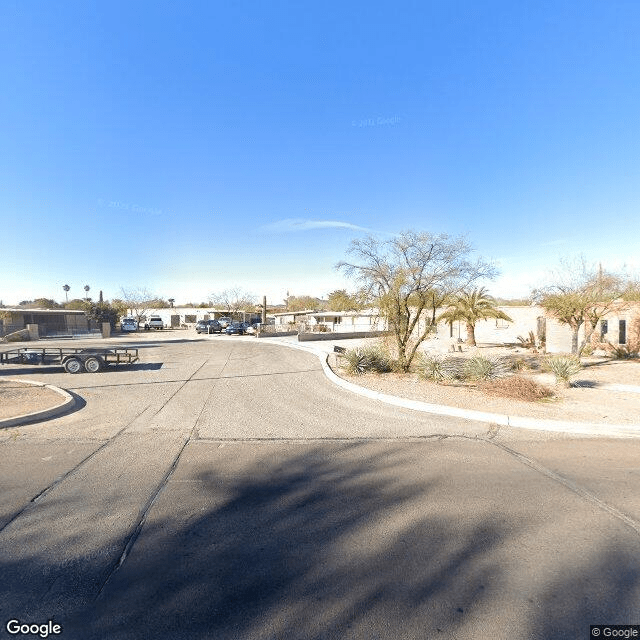
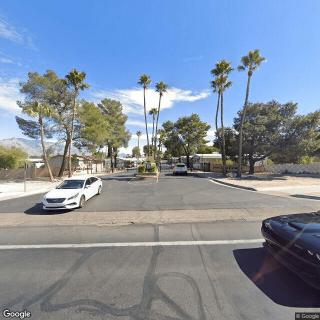
1621 N Silverbell Road, Tucson, AZ 85745
To contact a resident: (520) 622-0488
For more information about senior living options: (866) 208-4318
Avra Valley LLC Costs & Pricing
Avra Valley LLC presents a competitive pricing structure for its room types when compared to Pima County and the broader Arizona market. For private rooms, Avra Valley's rates range from $2,500 to $4,000, which undercuts both county and state averages of $3,332 and $3,345 respectively. The semi-private rooms are priced at $2,800, aligning closely with Pima County's cost of $2,805 but still slightly lower than the state average of $2,820. Notably, the one-bedroom suites at Avra Valley LLC are offered at $4,500, which is significantly above Pima County's average of $3,660 and Arizona's statewide figure of $3,532. Overall, while Avra Valley LLC is well-positioned in certain categories by offering lower costs for private and semi-private accommodations, its pricing on one-bedroom units suggests a premium that may reflect additional amenities or services provided.
| Floor plans | Avra Valley LLC | Pima County | Arizona |
|---|---|---|---|
| Private | $2,500 to $4,000 | $3,332 | $3,345 |
| Semi-Private | $2,800 | $2,805 | $2,820 |
| 1 Bedroom | $4,500 | $3,660 | $3,532 |
Memory care communities with a similar price nearby
-
from +$200 / mo

Casa De Los Abuelos Dos
$2,700 to $3,200 / month6.5 miles away -
About the same
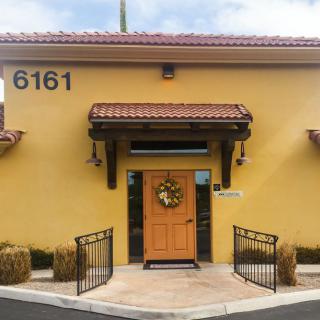
Fairmount Assisted Living
$2,500 to $3,500 / month8.7 miles away -
from +$450 / mo
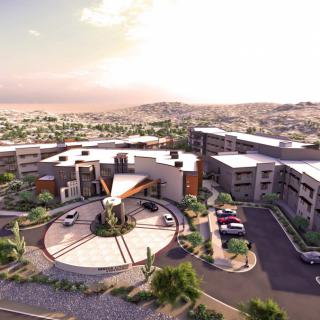
La Sonora at Dove Mountain
$2,950 to $5,270 / month13.4 miles away -
from -$372 / mo
Sunrise at River Road
$2,128 to $3,530 / month4.7 miles away -
from +$95 / mo
Atria Campana Del Rio
$2,595 to $7,095 / month4.8 miles away
Overall Review of Avra Valley LLC
Pros
 They feel very thankful for this place and for the staff.
- They appreciate the staff who work there.
- They value the assistance and care provided.
- The visit with a loved one was pleasant.
- The experience was unobtrusive.
- The clients are well looked after.
- They were not rushed, and things were taken care of efficiently.
- They feel thankful and blessed.
Cons
 It was the worst facility ever.
- The reviewer would not recommend the facility to anyone.
- The facility received zero stars.
Review
Avra Valley LLC in Tucson is best suited for families seeking a smaller, hands-on assisted-living environment where staff are readily accessible and genuinely engaged with residents. The strongest signal from the favorable feedback is that care teams are attentive, patient, and unhurried in conversations and tours with families. This facility appears to function well for residents who do not require constant medical intervention but benefit from steady daily help, respectful social interactions, and a calm atmosphere during visits. The tone of the positive reviews suggests a home-like setting where routines are predictable and staff know residents by name, creating a sense of security for families who value personal connection over glossy amenities.
Those with high clinical needs, complex medical conditions, or a desire for aggressive memory-care programming may want to consider alternatives. The negative feedback points to serious concerns from some families who would not recommend Avra Valley to others, signaling potential gaps in oversight, responsiveness, or advocacy. If a resident requires robust case management and consistently proactive problem-solving from administration or social work, this community may not consistently deliver. For families prioritizing strong, centralized communication and formal escalation processes, it would be wise to compare how this facility handles concerns against other options.
On the upside, the standout pros center on care staff and the manner in which care is delivered. Residents are described as well looked after, and visits feel non-intrusive, with staff allowing families time to address needs without rushing them. The ability to get things handled efficiently when required signals operational competence and a respectful approach to family involvement. These strengths translate into tangible benefits for daily living: reliable assistance with activities of daily living, steady monitoring of residents, and a calm environment where interactions feel sincere rather than perfunctory. For families who value a personal touch and steadiness in care routines, this is a meaningful advantage.
However, the single harsh appraisal cannot be ignored. The plain accusation of being the worst facility ever, supported by the assertion that several social workers agreed, suggests structural or cultural weak points. If social work guidance is inconsistent or if families feel unheard, the risk is that issues go unresolved, or families feel pressured to look elsewhere. This kind of negative perception often reflects problems with internal communication, care planning transparency, or responsiveness during crunch times. The reality may be that experiences vary by shift, by staff assignment, or by how well administrative leadership fields concerns. Still, the weight of a blunt warning should not be dismissed.
To balance the pros and cons, a practical decision framework is essential. Pros matter when a resident thrives under personal, gentle caregiving and when visits can be integrated without disruption. Cons matter sharply when trust hinges on predictable advocacy, rapid issue resolution, and visible clinical oversight. Pros offset cons only if the facility can demonstrate consistent staffing levels, clear care plans, and reliable escalation pathways. Prospective families should gather specifics: typical staff-to-resident ratios during day and night, the presence of a dedicated social worker, documented care plans, and recent responses to concerns. Shadow visits and conversations with current residents or families will illuminate whether the positives hold steady or the negatives reappear.
Bottom line: Avra Valley LLC is a practical choice for seniors who want a modest, respectful, and unhurried environment with dependable daily support, provided staff turnover is low and communication remains clear. It is less suitable for residents requiring intensive clinical management, aggressive social work advocacy, or very structured memory-care programming. Families should schedule a candid tour, ask to see sample care plans, request to meet the direct care team, and probe for how concerns were handled in the past months. If after visits the impression is one of aligned expectations and steady, compassionate care, Avra Valley can be a solid fit; if red flags persist around advocacy and responsiveness, exploring alternatives with urgency is advisable.
 Board and Care Home
 Memory Care
 Activities off-site
 Beautician on-site
 Indoor common areas
 Outdoor common areas
 Private
 Private bathrooms
 Respite or short term stays offered
 Wheelchair accessible showers
 Tucson International (10 miles away)
 Diabetic care
 High acuity care
 Incontinence care
 Medication management
 Kosher

 5 Early Indicators of Dementia and What You Can Do
 8 Important Indicators That Memory Care May Be Necessary
 Delving into the Inner World of Dementia: Insights into Thoughts and Awareness