For more information about senior living options: (866) 208-4318
4.3 from 106 reviews
5 stars
86
4 stars
0
3 stars
1
2 stars
1
1 stars
18
Casa Alvita Costs & Pricing
Casa Alvita offers competitive pricing for its residential care services, with costs significantly lower than those of both Pima County and the state of Arizona. For a semi-private room, Casa Alvita charges $1,500 per month, which is notably more affordable compared to the county average of $2,805 and the state average of $2,820. Similarly, in terms of private accommodations, Casa Alvita's rate is $2,000 per month - again demonstrating cost-effectiveness when juxtaposed with Pima County's average of $3,332 and Arizona's overall average of $3,345. This positioning not only highlights Casa Alvita's commitment to providing quality care at accessible rates but also makes it an attractive option for families seeking affordable solutions in assisted living.
Floor plans
Casa Alvita
Pima County
Arizona
Semi-Private
$1,500
$2,805
$2,820
Private
$2,000
$3,332
$3,345
Senior living communities with a similar price nearby
from +$50 / mo
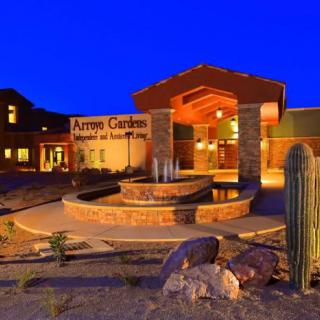
Arroyo Gardens
4.6 from 46 reviews
$1,550 to $5,330 / month
19.7 miles away
About the same
The Peaks at Santa Rita
4.5 from 73 reviews
$1,495 to $1,995 / month
23.0 miles away
from +$145 / mo
Fellowship Square at Tucson
4.3 from 89 reviews
$1,645 to $2,235 / month
8.2 miles away
from +$250 / mo
Sherwood Village Assisted Living & Memory Care
4.1 from 64 reviews
$1,750 to $2,450 / month
8.0 miles away
About the same
Omega Assisted Living II
5 from 1 review
$1,500 to $2,500 / month
8.9 miles away
Overall Review of Casa Alvita
common
Staff are described as kind
Residents and families repeatedly describe staff who are kind and supportive.
Many reviewers say the people there treat them with love, respect, patience, and empathy. Several also mention staff being organized and helpful during a stressful arrival. A smaller set of reviews are strongly negative about staff conduct, including claims of rudeness and harsh treatment.
differentiator
Strong help on arrival
Reviews frequently highlight practical support when people first arrive.
Across many comments, reviewers describe help with basics like food, clean clothes, and hygiene items. Others mention guidance and emotional support, plus transportation or assistance connecting to the next step after arrival. Some reviewers also describe a sense of safety and being protected during their stay.
common
Food and shelter details
Residents commonly mention getting food, a place to stay, and everyday necessities.
Reviewers often talk about being fed and having a room or shelter during their time there. Several describe receiving items beyond meals, such as blankets, shoes or clothing, and personal supplies. While most mentions are positive, a few reviews raise concerns about how belongings were handled during their stay.
caveat
Controversy shows up in negative reviews
Some reviews raise serious concerns about legitimacy and transparency.
A set of reviews is sharply critical, describing the operation in negative terms and questioning what it is doing and how it is funded. Some reviewers also claim there was secrecy or a lack of transparency. These concerns stand alongside the much larger number of positive reviews that focus on care, organization, and support.
How we summarize
We summarize when many written reviews mention each theme; a review can touch several themes, and only frequently mentioned themes are displayed.
Features
Types of Care
Board and Care Home
Amenities
Private
Transportation
Tucson International (3 miles away)
Care Services
Diabetic care
Nearby Places of Interest
This part of Tucson, Arizona offers a convenient and diverse range of amenities for seniors looking to settle in the area. With multiple pharmacies, hospitals, and physicians' offices nearby, access to healthcare services is easily accessible. There are also a variety of dining options ranging from fast food to more upscale restaurants, as well as cafes for socializing or enjoying a quiet cup of coffee. Transportation options are abundant with close proximity to the airport and rental car center. For entertainment, there is a movie theater nearby for catching the latest films, and several places of worship for spiritual needs. Additionally, the beautiful Reid Park provides a peaceful outdoor space for leisurely walks or picnics. Overall, this area offers a mix of convenience and recreational opportunities making it an attractive choice for senior living in Tucson.
Pharmacies
Walgreens (0.8 miles)
Walgreens (2.8 miles)
Fry's Pharmacy (2.8 miles)
Walgreens (3.9 miles)
Fry's Pharmacy (4.3 miles)
CVS Pharmacy (4.4 miles)
Safeway Pharmacy (4.6 miles)
Hospitals
University of Arizona Healthcare Hospital (1.5 miles)
VA Hospital Building 80/Lab (2.5 miles)
VA Medical Center (2.5 miles)
Tucson Natural (4.7 miles)
Arizona Cancer Center (5.5 miles)
Physicians
UAMC South Campus Outpatient Clinics (1.6 miles)
Clinica Del Alma (2.2 miles)
Savahcs Saguaro Clinic (2.5 miles)
Midvale Medical Center (3.8 miles)
Children's Medical Center of Tucson (4.1 miles)
Complimentary Medicine Association (4.9 miles)
SoundPoint Hearing Centers (5.2 miles)
Restaurants
In-N-Out Burger (1.7 miles)
Culver's (2.2 miles)
Beyond Bread (2.4 miles)
McDonald's (2.6 miles)
Desert Diamond Casino bingo hall (3 miles)
Desert Diamond Buffet (3 miles)
Tacos Apson (3.2 miles)
Cafes
Starbucks (2.1 miles)
Dutch Bros Coffee (2.3 miles)
The Diamond Cafe (3 miles)
Starbucks (4.2 miles)
Dutch Bros Coffee (4.5 miles)
Starbucks (4.7 miles)
Exo Roast Co. (4.8 miles)
Transportation
Tucson Airport Executive Terminal - TIA Tower (2.1 miles)
Lazar Enterprises (2.2 miles)
Delta Airlines (2.3 miles)
Main Terminal (2.3 miles)
Concourse B (2.3 miles)
Tucson International Airport (TUS) (2.3 miles)
Rental Car Center (2.3 miles)
Theaters
Century Theaters at Tucson Marketplace (2.3 miles)
Casa Alvita offers competitive pricing for its residential care services, with costs significantly lower than those of both Pima County and the state of Arizona. For a semi-private room, Casa Alvita charges $1,500 per month, which is notably more affordable compared to the county average of $2,805 and the state average of $2,820. Similarly, in terms of private accommodations, Casa Alvita's rate is $2,000 per month - again demonstrating cost-effectiveness when juxtaposed with Pima County's average of $3,332 and Arizona's overall average of $3,345. This positioning not only highlights Casa Alvita's commitment to providing quality care at accessible rates but also makes it an attractive option for families seeking affordable solutions in assisted living.
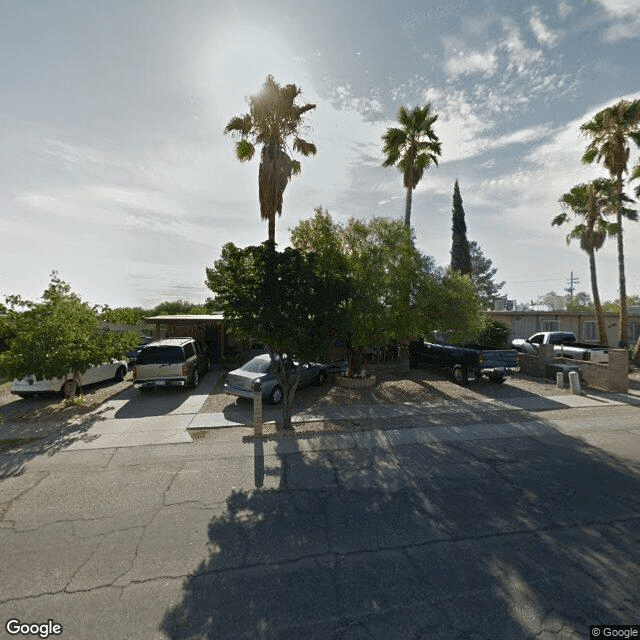
Casa Alvita is located at 5343 S. Cassia Way, Tucson, AZ 85706 in Pima County, Arizona
Nearby Communities
Sierra Adult Care LLC
Tucson, AZ
3.5 from 11 reviews
Personalized care including diabetes management; on-site activities and meals; indoor common areas.
Betania Care Home
Tucson, AZ
3 from 2 reviews
Friendly and attentive staff in a calm, quiet setting.
Sierra Adult Care
Tucson, AZ
3.5 from 11 reviews
$5,070 / month
Small, personalized board-and-care setting with 24-hour supervision, tailored meals and dietary accommodations, structured activities, and transportation coordination in a furnished environment.
Ranchwood Mobile Home Park
Tucson, AZ
3.7 from 87 reviews
$3,480 to $4,380 / month
Proactive management with a supportive, close-knit community and well-kept properties in a convenient location.
Sapphire Of Tucson Nursing And Rehab
Tucson, AZ
3.6 from 109 reviews
24-hour supervision with ADL support and diverse amenities
Luna Care Home
Tucson, AZ
4.5 from 2 reviews
Comprehensive care with meals, activities, and dietary accommodations
Marshall Home For Men
Tucson, AZ
4.2 from 6 reviews
$1,500 to $2,150 / month
Friendly staff and good meals; supports low-income men, including veterans.
Park Avenue Health & Rehab Center
Tucson, AZ
3.9 from 101 reviews
$4,020 to $4,770 / month
Private rooms and strong rehab-focused care in a well-located Tucson setting.
Woodland Palms Memory Care Community
Tucson, AZ
4.6 from 91 reviews
$4,295 to $4,995 / month
Warm, caring staff with engaging activities in a welcoming environment.
Home health care has become essential for supporting independence among the aging population, offering diverse services such as skilled nursing and rehabilitation in familiar environments, while also incorporating technology for personalized care. Despite its benefits, including improved recovery rates and emotional well-being, challenges like safety, staff availability, and insurance navigation must be managed for effective implementation.
Home health care offers a range of clinical services provided in a patient's home, including nursing and therapy, tailored to individual needs, particularly for aging seniors with chronic conditions. This approach enhances patient independence, promotes better disease management, and utilizes technology for real-time monitoring while fostering collaboration among healthcare providers and family members.
Seniors benefit from ride-hailing services like Uber and Lyft, which provide convenient and accessible transportation options that promote independence and social engagement, while addressing mobility challenges. These platforms have adapted to meet senior needs with user-friendly features and safety measures, although costs can be a concern; community programs may help subsidize rides for older adults.
Get PricingAsk A QuestionSchedule A TourContact Senior Advisor
By clicking submit, you agree to our Partner's Terms of Use. You
also consent to receive calls and texts, which may be autodialed, from our Partner. Your consent is not a condition to
using our Partner's service. Please visit our Partner's Privacy Policy for information about their privacy practices.



 Board and Care Home
 Private
 Tucson International (3 miles away)
 Diabetic care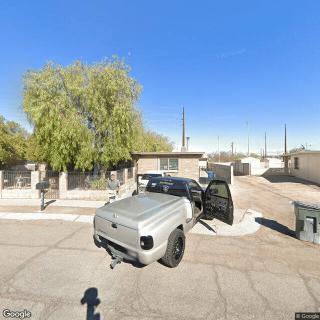
 Personalized care including diabetes management; on-site activities and meals; indoor common areas.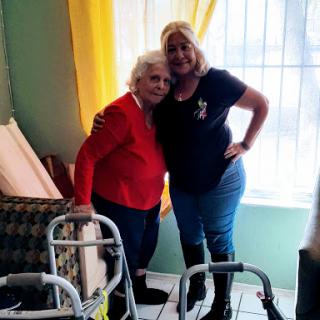


 Understanding Home Health Care: A Comprehensive Guide
 Home Health Care Demystified: A Comprehensive Guide for Families and Caregivers
 Seniors and Modern Transportation: Exploring Uber, Lyft, and Other Ride-Hailing Options