
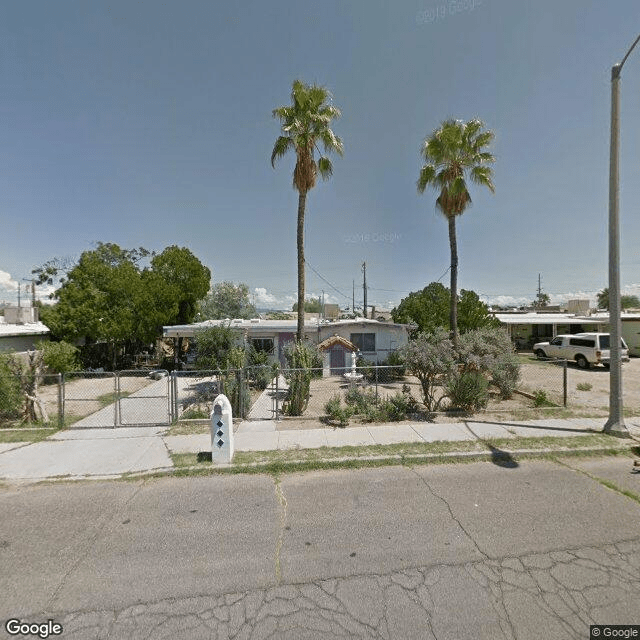
5433 S. 13th Ave., Tucson, AZ 85706
To contact a resident: (520) 295-0676
For more information about senior living options: (866) 208-4318
Angels in Paradise Adult Care Home Costs & Pricing
Angels in Paradise Adult Care Home offers competitive pricing for its residents, especially when compared to both Pima County and the broader Arizona state averages. For semi-private accommodations, Angels in Paradise charges $1,000 per month, significantly lower than the county's average of $2,805 and the state's average of $2,820. This represents a considerable saving for families seeking care options. Similarly, the private room rate at Angels is set at $1,500 monthly, which again stands in stark contrast to Pima County's average of $3,332 and Arizona's state average of $3,345. These cost advantages make Angels in Paradise an appealing choice for families looking for quality care without the financial strain often associated with adult care facilities.
| Floor plans | Angels in Paradise Adult Care Home | Pima County | Arizona |
|---|---|---|---|
| Semi-Private | $1,000 | $2,805 | $2,820 |
| Private | $1,500 | $3,332 | $3,345 |
Senior living communities with a similar price nearby
-
About the same

The Lakes Apartments
$975 to $1,095 / month9.0 miles away -
About the same
Mr. Te's Honorable Adult Homecare
$1,000 to $2,000 / month9.2 miles away
Overall Review of Angels in Paradise Adult Care Home
Pros
 Angels of Care is described as an amazing place to work, with Sergio seen as a person who is for the people.
- The company sets the standard for what a boarding home should provide.
- Sergio is helpful and kind to families seeking housing.
- Angels of Care has lifted many people to new heights of well-being.
- The organization maintains a safe, cohesive, and supportive community for all residents.
- Residents feel treated like family and supported by the care they receive.
- Sergio keeps the home clean and looks out for residents’ safety.
Review
Angels in Paradise Adult Care Home in Tucson is best suited for seniors who value a warm, home-like setting where safety, attentiveness, and a strong sense of community come first. The leadership and caregiving team are repeatedly described as genuinely dedicated to residents’ well-being, with Sergio singled out as a person-centered administrator who prioritizes people over process. This is not a luxury resort; it is a practical, human-centric option that delivers reliable daily support, clean surroundings, and steady companionship. For families seeking a place where residents are treated like family, and where staff responsiveness and warmth are consistently evident, this community stands out in the Tucson market.
Those who may want to consider alternatives are families whose loved ones require pronounced medical oversight, intensive rehabilitation, or specialized memory-care programming. The reviews acknowledge a small, boarding-home atmosphere rather than a large, clinical campus. Facilities that offer 24/7 licensed nursing, on-site physicians, formal memory-care wings, or expansive activity programs may better serve residents with complex medical needs or those who require highly structured, medically integrated care. For households prioritizing upscale amenities or extensive clinical services, exploring larger operators could reduce gaps in medical coordination.
The strongest pros center on leadership, safety, and a strong sense of belonging. Sergio’s approach is consistently described as compassionate, accessible, and dedicated to “the people,” which translates into attentive supervision and quick problem-solving. Residents report feeling protected and respected, with staff who keep living spaces clean and coworkers who operate with cohesion and purpose. The community atmosphere, marked by genuine fellowship, practical daily routines, and a culture of mutual support, appears to reduce anxiety and social isolation. In a market where care quality can feel transactional, the humanized, family-tinged environment here is the defining asset.
The primary cons are implicit rather than explicit in the reviews, reflecting the trade-offs of a smaller boarding-home model. There is no indication of high-end amenities, expansive programming, or hospital-level medical resources on site. Families should expect a modest, home-focused setting with fewer bells and whistles than larger assisted living communities. For residents needing frequent nursing interventions, extensive rehabilitation services, or tightly structured, facility-wide activity calendars, these limitations could be limiting. The challenge is ensuring that care plans align with medical complexity and if long-term medical needs grow, a transition to a more comprehensive campus may be warranted.
Yet, the favorable elements, and how they offset the drawbacks, are compelling for many families. The core strengths, trustworthy leadership, a safe and clean environment, and a pervasive sense of inclusion, tend to compensate for limited luxury and clinical depth. The warmth, predictability, and resident-to-staff familiarity reduce stress and confusion for seniors who thrive on routine and personal connections. When care is personal and staff are actively engaged, the risk of neglect or disengagement lowers significantly. In short, the human connection cultivated here can trump the absence of resort-level amenities for residents who prioritize dignity, safety, and belonging over opulence.
For families making a decision, practical steps can clarify fit. Schedule a face-to-face visit to observe daily interactions, question staff-to-resident ratios, and understand how care plans are developed and reviewed. Ask Sergio about emergency procedures, on-site medications, and how medical needs are coordinated with external providers. Inquire about intake processes, resident matching, and the flexibility of care as needs evolve. Request references from current families, and verify licensing and inspection records with local authorities. If warmth, trust, and a tight-knit community top the list of priorities, Angels in Paradise offers an unusually compelling proposition in this Tucson market; if medical complexity and upscale amenities drive the decision, it may be prudent to keep exploring alternatives with stronger clinical footprints.
 Board and Care Home
 Private
 Tucson International (3 miles away)


 Managing Nursing Home Expenses After Medicare Coverage Ends
 Is a Geriatric Care Manager the Right Choice for Your Family?
 Compassionate Conversations: How to Comfort Someone Who Is Grieving