

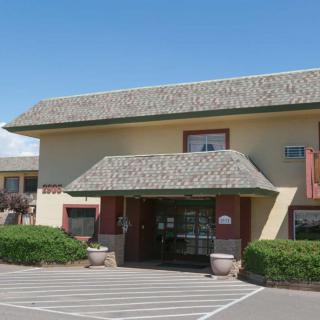
2345 East Thomas Road #462, Phoenix, AZ 85016
To contact a resident: (602) 283-5050
For more information about senior living options: (866) 208-4318
Overall Review of Synergy HomeCare Phoenix
Pros
 The staff are courteous to her needs.
- All of the caregivers are professional in their work.
- They are always on time to appointments.
- They keep good communication about her progress and answer questions.
- The service is consistently reliable and on time.
- Caretakers have been reliable and on time.
- The service offers great care.
- The staff have been helpful and friendly.
- It is highly recommended to other families.
Cons
 The reviewer described the care as grossly inadequate, noting bandages were not changed for two days.
- Bandages were soaked with blood.
- Hundreds of maggots crawled around the wounds after the bandages were removed.
- There were holes in the foot that had never been there.
- The leg had to be amputated above the knee.
- There were bruises where the patient had been dropped.
- The reviewer would not recommend this company to their worst enemy.
- The reviewer states that they lied about everything and would never forgive them for how they treated the mother.
Review
Synergy HomeCare Phoenix is best suited for families seeking in-home, practical personal care and routine medical assistance in the Phoenix area, with an emphasis on predictable scheduling and straightforward caregiver communication. It works well for clients who can supervise day-to-day tasks, tolerate some caregiver turnover, and want to keep a loved one at home rather than pursuing a facility-based option. The arrangement is most effective when a clear care plan and a reliable point of contact exist, enabling families to stay informed while a care team handles routine activities like bathing, dressing, light wound care, and medication reminders.
Those weighing alternatives should consider that this agency presents real advantages for steadiness and responsiveness, but it comes with caveats. High-acuity needs or strict, ongoing clinical oversight may outstrip the agency’s typical coverage, and variability in caregiver qualifications can surface if a strong supervisory framework is not in place. For families seeking highly specialized wound care, continuous RN-level support, or consistently uniform staffing, other providers or facility-based options may offer more robust, predictable guarantees. In short, this is a practical home-care choice for many, not a guaranteed solution for every complex medical scenario.
The strongest positives revolve around reliability, courtesy, and clear communication. Several reviews highlight staff who are on time, professional, and attentive to the client’s needs, with caregivers who keep families updated about progress and answer questions promptly. For tasks such as applying medications to the skin, assisting with showers, and meeting personal care needs, caregivers can deliver steady, workable support. The ability to transition to a dependable caregiver after an initial period also matters: once a consistent match is found, families report a sense of reliability and comfort knowing someone is there on schedule and following through on instructions.
Yet the most sobering counterpoint comes from a single, extreme negative experience that underscores serious safety risks. A caregiver failure to change bandages led to a traumatic wound infection, a cascade of complications, and ultimately an amputation. This was paired with account-specific claims of unqualified staff and misrepresentation. While not representative of every case, the incident signals that care quality is not uniformly guaranteed and that a lapse can have catastrophic consequences. That dichotomy, generally solid daily care for many clients versus a potential, high-stakes failure, defines the core risk in choosing this service.
Practical decision-making should focus on how to minimize that risk in concrete ways. Prospective clients should request a dedicated supervisor or care manager who remains involved, insist on a consistent primary caregiver, and obtain a planned, written wound-care protocol if needed. Ask for detailed references, background checks, and a clear escalation path for any missed tasks or concerns. Compare alternatives that offer RN oversight or 24/7 on-call support, and weigh whether the cost-to-risk balance favors a larger agency with stronger clinical infrastructure or a residential facility for higher acuity needs.
If proceeding with Synergy HomeCare Phoenix, implement a disciplined onboarding and review process. Establish a short-term trial with defined tasks, a fixed caregiver assignment, and weekly coordination calls to review progress and adjust goals. Ensure an explicit emergency plan, clear documentation of care instructions, and prompt reporting of any adverse events. Families should insist on open, frequent updates and a quarterly care-review meeting to re-verify fit, expectations, and safety. With vigilant supervision and careful caregiver pairing, this agency can deliver steady, home-based care, but only when safeguards are in place to prevent the worst-case scenarios that have occurred in rare cases.
 Phoenix Sky Harbor International (3 miles away)







 Understanding the Nuances of Palliative Care and Hospice: A Comprehensive Exploration
 Fecal Incontinence in Older Adults: A Comprehensive Guide
 Nurturing Well-Being Through Gardening: A Detailed Guide for Senior Enthusiasts