At Sun Health Residence Care, the costs for various room types reflect a premium level of service and care in comparison to both Maricopa County and the broader state of Arizona. For a semi-private room, residents can expect to pay $3,540 per month, which is significantly higher than the county average of $2,801 and the state average of $2,820. Moreover, the pricing for studio accommodations stands at $4,200 monthly, noticeably above Maricopa County's $3,960 and Arizona's $3,829 averages. These rates underscore Sun Health's commitment to providing high-quality living environments and personalized care services tailored to meet the needs of their residents.
Floor plans
Sun Health Residence Care
Maricopa County
Arizona
Semi-Private
$3,540
$2,801
$2,820
Studio
$4,200
$3,960
$3,829
Memory care communities with a similar price nearby
Physical and occupational therapy are repeatedly described as attentive and effective.
Many residents and family members describe PT and OT teams as helpful, encouraging, and focused on making progress toward mobility goals like walking with a cane or moving more independently. Several reviews also mention speech therapy for rehabilitation or recovery support. A few reviewers describe therapy as organized and frequent, with prompt help when call buttons are used and support tailored to individual restrictions.
common54 reviews mention this
Caring, responsive staff experience
Staff kindness and responsiveness are a consistent theme across reviews.
Across reviews, residents and families frequently praise nurses, CNAs, and other caregivers for being professional, caring, and respectful. Multiple reviewers specifically call out quick response to call buttons and hands-on help with daily needs. While most comments are positive, a few negative reviews describe serious breakdowns in communication, medication timing, or how staff treated residents.
common24 reviews mention this
Dining is generally well-liked
Residents often mention the food as good and satisfying during stays.
Dining comes up often, with reviewers describing food as good, tasty, and plentiful, and in some cases mentioning variety across meals. Several reviews also describe the dining room positively, including being able to attend meals and feel more social. A minority of feedback is mixed, with one reviewer describing food as cold or tasteless at times.
caveat10 reviews mention this
Rooms feel clean, but dated
Reviews are mixed on the condition and cleanliness of rooms.
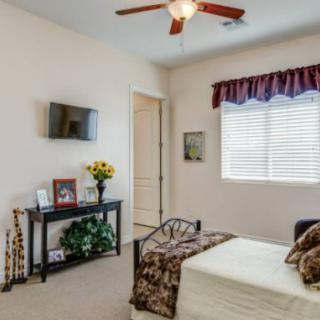
Some residents describe rooms as spacious, clean, and comfortable, and mention the facility smelling clean with no negative odors. Others say the decor or furniture feels dated, and a few negative reviews report cleanliness issues like rooms not being cleaned after requests. Overall, the strongest thread is cleanliness being important to reviewers, with results varying by stay.
caveat2 reviews mention this
Costs vary by room type
Pricing is a concern for some families.
One review directly says the community can be beyond a family’s financial range and questions whether the value matches the cost. In pricing details, semi-private pricing is shown as higher than both county and state benchmarks, while studio pricing is shown as lower than county and state benchmarks. That difference may help explain why price feedback isn’t uniform across reviews.
common2 reviews mention this
Nearby options support daily errands
Families may have nearby dining, parks, and services for quick visits.
Nearby listings include several parks and restaurant options within about 1–3 miles, which can make short outings easier for visitors. Medical and pharmacy stops are also shown close by, including multi-specialty physician services and Walgreens/CVS locations around the 1–1.5 mile range. These nearby options may help during rehabilitation stays when frequent errands aren’t always simple.
How we summarize
Counts show how many written reviews mention each theme; a review can touch several themes, and only frequently mentioned themes are displayed.
Features
Types of Care
Assisted Living
Memory Care
Amenities
Activities on-site
Devotional services off-site
Indoor common areas
Respite or short term stays offered
Transportation
Phoenix Sky Harbor International (19 miles away)
Care Services
Ambulatory care
Diabetic care
Dining
Meals provided
Activities
Activities on-site
Devotional activities offsite
Nearby Places of Interest
Located in the charming city of Peoria, Arizona, this area offers a variety of amenities suitable for senior living. With several parks nearby such as Rio Vista Community Park and Pioneer Community Park, residents have access to beautiful outdoor spaces for recreation and relaxation. Additionally, there are a number of reputable physicians and healthcare facilities in close proximity, including Multi-Specialty Physicians and The CORE Institute, ensuring quality medical care is easily accessible. For dining options, a range of restaurants like Culver's and Abuelo's Mexican Restaurant offer delicious meals within a short distance. Various cafes such as Dutch Bros Coffee and Starbucks cater to those seeking a caffeine fix or a place to socialize. Pharmacies like Walgreens and CVS Pharmacy are conveniently located for medication needs. Furthermore, places of worship such as the Church At Arrowhead provide spiritual support for those seeking religious involvement. Overall, this area of Peoria provides a well-rounded environment perfect for seniors looking for both convenience and leisure opportunities.
Parks
Rio Vista Community Park (0.9 miles)
Pioneer Community Park Off-Leash Dog Park (2.9 miles)
Pioneer Community Park (3 miles)
Fletcher Heights Park (5.5 miles)
Grand Canal Linear Park (5.6 miles)
Indoor Playgrounds International (5.6 miles)
Foothills Park (5.8 miles)
Restaurants
Haymaker Thunderbird (1 miles)
Tacos Calafia (1.5 miles)
Culver's (1.5 miles)
Angry Crab Peoria (2.2 miles)
Abuelo's Mexican Restaurant (2.5 miles)
Bubba's 33 (2.6 miles)
Line Thai Resteraunt (2.6 miles)
Physicians
Multi-Specialty Physicians (1.2 miles)
Academic Urology & Urogynecology Of Arizona (1.2 miles)
The CORE Institute - Sun City (1.4 miles)
Arizona Arthritis & Rheumatology Associates, PC (1.5 miles)
North Valley Dermatology & Original Skin (1.5 miles)
Associated Retina Consultants (1.6 miles)
Aspire Pedi. Therapy (2.4 miles)
Cafes
Dutch Bros Coffee (1.3 miles)
Starbucks (1.6 miles)
Starbucks (1.7 miles)
Starbucks (3 miles)
Dutch Bros Coffee (4.4 miles)
Starbucks (4.9 miles)
Dutch Bros Coffee (5.2 miles)
Pharmacies
Walgreens (1.4 miles)
CVS Pharmacy (1.4 miles)
CVS Pharmacy (1.5 miles)
Walgreens (1.6 miles)
CVS Pharmacy (2.3 miles)
Walgreens (2.5 miles)
Albertsons Pharmacy (2.7 miles)
Theaters
Arrowhead Fountains 18 (2.4 miles)
Park West 14 (3.3 miles)
AMC Arrowhead 14 (3.5 miles)
AMC Westgate 20 (4.5 miles)
AMC Surprise Pointe 14 (5.5 miles)
Places of Worship
Church of Jesus Christ of Latter Day Saints (2.4 miles)
At Sun Health Residence Care, the costs for various room types reflect a premium level of service and care in comparison to both Maricopa County and the broader state of Arizona. For a semi-private room, residents can expect to pay $3,540 per month, which is significantly higher than the county average of $2,801 and the state average of $2,820. Moreover, the pricing for studio accommodations stands at $4,200 monthly, noticeably above Maricopa County's $3,960 and Arizona's $3,829 averages. These rates underscore Sun Health's commitment to providing high-quality living environments and personalized care services tailored to meet the needs of their residents.
VA nursing homes, or Community Living Centers (CLCs), offer tailored long-term care for veterans, featuring medical attention and rehabilitation in a supportive environment. The guide covers facility types, eligibility criteria, financial assistance options, quality of care standards, and alternatives to full-time nursing home placement.
At-home dementia care expenses vary widely based on care levels, location, and caregiver expertise, with monthly costs for home health aides exceeding $4,500 and specialized care potentially surpassing $100,000 annually. While families favor in-home care for its comfort and personalized attention, they must consider financial planning and the challenges of caregiver fatigue.
The article discusses the late stages of dementia, detailing the progression from mild to severe impairment and highlighting key characteristics such as profound cognitive decline and dependency in daily activities. It emphasizes care strategies focused on comfort and dignity, the importance of advance directives, and the emotional support needed for family caregivers facing this challenging journey.
Get PricingAsk A QuestionSchedule A TourContact Senior Advisor
By clicking submit, you agree to our Partner's Terms of Use. You
also consent to receive calls and texts, which may be autodialed, from our Partner. Your consent is not a condition to
using our Partner's service. Please visit our Partner's Privacy Policy for information about their privacy practices.


 Assisted Living
 Memory Care
 Activities on-site
 Devotional services off-site
 Indoor common areas
 Respite or short term stays offered
 Phoenix Sky Harbor International (19 miles away)
 Ambulatory care
 Diabetic care
 Meals provided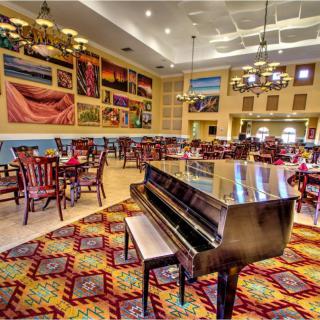
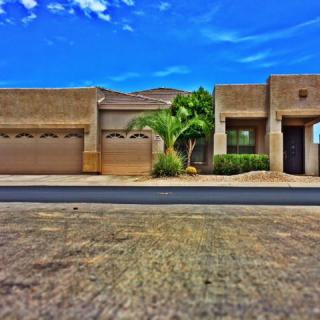
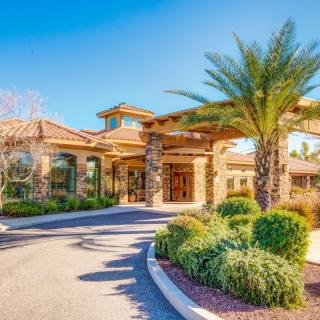
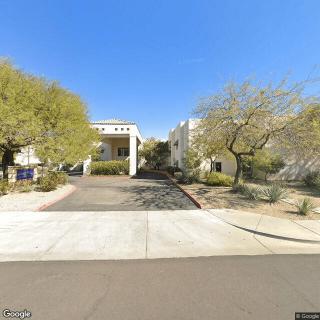
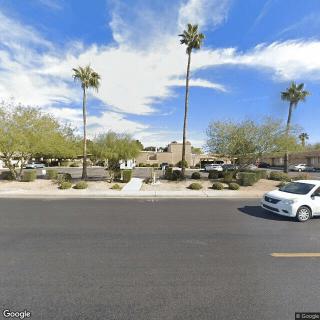
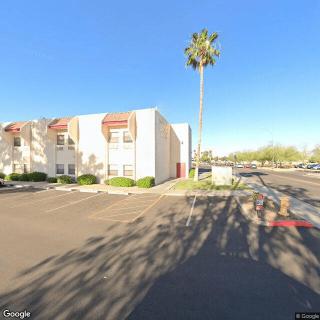
 Friendly staff, spacious 1- and 2-bedroom apartments, and affordable pricing in a convenient Peoria location.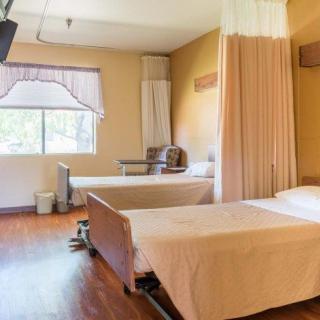


 Comprehensive Guide to VA Nursing Homes: A Crucial Long-Term Care Resource for Veterans
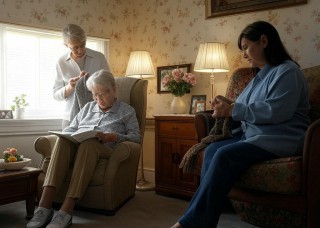 Estimating the Expenses of At-Home Dementia Care: A Detailed Exploration
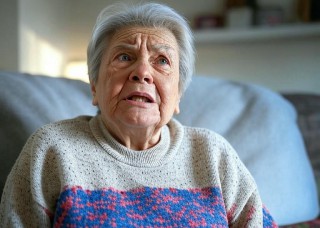 Comprehensive Insights on the Late Stages of Dementia: What to Expect and How to Provide Care