At Visions Senior Living at Mesa, the monthly costs reflect a competitive pricing structure within the broader context of Maricopa County and Arizona. For a semi-private room, residents can expect to pay $2,900 per month, which is slightly above the county average of $2,801 but still remains below the state average of $2,820. This positioning offers an appealing option for those seeking quality care without straying too far from budgetary considerations. In contrast, a studio room is priced at $3,500 per month - more economical than the county's average of $3,960 and notably lower than the state average of $3,829. This makes Visions Senior Living at Mesa an attractive choice for individuals looking for comfortable accommodations in a supportive community while remaining mindful of financial commitments.
Floor plans
Visions Senior Living at Mesa
Maricopa County
Arizona
Semi-Private
$2,900
$2,801
$2,820
Studio
$3,500
$3,960
$3,829
Memory care communities with a similar price nearby
Residents and families describe dementia care as compassionate and reassuring.
Several reviews focus on dementia support, describing gentle interactions and staff who helped keep loved ones calm and comfortable. One family said the team communicated clearly during the move to memory care and made the transition feel safe. Others described end-of-life compassion and comfort for residents, including assistance aimed at day-to-day needs tied to dementia. A critical review also ties the experience to dementia-related mobility concerns, noting the community struggled with falls and wandering in that situation.
common23 reviews mention this
Staff are consistently caring
The staff’s kindness and attentiveness are the most repeated positive themes.
Across the reviews, residents and families repeatedly describe the staff as caring, compassionate, and responsive to day-to-day needs. Multiple people mention frequent communication with family and prompt support, including around difficult medical moments. Some reviews also highlight specific staff members and describe the overall team as treating residents with empathy and respect. A few reviews express the opposite experience, but the overall pattern of warm, attentive care shows up in the majority of feedback.
caveat5 reviews mention this
Communication can be frustrating
Some families report difficulty getting timely responses from leadership.
A recurring concern is communication, with some reviewers saying the phone was not answered and important issues required in-person follow-up. Others describe frustration when trying to resolve concerns, including feeling brushed off or having conversations become difficult. Even among positive experiences, a few reviews single out leadership as a source of stress rather than smooth support. On the more negative side, at least one review mentions limited communication unless a family member called and asked direct questions.
common5 reviews mention this
Activities and recreation bring company
Reviews describe regular activities that help residents stay engaged.
Several residents and families mention that there is a lot going on, including recreation led by staff and a steady stream of activities. One review specifically calls out an activities coordinator and describes community events that include residents and families. Another notes that their loved one is doing better and attributes part of that to activities and keeping residents happy. A separate review says there did not seem to be many activities at the time of touring, encouraging families to visit and verify for themselves.
common3 reviews mention this
Meals get mentioned alongside preferences
Dining shows up positively in reviews, including balanced meals and special meals.
Some reviewers mention the kitchen providing well-balanced meals and special dining moments for residents and families. One family highlights that staff tried to accommodate snack requests for a resident. Another review mentions a holiday meal being served for patients and their families. While a full dining review theme isn’t as strong as staffing and dementia care, these comments still show that meals and preferences matter to families.
caveat3 reviews mention this
Billing and refunds are a sore spot
Some families describe billing problems and missed refund follow-through.
A few reviews raise concerns about charges and refund handling, including a case where a family said they were billed for additional time after discharge and did not receive a refund. Another reviewer described a situation where insurance had refunded amounts to the community, but the family reported waiting months for their own refund and said they received partial information instead of a full resolution. A third negative review also mentions needing a refund tied to a difficult placement outcome. This is one of the areas where reviews are least consistent and where families may want to confirm billing expectations up front.
common8 reviews mention this
Clean, maintained spaces come up often
Multiple reviews mention the facility looks clean and well kept.
Several reviewers describe bright, clean interiors and well-kept grounds, often paired with comments about resident comfort. A few reviews also mention details tied to safety and upkeep, like the condition of shower areas and general maintenance. However, there are also negative mentions from other reviewers who said the facility was outdated or not maintained well at the time of their visit. Because these accounts vary, it may help to ask to see the specific unit and common areas during a tour.
How we summarize
Counts show how many written reviews mention each theme; a review can touch several themes, and only frequently mentioned themes are displayed.
Features
Types of Care
Assisted Living
Memory Care
Amenities
Activities off-site
Activities on-site
Devotional services off-site
Indoor common areas
Outdoor common areas
Respite or short term stays offered
Wheelchair accessible showers
Transportation
Phoenix Sky Harbor International (17 miles away)
Care Services
Ambulatory care
Diabetic care
Incontinence care
Medication management
Dining
Meals provided
Vegetarian
Activities
Activities off-site
Activities on-site
Devotional activities offsite
Nearby Places of Interest
This part of Mesa, Arizona offers a variety of amenities and services that cater to senior living. With a range of physicians, pharmacies, and restaurants within close proximity, residents have easy access to healthcare and dining options. The nearby parks provide opportunities for outdoor activities and relaxation in a peaceful environment. Additionally, the cafes offer cozy spots to enjoy a cup of coffee with friends or family. For entertainment, there are theaters nearby for enjoying movies. The area also has transportation options available, such as Falcon Field Airport, making it convenient for seniors to travel if needed. Places of worship are also easily accessible for those looking to maintain their religious practices. Overall, this part of Mesa provides a well-rounded community for seniors seeking a comfortable and convenient living environment.
Physicians
Cornerstone Family Medicine (1.2 miles)
Cvam (1.3 miles)
Parikh, Simul Banner Md Anderson Cancer Center (1.5 miles)
Valley Endocrine Associates (1.5 miles)
Simonmed Imaging (1.5 miles)
Banner Imaging East Mesa (1.5 miles)
Dermatology Solutions (1.9 miles)
Restaurants
Uncle Bear's Grill & Tap Greenfield (1.3 miles)
Red Lobster (1.4 miles)
Olive Garden (1.5 miles)
Applebee's (1.5 miles)
Cracker Barrel (1.6 miles)
Del Taco (1.8 miles)
MOD Pizza (1.8 miles)
Pharmacies
Walgreens (1.3 miles)
Walgreens (1.4 miles)
CVS Pharmacy (1.4 miles)
Bashas' Pharmacy (2.1 miles)
CVS Pharmacy (2.4 miles)
Walgreens (2.8 miles)
Walgreens (2.9 miles)
Parks
Greenfield Park (1.3 miles)
Riparian Preserve at Water Ranch (3 miles)
Finley Farms Park (4.5 miles)
Ashley Heights Park (6 miles)
Skyline Park (6.1 miles)
Cafes
Dutch Bros Coffee (1.3 miles)
Starbucks (1.7 miles)
Over Easy (1.7 miles)
Starbucks (1.8 miles)
The Human Bean (2.1 miles)
Panera Bread (2.8 miles)
Panera Bread (5.3 miles)
Theaters
Superstition Springs 25 (2.6 miles)
AMC Mesa Grand 14 (5.2 miles)
Transportation
Falcon Field Airport (MSC) (3.6 miles)
Places of Worship
Church of Jesus Christ of Latter Day Saints (3.9 miles)
Mesa Arizona Temple (5.9 miles)
Church of Jesus Christ of Latter Day Saints (6 miles)
At Visions Senior Living at Mesa, the monthly costs reflect a competitive pricing structure within the broader context of Maricopa County and Arizona. For a semi-private room, residents can expect to pay $2,900 per month, which is slightly above the county average of $2,801 but still remains below the state average of $2,820. This positioning offers an appealing option for those seeking quality care without straying too far from budgetary considerations. In contrast, a studio room is priced at $3,500 per month - more economical than the county's average of $3,960 and notably lower than the state average of $3,829. This makes Visions Senior Living at Mesa an attractive choice for individuals looking for comfortable accommodations in a supportive community while remaining mindful of financial commitments.
Medication management at Visions Senior Living at Mesa is essential for ensuring that residents receive their prescribed medications accurately and on time, which is crucial for maintaining their overall health and cognitive function. Trained staff monitor dosages and schedules, reducing the risk of medication errors that could exacerbate dementia symptoms. Incontinence care further supports residents by promoting dignity and comfort; specialized staff are trained to handle these sensitive needs compassionately, thus minimizing potential distress or embarrassment. This holistic approach to care helps create a supportive environment where residents can thrive, as both features address critical aspects of daily living that directly impact emotional well-being and quality of life.
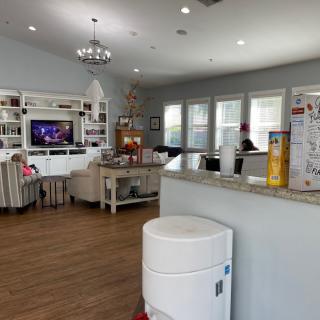
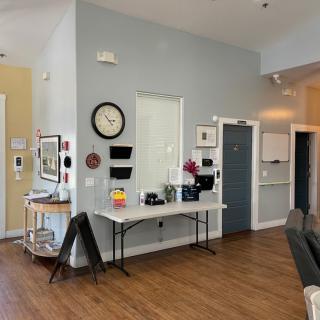
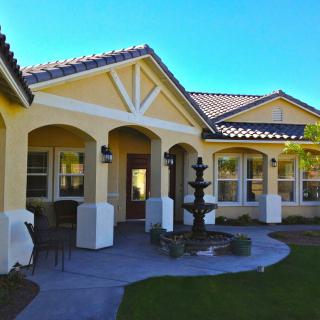
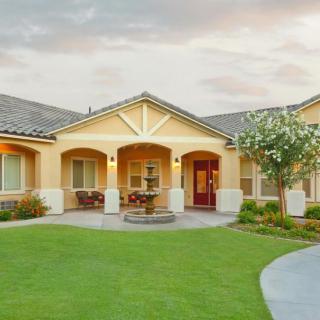
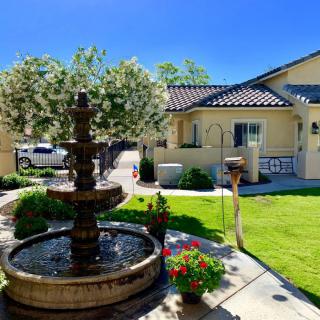
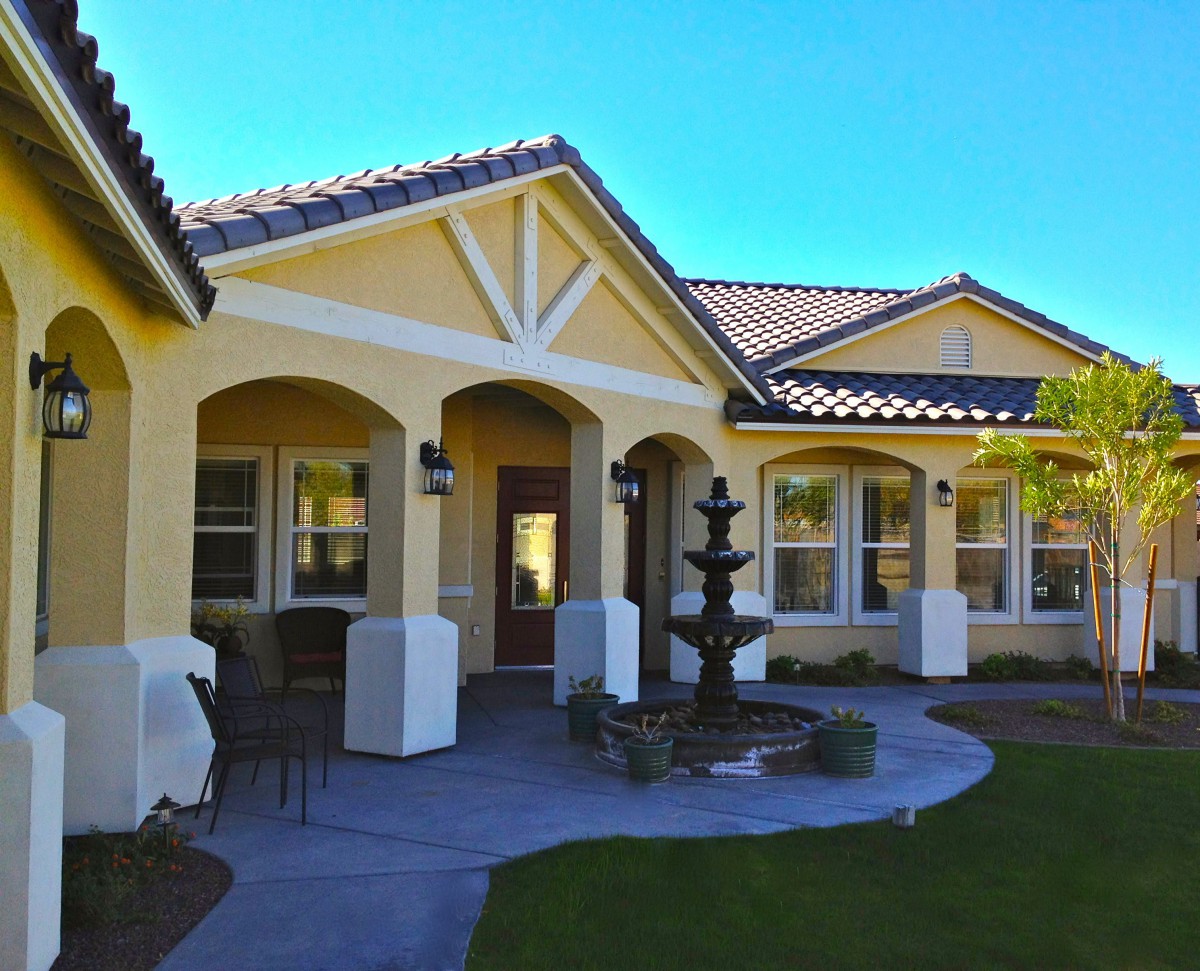
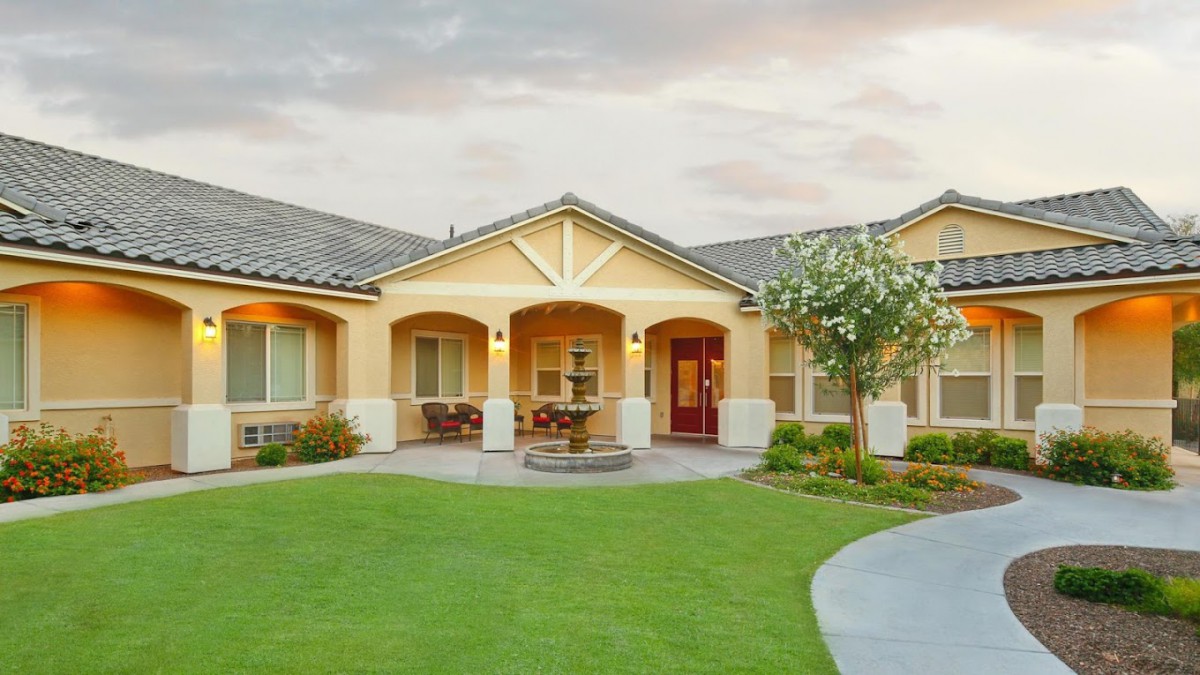
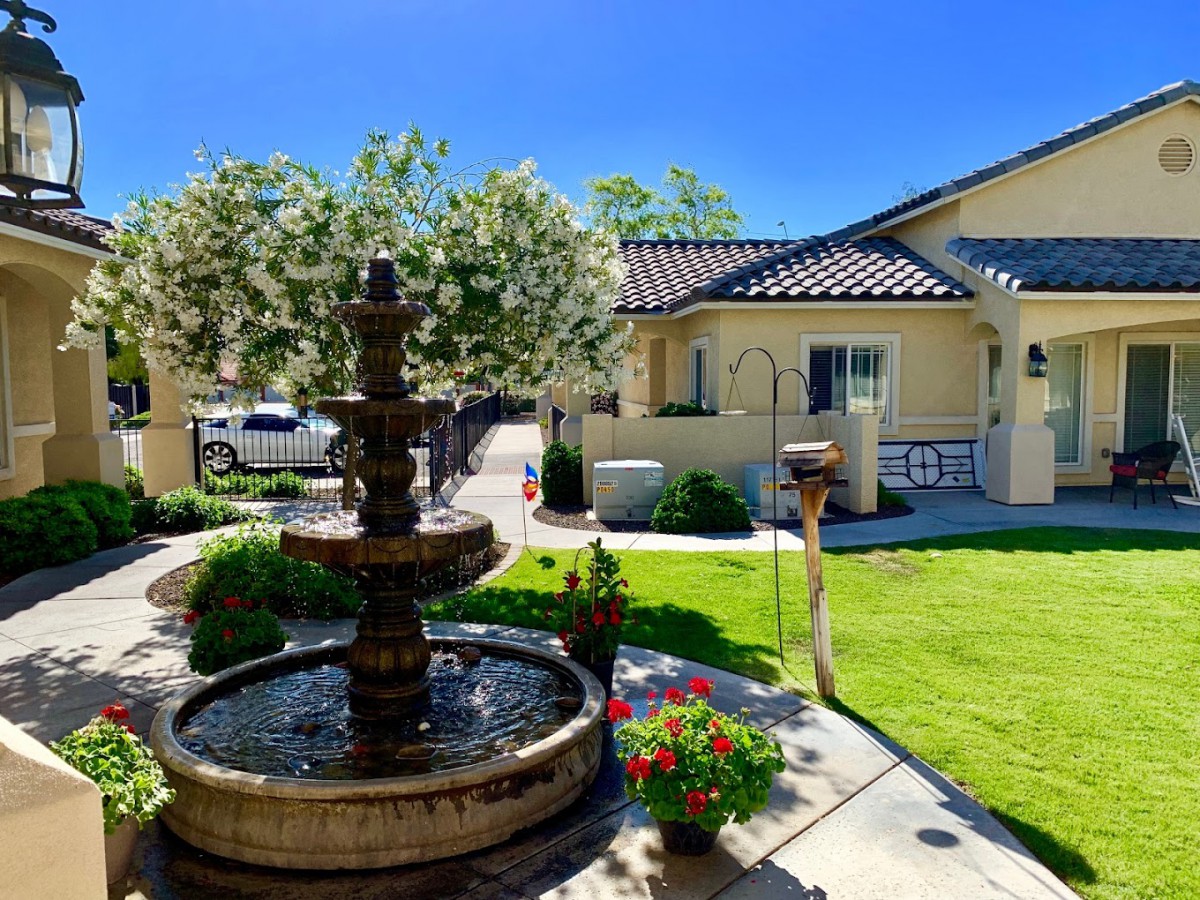
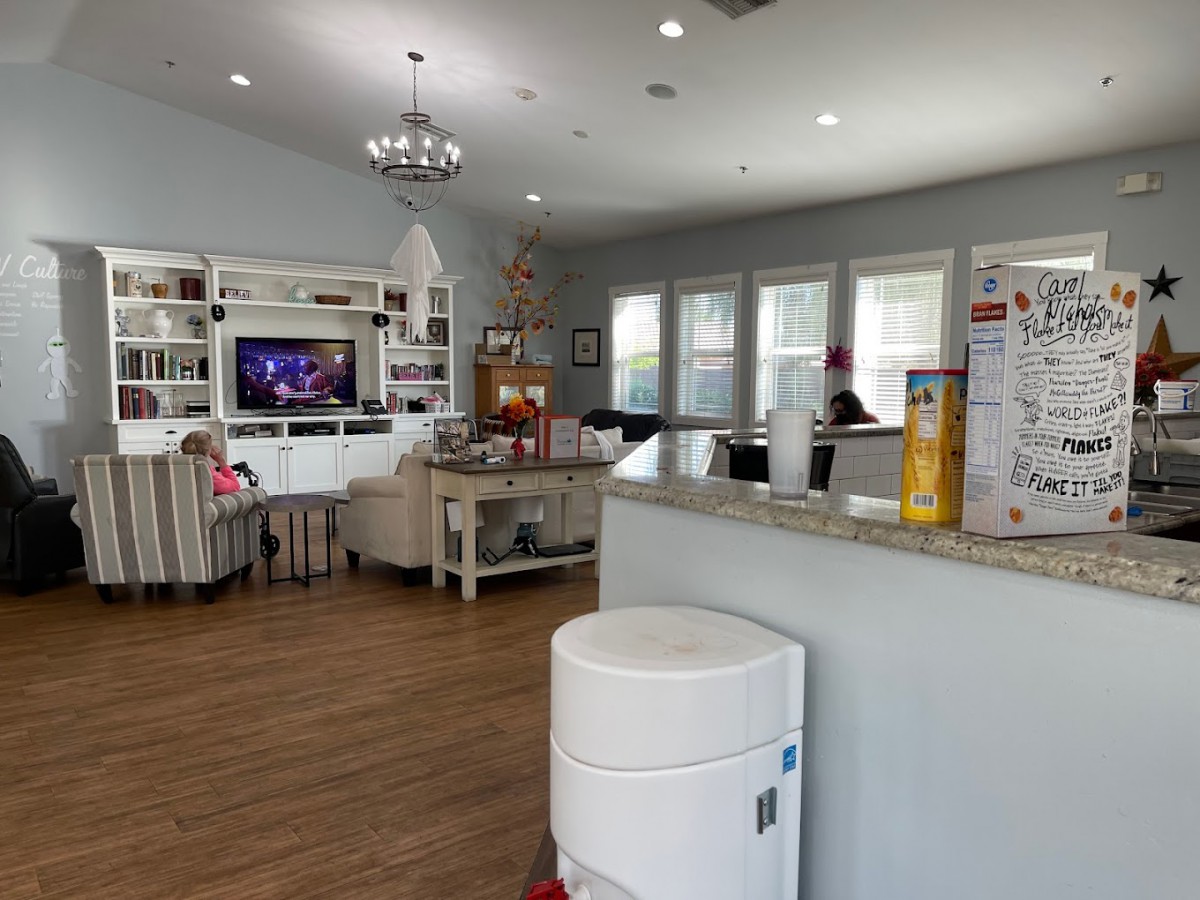
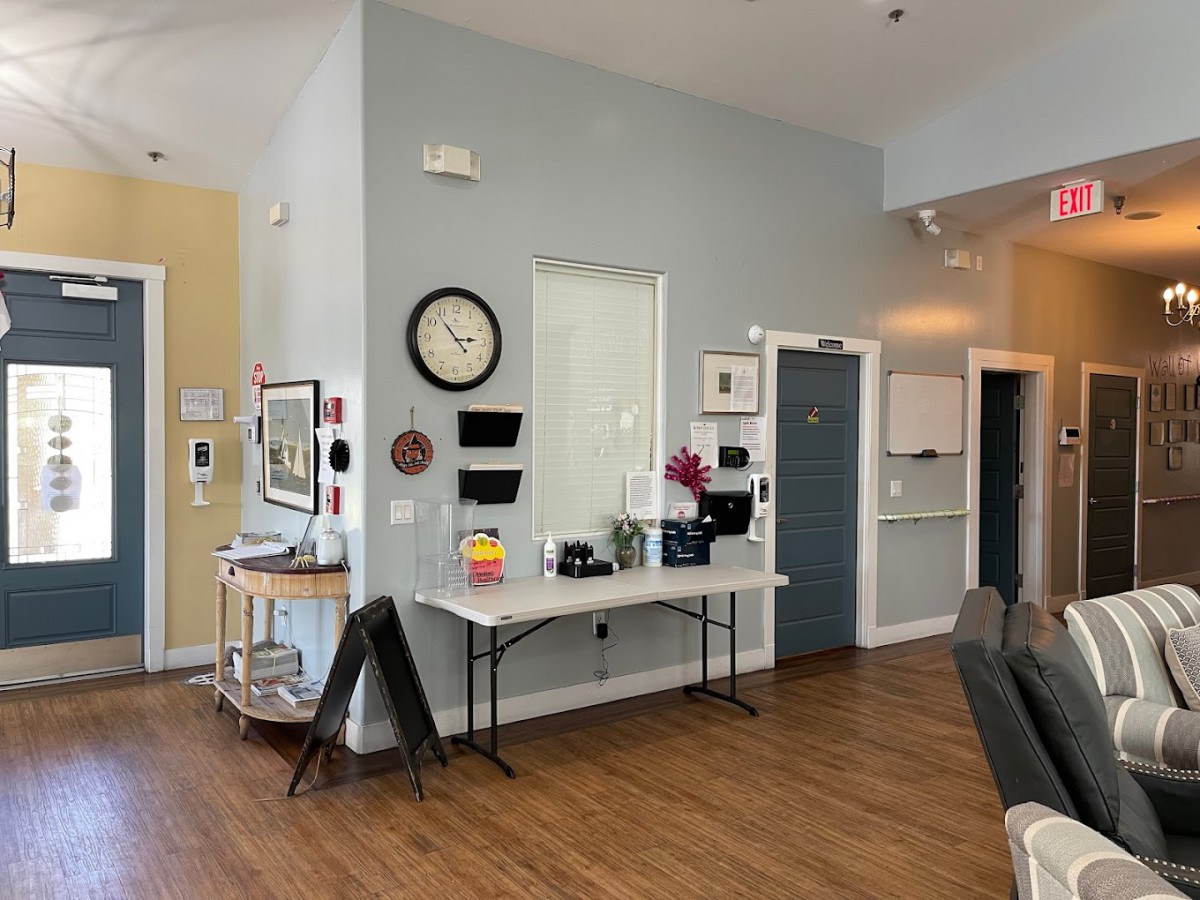
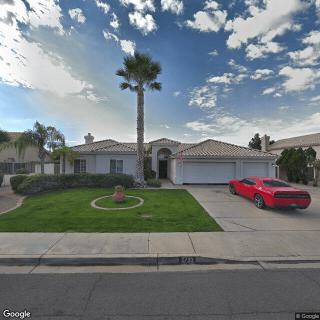
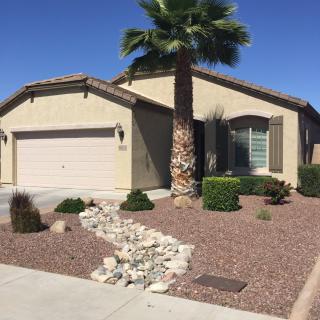
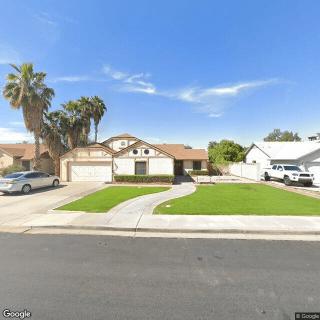
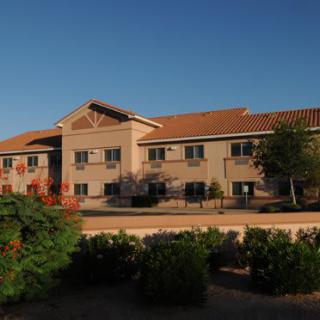
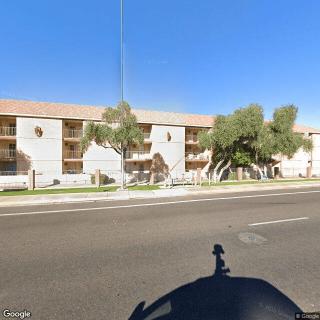
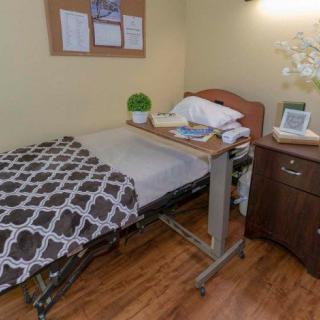
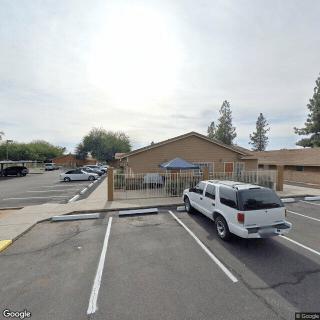
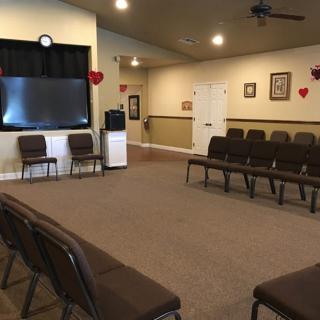
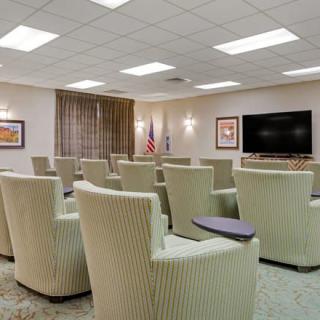
Visions Senior Living at Mesa on seniors.fyi includes 5 photos including images showing landscaping, architecture, fountain, interior, decor, exterior, garden, outdoor, and more.
Nearby Communities
Visions Assisted Living at Mesa
Mesa, AZ
4.3 from 46 reviews
Caring staff in a bright, home-like setting with memory care and nutritious meals.
The Citadel Senior Living Community
Mesa, AZ
4.6 from 145 reviews
Caring staff, clean surroundings, and engaging amenities.
The Citadel
Mesa, AZ
4.7 from 147 reviews
$1,595 to $2,080 / month
Friendly staff, engaged activities, and a welcoming community.
The Citadel
Mesa, AZ
3.5 from 2 reviews
Friendly staff and a pet-friendly, well-maintained community.
Citadel Post Acute
Mesa, AZ
3.6 from 136 reviews
Clean, welcoming environment with friendly staff and effective therapy.
Copper Village
Mesa, AZ
3.6 from 26 reviews
$2,100 to $2,500 / month
Friendly, caring staff in a clean, well-organized memory-care setting with engaging activities.
Arbor Rose Senior Care
Mesa, AZ
4.1 from 102 reviews
$3,195 to $3,895 / month
Caring staff in a clean, home-like setting with good meals and engaging activities.
Brookdale Springs Mesa
Mesa, AZ
4.4 from 153 reviews
$2,295 to $4,845 / month
Friendly, attentive staff and a warm, social community with restaurant-style dining.
Orchard Mesa Active Senior Living
Mesa, AZ
3.5 from 81 reviews
$510 / month
Clean, well-maintained community with friendly staff, engaging activities, and affordable, pet-friendly living.
Dementia, influenced by aging and certain medications, may be exacerbated by drug classes such as anticholinergics, benzodiazepines, and antipsychotics, which are associated with cognitive impairment. Regular medication reviews by healthcare professionals are crucial for older adults to manage risks and optimize cognitive health.
Dementia often results in disrupted sleep patterns, leading to excessive daytime sleeping due to factors like brain damage affecting circadian rhythms, medication side effects, and lack of structure in daily activities. Caregivers must monitor these changes closely, as oversleeping can increase risks such as malnutrition or dehydration, and provide necessary support and routines to enhance patient engagement and well-being.
The transition from assisted living to skilled nursing care is often prompted by complex medical needs that assisted living cannot meet, with key indicators including frequent health declines, increased falls, severe memory issues, and caregiver burnout. Families should recognize these signs early to discuss options with healthcare providers and prepare for the emotional and logistical aspects of moving to a facility that offers comprehensive medical support.
Get PricingAsk A QuestionSchedule A TourContact Senior Advisor
By clicking submit, you agree to our Partner's Terms of Use. You
also consent to receive calls and texts, which may be autodialed, from our Partner. Your consent is not a condition to
using our Partner's service. Please visit our Partner's Privacy Policy for information about their privacy practices.



 Assisted Living
 Memory Care
 Activities off-site
 Devotional services off-site
 Indoor common areas
 Outdoor common areas
 Respite or short term stays offered
 Wheelchair accessible showers
 Phoenix Sky Harbor International (17 miles away)
 Ambulatory care
 Diabetic care
 Incontinence care
 Medication management
 Meals provided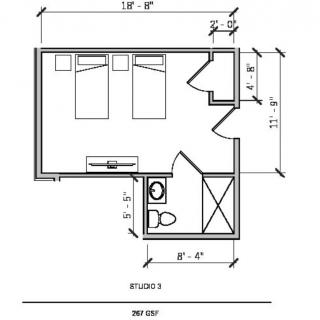
 Caring staff in a bright, home-like setting with memory care and nutritious meals.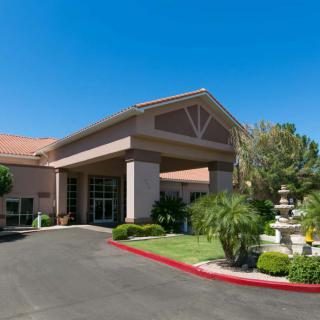

 A Thorough Discussion of Medications Potentially Linked to Dementia Risk
 Why Do Dementia Patients Sleep So Much? Understanding Oversleeping, Stages, and Care Approaches
 8 Key Indicators That Suggest It May Be Time to Transition from Assisted Living to Skilled Nursing Care