For more information about senior living options: (866) 208-4318
3.7 from 35 reviews
5 stars
21
4 stars
2
3 stars
2
2 stars
2
1 stars
8
Heritage Hall Big Stone Gap Costs & Pricing
Heritage Hall Big Stone Gap offers competitive pricing for its various room types, aligning closely with local and state averages. For a semi-private room, residents can expect to pay $3,862 per month, which matches the cost seen throughout Wise County but is slightly lower than the Virginia state average of $3,991. In terms of private accommodations, the monthly rate at Heritage Hall is set at $4,634, also consistent with Wise County rates and remaining just below the broader state average of $4,684. Notably, studio rooms are priced at $5,020 each month - this figure stands out as higher than both the county and state averages, with Virginia's typical cost for such accommodations being significantly lower at $4,436. Overall, Heritage Hall Big Stone Gap offers a balanced range of costs that cater to different needs while reflecting regional trends in assisted living expenses.
Many reviews describe staff who treat residents well, stay patient-centered, and provide professional, compassionate care. Several also mention being kept informed and supported through admissions and social services. A smaller set of reviews is sharply negative, citing rude behavior, neglect concerns, or clinicians not following a care plan, but the overall pattern still heavily centers on staff interaction as the defining daily experience.
caveat6 reviews mention this
Staffing levels are a mixed point
Staffing is repeatedly mentioned as either sufficient or not enough.
Some residents’ families say there are plenty of staff, and one review also describes the facility adapting during shortages. Others report needing more help on all shifts or describe insufficient staffing, especially for people with memory-related needs. There are also complaints that residents were neglected, alongside criticisms about care quality declining in a rehab context.
common3 reviews mention this
Cleanliness comes up often
Multiple reviewers mention a clean, odor-free environment.
Several families say the facility is clean and does not have an odor. One review also connects cleanliness with overall satisfaction, while another notes the environment in connection with care and comfort. Negative reviews exist in the mix, but cleanliness is specifically called out as a positive by multiple reviewers.
differentiator2 reviews mention this
Food is appreciated
Residents’ families mention meals they view as genuinely good.
Reviewers mention food as a bright spot, including one family saying their loved one loves the food and another noting that their loved one did not leave anything on the plate. The community also offers restaurant-style dining, which aligns with why dining shows up in the reviews. The listing additionally supports meal handling for special dietary needs mentioned in dining details.
caveat2 reviews mention this
Communication can be frustrating
Some reviewers report difficulty reaching the right person.
A few reviews describe operational communication problems, such as phones being hard to answer and messages seeming to end quickly. Others complain about record-sharing logistics during relocation requests, including delays getting needed paperwork. Together, these comments suggest communication responsiveness is uneven for some families.
How we summarize
Counts show how many written reviews mention each theme; a review can touch several themes, and only frequently mentioned themes are displayed.
Features
Housing
180 resident community capacity
Types of Care
Skilled Nursing Facility
Amenities
Air-conditioning
Beauty salon
Cable or satellite TV
Computer center
Dining room
Fitness room
Fully furnished
Gaming room
Garden
Housekeeping services
Kitchenette
Move-in coordination
Outdoor space
Private bathrooms
Restaurant-style dining
Small library
Telephone
Wellness center
Wi-Fi/high-speed internet available
Transportation
Community operated transportation
Transportation arrangement
Transportation arrangement (non-medical)
Transportation to doctors appointments
Care Services
12-16 hour nursing
24-hour call system
24-hour supervision
Activities of daily living assistance
Assistance with bathing
Assistance with dressing
Assistance with transfers
Diabetes diet
Meal preparation and service
Medication management
Mental wellness program
Special dietary restrictions
Dining
Diabetes diet
Special dietary restrictions
Activities
Community-sponsored activities
Concierge services
Fitness programs
Planned day trips
Resident-run activities
Scheduled daily activities
Nearby Places of Interest
Hospitals
Lonesome Pine Hospital (0.1 miles)
Wellmont Health System (8.4 miles)
Mountain View Regional Med (8.5 miles)
Mountain View Regional Medical Center (8.5 miles)
Bon Secours St Mary's Hospital (8.5 miles)
Wellmont Medical Associates (9.8 miles)
Physicians
Rama, M R, Md - Radiology Department (0.2 miles)
Wellmont Medical Associates (1 miles)
Medical Assoc of Southwest Virginia (1 miles)
Wellmont Fam Med (1.8 miles)
Appalachia Medical Clinic PC (2.7 miles)
Community Physicians (7.2 miles)
Regional Lung Center (7.3 miles)
Pharmacies
Big Stone Gap Pharmacy (0.2 miles)
Union Drug (1 miles)
Revco Drug Stores (1.3 miles)
CVS Pharmacy (1.3 miles)
Big Stone Economy Drug (2.2 miles)
CVS Pharmacy (7.5 miles)
Lonesomepine Economy Drug (8.1 miles)
Places of Worship
Assembly of God Church (0.6 miles)
East Stone Gap Baptist Church (0.8 miles)
Heritage Church of God (1.1 miles)
Church of Christ (1.1 miles)
Big Stone Gap Presbyterian Church (1.4 miles)
Williams Chapel Ame Zion Church (1.5 miles)
Southern Baptist Convention (1.6 miles)
Restaurants
Little Mexico (0.7 miles)
Burger King (1 miles)
McDonald's (1 miles)
Little Mexico Mexican Restaurant (1.2 miles)
Huddle House (1.2 miles)
Red Flower Chinese Restaurant (1.4 miles)
Curklin's (1.4 miles)
Cafes
The Ugly Mug (1.3 miles)
Annie's Cafe (1.4 miles)
Red Fox Grill (1.5 miles)
Kool Beanz Smoothie Bar & Cafe (7.8 miles)
Theaters
Central Drive-In Theatre (4 miles)
Cinema City (8.4 miles)
Transportation
U-Haul (7 miles)
Enterprise Rent-A-Car (9 miles)
Alamo (9.6 miles)
U-Haul Neighborhood Dealer (9.8 miles)
Parks
Cove Ridge Center Natural Tunnel State Park (11.5 miles)
Heritage Hall Big Stone Gap offers competitive pricing for its various room types, aligning closely with local and state averages. For a semi-private room, residents can expect to pay $3,862 per month, which matches the cost seen throughout Wise County but is slightly lower than the Virginia state average of $3,991. In terms of private accommodations, the monthly rate at Heritage Hall is set at $4,634, also consistent with Wise County rates and remaining just below the broader state average of $4,684. Notably, studio rooms are priced at $5,020 each month - this figure stands out as higher than both the county and state averages, with Virginia's typical cost for such accommodations being significantly lower at $4,436. Overall, Heritage Hall Big Stone Gap offers a balanced range of costs that cater to different needs while reflecting regional trends in assisted living expenses.
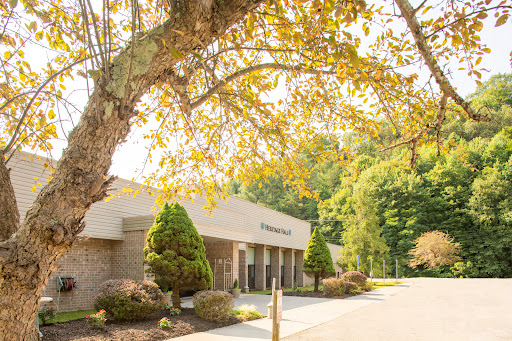
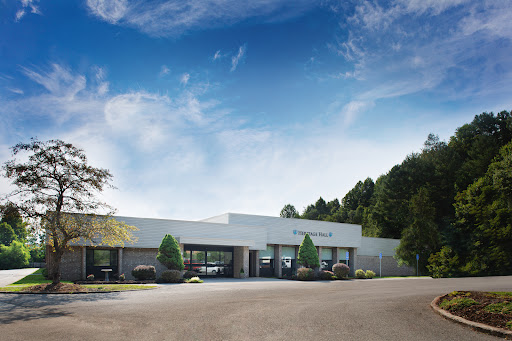
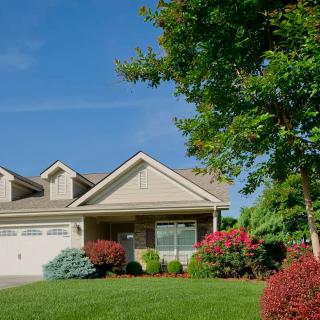
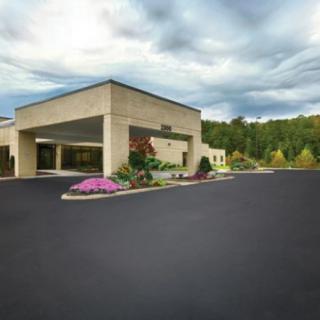
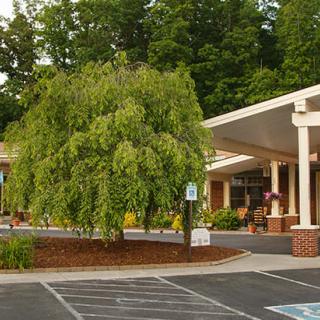
Heritage Hall Big Stone Gap on seniors.fyi includes 6 photos including images showing nature, outdoors, building, trees, landscaping, architecture, exterior, urban, and more.
Nearby Communities
Heritage Hall
Big Stone Gap, VA
3.7 from 31 reviews
Caring, respectful staff in a clean, comfortable setting.
Mullins Adult Residential Ctr
Norton, VA
4.9 from 43 reviews
Excellent location with abundant nearby amenities (dining, pharmacies, healthcare, transportation).
Mountain View Regional Medical Center
Norton, VA
4.6 from 120 reviews
24/7 supervision with medication management and diverse dining and social activities.
The Laurels Retirement & Assisted Living
Norton, VA
5 from 1 review
Caring staff, clean facility, and spacious rooms with robust amenities.
Kingston Center
Duffield, VA
3.5 from 14 reviews
Extensive amenities and comprehensive care (24/7 supervision, dining, transportation, and activities).
Ridgecrest Manor Nursing & Rehabilitation
Duffield, VA
4.6 from 109 reviews
Restaurant-style dining plus extensive on-site amenities and comprehensive care services.
Asbury Place at Kingsport
Kingsport, TN
3.9 from 94 reviews
$1,900 to $3,000 / month
Caring staff with ample amenities and competitive pricing.
NHC Healthcare - Kingsport
Kingsport, TN
4 from 26 reviews
Kind, attentive staff; clean facility; good food variety and engaging activities.
Preston Place Suites
Kingsport, TN
4.7 from 33 reviews
$3,900 / month
Caring, friendly staff in a clean, secure environment with engaging activities.
Anticipatory grief is an emotional response to the impending loss of a loved one, characterized by complex emotions such as sadness and anger, and involves navigating stages similar to those identified by Kübler-Ross. Coping strategies are vital for managing this process, emphasizing compassionate communication, self-care, and support groups while recognizing the cultural influences on grieving.
Adult day care programs offer essential support and activities for older adults, yet many hesitate to participate due to concerns about independence and stigma. To alleviate these apprehensions, families should facilitate open discussions, explore financial resources, suggest trial visits, and collaborate with healthcare providers to highlight the benefits of such services for both the participants and their caregivers.
Living wills and advance directives are crucial legal documents that outline an individual's healthcare preferences when they cannot make decisions themselves, enhancing patient autonomy and alleviating family stress during medical crises. The article emphasizes the need for these documents to be personalized, legally valid, and regularly updated, while also encouraging communication about end-of-life wishes among family members and healthcare providers.
Get PricingAsk A QuestionSchedule A TourContact Senior Advisor
By clicking submit, you agree to our Partner's Terms of Use. You
also consent to receive calls and texts, which may be autodialed, from our Partner. Your consent is not a condition to
using our Partner's service. Please visit our Partner's Privacy Policy for information about their privacy practices.










 180 resident community capacity
 Skilled Nursing Facility
 Air-conditioning
 Beauty salon
 Cable or satellite TV
 Computer center
 Dining room
 Fitness room
 Fully furnished
 Gaming room
 Garden
 Housekeeping services
 Kitchenette
 Move-in coordination
 Outdoor space
 Private bathrooms
 Restaurant-style dining
 Small library
 Telephone
 Wellness center
 Wi-Fi/high-speed internet available
 Community operated transportation
 12-16 hour nursing
 24-hour call system
 Activities of daily living assistance
 Assistance with bathing
 Assistance with dressing
 Assistance with transfers
 Diabetes diet
 Medication management
 Mental wellness program
 Special dietary restrictions
 Concierge services
 Planned day trips
 Caring, respectful staff in a clean, comfortable setting.


 Recognizing the Journey: Understanding and Navigating Anticipatory Grief
 Encouraging Participation in Adult Day Care: A Guide to Supporting a Hesitant Parent
 Comprehensive Exploration of Living Wills and Other Advance Directives