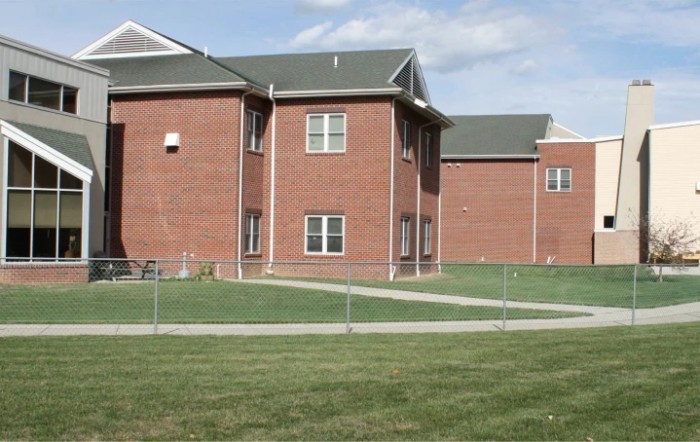

2050 Barley Road, York, PA 17404
To contact a resident: (717) 767-6463
For more information about senior living options: (866) 208-4318
Overall Review of Margaret E. Moul Home
Pros
 Aunt Margaret was an amazing woman with an amazing story.
- The residents were cared for dearly.
- The place is amazing and the staff are truly caring.
- The home stood out for going out of its way to care for the residents.
- The facility offers lots of activities and arts and crafts, and even brings animals for residents to play with.
- The environment feels homey and the staff treat the residents like family.
Cons
 The staff harassed residents and were consistently unprofessional.
- The staff did not receive proper training, leading to repeated issues.
- A resident was given the wrong consistency of food and drink, causing a major problem that required an investigation.
Review
Margaret E. Moul Home in York, PA is best suited for seniors who prize a warm, home-like atmosphere where staff form genuine, attentive connections with residents and daily life centers on social engagement, crafts, and small-animal interactions. This community tends to attract families seeking a place that feels less institutional and more like a welcoming extension of home, with staff who appear willing to go the extra mile to make residents feel cared for and included. It appeals particularly to those who value meaningful activity calendars and a sense of family among residents and caregivers, rather than a clinical, highly regimented environment.
That said, there are clear reasons to consider alternatives, especially for residents whose needs demand consistent professional boundaries and more formal oversight. When there are perceived or reported issues around staff conduct, training, or supervision, as well as questions about how menus and nutrition are managed, families may want to explore other options. Potential residents with higher medical acuity or a need for strict, university-standardized protocols will likely find better alignment elsewhere. In short, this is not the destination for families prioritizing rigorous clinical oversight and uniform staff training as nonnegotiable.
On the positive side, the strongest assets are the staff’s demonstrated care and the homey environment. Reviewers consistently note that staff go out of their way to care for residents, creating a sense of family and belonging. The programming stands out in its abundance: arts and crafts, social activities, and even animal interactions that bring joy and a comforting routine to daily life. The atmosphere feels intimate and respectful, with residents treated as individuals rather than as a checklist, which can translate into meaningful moments and consistent companionship for those who reciprocate with engagement.
Conversely, the negative feedback points to real and nontrivial risks. The most alarming concern centers on harassment and unprofessional conduct, paired with reports of insufficient training. One review cites a situation where a resident received an inappropriate or unsafe food consistency that required investigation, underscoring potential gaps in staff education and supervision. While the volume of reviews is small, the severity of the cited incident cannot be dismissed. These factors raise legitimate questions about safety, accountability, and the ability to sustain consistently high standards under pressure.
The key pros can offset the main cons only to a degree. For residents who prioritize warmth, personal attention, and a lively social calendar, the strengths offer tangible quality-of-life benefits that are hard to replicate in more clinical settings. A home-like rhythm and staff that feel like extended family can dramatically improve daily happiness and reduce isolation. However, the sting of reported harassment and training gaps cannot be dismissed; those issues strain trust and can erode safety if not addressed with transparency and rapid corrective action. In environments where leadership has a clear, ongoing plan to reinforce professional boundaries and staff development, the positives may prevail; where that accountability is uncertain, the cons loom larger.
Families should approach a decision here with concrete steps. Visit to observe staff-resident interactions firsthand, and specifically note how concerns are handled when raised. Request information on staff training programs, supervision structures, and recent incident resolutions. Inquire about current staffing ratios, care planning processes, and the facility’s pathway for quality improvement. If warmth, engagement, and a familial atmosphere are non-negotiables, and recent oversight concerns are being actively remedied, Margaret E. Moul Home can be a good fit. If, instead, consistent professional boundaries, rigorous clinical oversight, and an uncompromising expectation of flawless execution are required, exploring other communities is prudent.
 82 resident community capacity
 Board and Care Home
 Skilled Nursing Facility
 Air-conditioning
 Beauty salon
 Cable or satellite TV
 Computer center
 Dining room
 Fitness room
 Fully furnished
 Gaming room
 Garden
 Housekeeping services
 Kitchenette
 Move-in coordination
 Outdoor space
 Private bathrooms
 Restaurant-style dining
 Small library
 Telephone
 Wellness center
 Wi-Fi/high-speed internet available
 Harrisburg International (15 miles away)
 Community operated transportation
 12-16 hour nursing
 24-hour call system
 Activities of daily living assistance
 Assistance with bathing
 Assistance with dressing
 Assistance with transfers
 Diabetes diet
 Medication management
 Mental wellness program
 Special dietary restrictions
 Concierge services
 Planned day trips



 9 Stimulating Memory Activities for Seniors: Puzzles, Cards, and Much More
 Managing Nursing Home Expenses After Medicare Coverage Ends
 Is a Geriatric Care Manager the Right Choice for Your Family?