For more information about senior living options: (866) 208-4318
3.4 from 50 reviews
5 stars
19
4 stars
13
3 stars
2
2 stars
2
1 stars
14
Overall Review of Woodbury Wellness Center
common4 reviews mention this
Cleanliness shows up in visits
Residents and families describe a clean environment with few unpleasant odors.
Several families specifically mention cleanliness, including a report of no odor and a generally fresh feel when touring or visiting. Other reviews echo that everything looked clean and that the home itself felt well kept. One negative review still calls the building a hazard and reports poor room maintenance, which is the main cleanliness-related concern raised.
common5 reviews mention this
Staff attention varies by experience
Many reviewers describe staff who show up, check in, and respond to questions.
A number of reviews emphasize that staff were attentive and quick to answer calls, with families feeling updated about care. In rehab-focused experiences, residents were described as being checked on frequently and supported during the recovery period. At the same time, other reviews raise sharp concerns about delayed help, ignored call buttons, and poor communication when families tried to get assistance.
differentiator3 reviews mention this
Rehab therapy supports recovery
Rehabilitation services show up clearly in short-term recovery stories.
Multiple reviews tied meaningful improvement to therapy, including physical therapy that helped residents regain key abilities and encouraged progress toward going home. One reviewer also credits PT and OT as a standout part of the stay. These accounts align with the idea that the facility is being used for rehab and recovery, not just long-term housing.
caveat6 reviews mention this
Care and communication concerns recur
Some residents and families report neglected basics and unreliable communication.
Across several reviews, families describe problems such as call buttons being ignored for long periods and delays when help was needed. Others cite issues like concerns about food delivery, medication access, and documentation or follow-through during difficult situations. A separate theme is staffing strain, including claims that the facility is regularly short-staffed and that staffing impacts the consistency of care.
How we summarize
Counts show how many written reviews mention each theme; a review can touch several themes, and only frequently mentioned themes are displayed.
Features
Housing
112 resident community capacity
Types of Care
Skilled Nursing Facility
Amenities
Air-conditioning
Beautician on-site
Beauty salon
Cable or satellite TV
Computer center
Dining room
Fitness room
Fully furnished
Gaming room
Garden
Housekeeping services
Kitchenette
Move-in coordination
Outdoor space
Private bathrooms
Respite or short term stays offered
Restaurant-style dining
Small library
TV room
Telephone
Wellness center
Wi-Fi/high-speed internet available
Transportation
Wilmington International (17 miles away)
Community operated transportation
Transportation & parking
Transportation arrangement
Transportation arrangement (non-medical)
Transportation to doctors appointments
Care Services
12-16 hour nursing
24-hour call system
24-hour supervision
Activities of daily living assistance
Assistance with bathing
Assistance with dressing
Assistance with transfers
Diabetes diet
Meal preparation and service
Medication management
Mental wellness program
Special dietary restrictions
Dining
Diabetes diet
Special dietary restrictions
Activities
Activities off-site
Community-sponsored activities
Concierge services
Fitness programs
Planned day trips
Resident-run activities
Scheduled daily activities
Videos
Nearby Places of Interest
Cafes
Starbucks (17.1 miles)
Port City Java (19.3 miles)
Bespoke Coffee & Dry Goods (20.6 miles)
Restaurants
Jax 5th Avenue Deli & Ale House (17.2 miles)
Casey's Buffett Barbecue & Home Cookin (17.7 miles)
Taco Bell (17.9 miles)
K-38 Baja Grill (17.9 miles)
Okami Japanese Steakhouse (18 miles)
Goody Goody Omelet House (18.1 miles)
McDonald's (18.5 miles)
Transportation
Wilmington International Airport (ILM) (17.7 miles)
American Airlines (17.7 miles)
Parks
Hugh MacRae Park (19 miles)
Brunswick River Park (22.8 miles)
Leland Westgate Park (24.9 miles)
Physicians
New Hanover Medical Group (20.6 miles)
Coastal Neurosurgical Associates (20.9 miles)
Wilmington Endocrinology (21 miles)
Tinsley, Ellis, A, Jr, MD (21 miles)
Wilmington Eye - Medical Center Drive (21.4 miles)
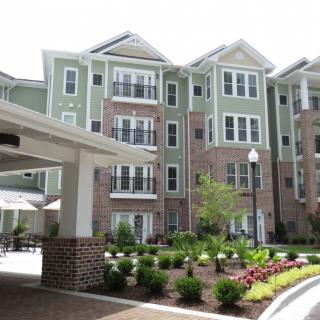
Woodbury Wellness Center on seniors.fyi includes 4 photos including images showing landscaping, building, rehabilitation, entrance, architecture, nature, road, tree, and more.
Nearby Communities
Stonebridge at Woodbury Assisted Living and Memory Care
Hampstead, NC
3.2 from 41 reviews
$3,312 to $3,968 / month
Beautiful, clean community with friendly staff and memory-care specialization.
Arbor Landing at Hampstead
Hampstead, NC
4.6 from 111 reviews
$3,495 to $6,195 / month
Caring staff in a clean, spacious setting with engaging activities.
Mary Rebecca's Village
Hampstead, NC
Intimate 6-resident community with 24-hour supervision and comprehensive ADL support.
Plantation Village
Wilmington, NC
5 from 9 reviews
Davis Health Care Center
Wilmington, NC
3.4 from 78 reviews
$4,515 to $4,965 / month
Clean, organized facility with friendly staff and engaging memory-care programs.
Champions Assisted Living
Wilmington, NC
4.4 from 24 reviews
$3,426 to $5,438 / month
Nice facility with friendly, responsive staff and strong resident social engagement.
Cambridge Village of Wilmington
Wilmington, NC
4.5 from 159 reviews
$2,970 to $4,400 / month
Spacious, safe, with friendly staff, a wide range of on-site activities and amenities (pool, gym, salon, restaurant-style dining) and well-kept, modern apartments.
Huntington Health Care
Burgaw, NC
3 from 2 reviews
$2,550 to $5,100 / month
Compassionate, supportive environment with engaging activities and a convenient location.
Adult day care programs offer essential support and activities for older adults, yet many hesitate to participate due to concerns about independence and stigma. To alleviate these apprehensions, families should facilitate open discussions, explore financial resources, suggest trial visits, and collaborate with healthcare providers to highlight the benefits of such services for both the participants and their caregivers.
Living wills and advance directives are crucial legal documents that outline an individual's healthcare preferences when they cannot make decisions themselves, enhancing patient autonomy and alleviating family stress during medical crises. The article emphasizes the need for these documents to be personalized, legally valid, and regularly updated, while also encouraging communication about end-of-life wishes among family members and healthcare providers.
The article examines living wills and advance directives, highlighting their significance in expressing healthcare preferences for those unable to communicate due to illness or incapacity. It discusses their historical development, legal components, limitations, practical drafting advice, and the importance of clear communication among families and healthcare professionals regarding end-of-life decisions.
Get PricingAsk A QuestionSchedule A TourContact Senior Advisor
By clicking submit, you agree to our Partner's Terms of Use. You
also consent to receive calls and texts, which may be autodialed, from our Partner. Your consent is not a condition to
using our Partner's service. Please visit our Partner's Privacy Policy for information about their privacy practices.






 112 resident community capacity
 Skilled Nursing Facility
 Air-conditioning
 Beautician on-site
 Cable or satellite TV
 Computer center
 Dining room
 Fitness room
 Fully furnished
 Gaming room
 Garden
 Housekeeping services
 Kitchenette
 Move-in coordination
 Outdoor space
 Private bathrooms
 Respite or short term stays offered
 Restaurant-style dining
 Small library
 Telephone
 Wellness center
 Wi-Fi/high-speed internet available
 Wilmington International (17 miles away)
 Community operated transportation
 12-16 hour nursing
 24-hour call system
 Activities of daily living assistance
 Assistance with bathing
 Assistance with dressing
 Assistance with transfers
 Diabetes diet
 Medication management
 Mental wellness program
 Special dietary restrictions
 Concierge services
 Planned day trips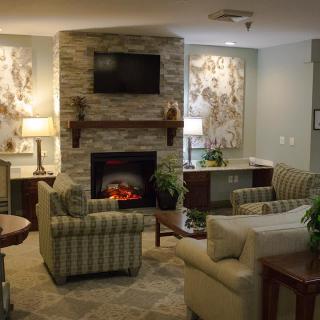
 Beautiful, clean community with friendly staff and memory-care specialization.






 Encouraging Participation in Adult Day Care: A Guide to Supporting a Hesitant Parent
 Comprehensive Exploration of Living Wills and Other Advance Directives
 A Detailed Exploration of Living Wills and Advance Directives