Overall Review of River Garden Hebrew Home For The Aged
common22 reviews mention this
Care teams are praised most
Residents and families repeatedly describe attentive, caring staff at River Garden.
Across many reviews, families describe the staff as caring, friendly, and responsive—often noting frequent communication and help with day-to-day needs. Several reviewers also call out specific roles (like nurses and CNAs) as knowledgeable and professional, and they say the staff takes notice of residents over time. A smaller set of reviews takes the opposite view, describing moments of neglect, delays, or unresponsiveness, including complaints about restroom help, hygiene needs, and discharge handling.
common7 reviews mention this
Dining quality comes up often
Food is a frequent positive topic in resident and family feedback.
Multiple reviews mention that the meals taste good, with some describing them as restaurant-like or comparing them favorably to other places. Reviewers also connect food to the overall experience—saying they have no problem with the menu, that it supports residents’ needs, or that residents stayed in good shape while eating well. The community also lists restaurant-style dining and diet accommodations such as special dietary restrictions and diabetes-related meal needs.
differentiator3 reviews mention this
Memory care support appears in reviews
Residents in memory care are mentioned in multiple reviews with contrasting experiences.
Some reviewers describe memory care as providing activities, quiet time, and a level of care that supports their loved one, including praise for overall satisfaction in that unit. Other feedback is sharply critical, pointing to concerns about dementia-related evaluation, hygiene support, and care decisions for someone needing more appropriate support. Together with the community’s listed care services (including medication management and specialized diet support), the reviews suggest memory care outcomes vary by resident and situation.
caveat6 reviews mention this
Some families report operational problems
A recurring concern in reviews is inconsistent day-to-day follow-through.
Several critical reviews describe issues that families attribute to staffing and process—like long waits for help, problems with hygiene or assistance, and concerns about discharge timing and communication. Others mention supply or clinical-support breakdowns during rehab stays, including claims about missing or inaccessible medical supplies. While many reviews are positive, these recurring complaints suggest families should ask detailed questions about schedules, response times, and how care is handled during short-notice changes.
How we summarize
Counts show how many written reviews mention each theme; a review can touch several themes, and only frequently mentioned themes are displayed.
Features
Housing
180 resident community capacity
Types of Care
Skilled Nursing Facility
Amenities
Air-conditioning
Beauty salon
Cable or satellite TV
Computer center
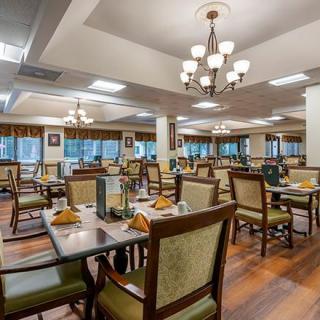
Dining room
Fitness room
Fully furnished
Gaming room
Garden
Housekeeping services
Kitchenette
Move-in coordination
Outdoor space
Private bathrooms
Restaurant-style dining
Small library
Telephone
Wellness center
Wi-Fi/high-speed internet available
Transportation
Jacksonville International (23 miles away)
Community operated transportation
Transportation arrangement
Transportation arrangement (non-medical)
Transportation to doctors appointments
Care Services
12-16 hour nursing
24-hour call system
24-hour supervision
Activities of daily living assistance
Assistance with bathing
Assistance with dressing
Assistance with transfers
Diabetes diet
Meal preparation and service
Medication management
Mental wellness program
Special dietary restrictions
Dining
Diabetes diet
Special dietary restrictions
Activities
Community-sponsored activities
Concierge services
Fitness programs
Planned day trips
Resident-run activities
Scheduled daily activities
Nearby Places of Interest
Pharmacies
Walgreens (0.2 miles)
Winn-Dixie (0.4 miles)
CVS Pharmacy (0.6 miles)
Walgreens (2.3 miles)
Walmart Pharmacy (2.7 miles)
Walgreens (3.5 miles)
Walgreens (3.5 miles)
Places of Worship
Cody Family Enrichment Center (0.4 miles)
St Joseph's Catholic Church (0.5 miles)
Freedom Christian Fellowship (1.4 miles)
Shepherd of the Woods Lutheran Church (3.6 miles)
Holy Family Catholic School (4.4 miles)
Parks
Losco Park (0.8 miles)
Losco Regional Park (2.1 miles)
Aberdeen Park (5.6 miles)
Moccasin Slough Park (6.8 miles)
Clarke House Park (7 miles)
Restaurants
Seasons Dumpling (1.3 miles)
Waffle House (2.1 miles)
Don Juan's Restaurant (2.5 miles)
Firehouse Subs (2.6 miles)
Steak 'n Shake (2.7 miles)
Burger King (2.8 miles)
Zaxby's (2.8 miles)
Hospitals
Baptist South hospital (1.4 miles)
Baptist Medical Center South (4.2 miles)
Physicians
First Coast Oncology (1.9 miles)
Clay Eye Physicians & Surgeons (2.2 miles)
Yalch Peter Baptist Primary Care Jacksonville (2.3 miles)
The article highlights eight essential assistive devices that improve the independence and safety of older adults, addressing issues related to mobility, balance, vision, hearing, and dexterity. It emphasizes the importance of proper selection guided by healthcare professionals to enhance seniors' quality of life while allowing them to age in place.
The article offers detailed guidance on the financial complexities of nursing home care, covering costs, payment methods, and alternative funding strategies while emphasizing the importance of proactive planning and legal considerations for individuals and families making care decisions.
The article emphasizes the critical role of supportive employee benefits for caregivers, advocating for flexible scheduling, paid leave, and mental health services to ease their challenges while enhancing employee well-being and organizational loyalty. It also highlights the importance of strong leadership in promoting these initiatives to foster a sustainable workplace culture that values caregivers.
Get PricingAsk A QuestionSchedule A TourContact Senior Advisor
By clicking submit, you agree to our Partner's Terms of Use. You
also consent to receive calls and texts, which may be autodialed, from our Partner. Your consent is not a condition to
using our Partner's service. Please visit our Partner's Privacy Policy for information about their privacy practices.

 180 resident community capacity
 Skilled Nursing Facility
 Air-conditioning
 Beauty salon
 Cable or satellite TV
 Computer center
 Dining room
 Fitness room
 Fully furnished
 Gaming room
 Garden
 Housekeeping services
 Kitchenette
 Move-in coordination
 Outdoor space
 Private bathrooms
 Restaurant-style dining
 Small library
 Telephone
 Wellness center
 Wi-Fi/high-speed internet available
 Jacksonville International (23 miles away)
 Community operated transportation
 12-16 hour nursing
 24-hour call system
 Activities of daily living assistance
 Assistance with bathing
 Assistance with dressing
 Assistance with transfers
 Diabetes diet
 Medication management
 Mental wellness program
 Special dietary restrictions
 Concierge services
 Planned day trips
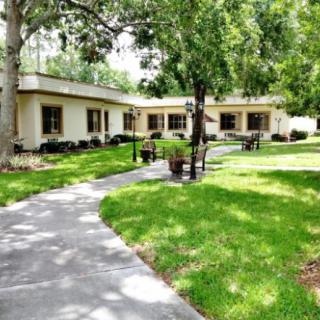
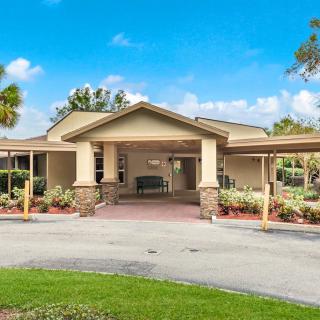
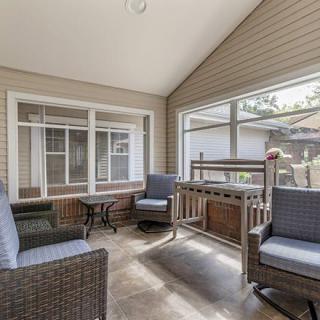
 Serene environment with on-site activities and diabetic care.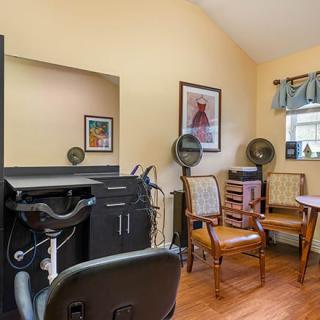


 8 Essential Assistive Devices for Older Adults
 Navigating the Financial Road to Nursing Home Care: In-Depth Guidance and Resources
 Supportive Employee Benefits That Help Caregivers Attain Better Work-Life Harmony