
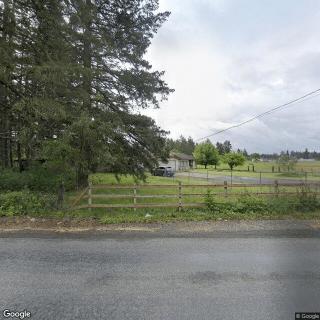
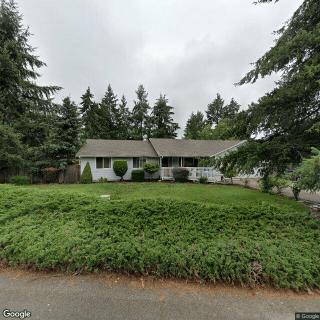
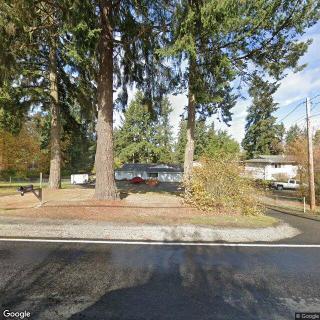
21514 47th Ave E., Spanaway, WA 98387
To contact a resident: (253) 271-0137
For more information about senior living options: (866) 208-4318
Country Living AFH Costs & Pricing
Country Living Adult Family Home's monthly costs reflect a commitment to quality care, albeit at a premium compared to average rates in Pierce County and the broader state of Washington. For a one-bedroom accommodation, Country Living AFH charges $5,000, which is notably higher than both the county's average of $4,456 and the state's median of $4,632. When considering semi-private rooms, the price rises to $5,500 - surpassing local and state averages of $4,264 and $4,267 respectively. Lastly, private rooms at Country Living AFH are priced at $6,000, again exceeding Pierce County's average of $4,623 and Washington's typical rate of $4,772. These higher costs may reflect enhanced amenities or specialized services designed to provide residents with an exceptional level of care and comfort.
| Floor plans | Country Living AFH | Pierce County | Washington |
|---|---|---|---|
| 1 Bedroom | $5,000 | $4,456 | $4,634 |
| Semi-Private | $5,500 | $4,264 | $4,272 |
| Private | $6,000 | $4,623 | $4,774 |
Memory care communities with a similar price nearby
-
from +$500 / mo

Twin Lake Adult Family Home
$5,500 to $6,500 / month16.8 miles away -
About the same
Peace and Pleasant Care Adult Family Home II
$5,000 to $6,000 / month23.5 miles away -
from -$695 / mo
Penrose Harbor at Heron's Key
$4,305 to $7,332 / month21.8 miles away -
from -$500 / mo
A Serenity AFH
$4,500 to $6,000 / month18.3 miles away -
from +$610 / mo

Rainier Rehabilitation
$5,610 to $6,240 / month9.2 miles away
Overall Review of Country Living AFH
Pros
 Grandmother will be very well taken care of there.
- The owners are great folks who work very hard.
- Grandmother will definitely get one-on-one attention there.
Cons
 The value for the money is not worth it.
- The care is not as described.
- No games, outings, or exercise are provided.
- The owner can be very mean verbally and is rough with residents in a wheelchair, to the point of causing falls.
- The owner will not help residents up after a fall and instead splashes water on them.
- When residents are in pain or cry at night, the owner takes away their TV and tells the family to take it home.
- The owner tells residents to quit talking to his stepchildren and to keep to themselves.
- The place would not take care of any type of animal.
- The owner yells at his wife early in the morning, suggesting he has issues with running such a place.
Review
Country Living AFH in Spanaway, WA, is best suited for families seeking a small, home-like environment where a resident can receive highly personal, one-on-one attention from the people who run the house. The setup appears to work best for an elderly person who prioritizes intimate daily contact, a warm but uncomplicated routine, and the feeling of being cared for by a familial, hands-on operator rather than by a larger staff. This option tends to fit someone who does not demand a formal memory-care program, nor a heavy schedule of structured activities, but does require steady company, help with daily tasks, and a sense of safety in a closely watched space.
Those who should consider alternatives are families prioritizing consistent programming, clear safety protocols, and professional oversight. If strong concerns about resident safety, staff conduct, or predictable meal quality surface in the decision process, a larger assisted-living community with licensed, rotating staff and scheduled activities may offer a more comfortable fit. Likewise, caregivers who expect ongoing, organized recreation, mobility-friendly outings, and a consistent standard of care across days and shifts may find a more formal operation preferable. In short, this option suits a preference for a private, intimate home setting, less so a benchmark for reliable, facility-wide programming.
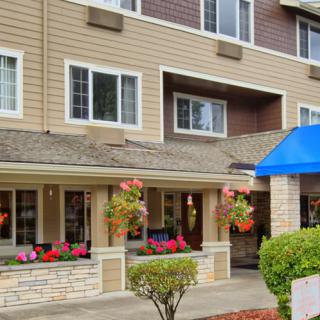
On the positive side, the strongest selling points center on the intimate atmosphere and perceived availability of the owners. Reviewers highlight the cleanliness of key living areas and the likelihood of one-on-one attention, which can translate into meaningful, day-to-day assistance and personalized interaction. The owners’ hard work and hands-on involvement can foster a sense of warmth and responsiveness that larger facilities struggle to match. For a resident who thrives on direct access to caregivers and a feeling of being treated as family, these factors can yield tangible comfort and security.
However, serious concerns muddy the picture and weigh heavily against the lighter advantages. One reviewer reports that the home does not deliver the level of care advertised, with gaps in activities, exercise, and social engagement, and with meals that are not consistently home-cooked. The same account describes mood-driven, at times harsh behavior from the owner, including rough handling of a resident in a wheelchair and dismissive responses to distress. Additional tensions around privacy, family dynamics, and personal boundaries amplify the sense that safety and emotional well-being could be precarious for a frail or easily frightened resident. Dusting gaps and inconsistent housekeeping further challenge the claim of a consistently well-run home.
In weighing the pros against the cons, the decisive factor becomes risk tolerance and care expectations. If the resident is stable, highly valued for personal attention, and acceptable with a more fluid activity level, the benefits of a close-knit, adaptable setting may outweigh some rough edges in programming. Yet the specter of unsafe handling, mood volatility, and a perceived tolerance for substandard care cannot be dismissed lightly. The patchwork impression created by contrasting experiences suggests that outcomes are highly variable and highly dependent on day-to-day staff behavior and how the owner conducts the operation. This makes careful, in-person evaluation essential before any commitment.
The practical path forward is clear. Prospective families should visit multiple times, observe how staff interact with residents, and request direct demonstrations of daily routines, meal quality, and safety supports. Ask for recent references and any licensing or inspection results available through local authorities. Specifically, probe how care plans are developed, how staff are trained, and what happens if a resident’s needs change. If peace of mind hinges on consistent activity programs, transparent safety practices, and dependable meal service, this setting may fall short. For those prioritizing intimate, one-on-one care in a homey environment and willing to accept potential variability, Country Living AFH could be a reasonable pick, so long as thorough checks and cautious optimism guide the final decision.
 Board and Care Home
 Memory Care
 Activities off-site
 Bath tubs
 Beautician on-site
 Devotional services off-site
 Indoor common areas
 Outdoor common areas
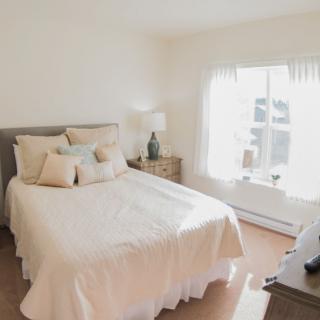
 Private
 Wi-Fi/high-speed internet available
 Diabetic care
 High acuity care
 Incontinence care
 Medication management
 Meals provided

 Dementia Behaviors: In-Depth Understanding and Effective Coping Strategies
 5 Early Indicators of Dementia and What You Can Do
 8 Important Indicators That Memory Care May Be Necessary