
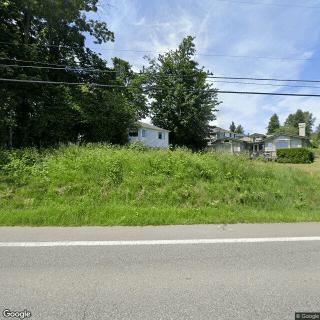
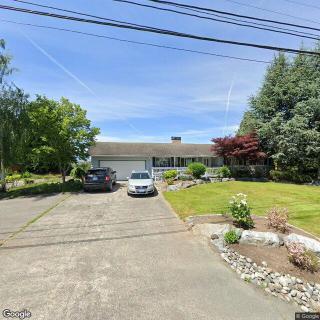
8510 Vernon Road, Lake Stevens, WA 98258
To contact a resident: (425) 344-2886
For more information about senior living options: (866) 208-4318
Angelina Care Home Costs & Pricing
Angelina Care Home offers competitive pricing for its various room types when compared to both Snohomish County and the broader state of Washington. For a semi-private room, residents will find the monthly fee at Angelina is $4,000, notably lower than the county average of $4,320 and slightly below the state average of $4,267. Studio apartments are reasonably priced at $4,500, which is just marginally above the county's rate of $4,443 but still lower than statewide costs averaging $4,126. Both one-bedroom and private rooms also carry a monthly cost of $4,500 at Angelina Care Home; this figure is more affordable than Snohomish County's average for one-bedroom units at $5,080 and comparable to the county's private room cost of $4,834. Overall, Angelina Care Home provides an appealing option for those seeking quality care without straining their budgets in comparison to local rates.
| Floor plans | Angelina Care Home | Snohomish County | Washington |
|---|---|---|---|
| Semi-Private | $4,000 | $4,320 | $4,272 |
| Studio | $4,500 | $4,443 | $4,128 |
| 1 Bedroom | $4,500 | $5,080 | $4,634 |
| Private | $4,500 | $4,834 | $4,774 |
Memory care communities with a similar price nearby
-
from -$500 / mo
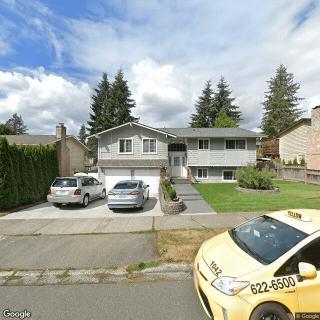
Dignity Life
$3,500 / month11.8 miles away -
from -$625 / mo
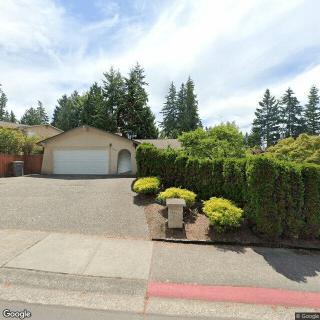
Evergreen Manor Senior Care Inc
$3,375 to $7,500 / month21.1 miles away -
from +$500 / mo
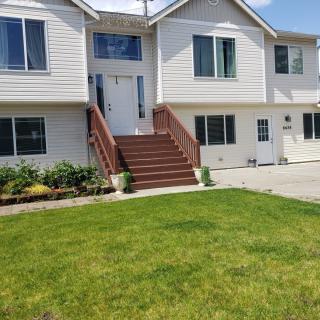
We Care Adult Family Home
$4,500 to $8,000 / month6.4 miles away -
from +$500 / mo
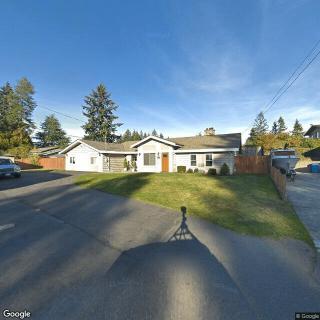
Happy Family Adult Family Home 2
$4,500 / month18.9 miles away -
from +$500 / mo
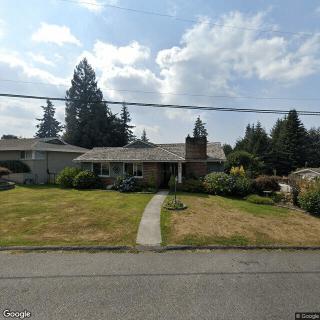
Amy's Adult Care Home
$4,500 / month6.1 miles away
Overall Review of Angelina Care Home
Pros
 The place feels like home and is very friendly.
- The lady who runs the home is very patient with residents.
- There are few residents, so they receive the attention they need.
- All the residents there are friendly, and the overall atmosphere is comfortable.
- He loves it there.
Cons
 He's a pain at times.
Review
Angelina Care Home in Lake Stevens is best suited for seniors who prize a small, home-like setting where personalized attention is the norm. The environment feels intimate and comfortable, with a resident group that remains close-knit enough to keep interactions casual and meaningful. The caregiver, who runs the home, takes a hands-on approach, creating a steady, predictable routine that reduces anxiety for residents and gives families confidence that a trusted figure is overseeing daily care. In short, this community thrives when the priority is warmth, familiarity, and a calm pace over institutional scale.
Those weighing alternatives should consider programs better suited to higher care needs or broader social programming. For seniors who require extensive medical oversight, complex daily assistance, or a wide array of structured activities and transportation options, a larger assisted living facility or a dedicated memory-care setting may deliver more comprehensive support. Families seeking robust clinical services, frequent on-site professionals, or frequent opportunities for social engagement across a broader resident base may find Angelina Care Home less aligned with those expectations.
The strongest positives are concrete and practical. The setting is described as very friendly, with residents who are cooperative and welcoming, contributing to an atmosphere that feels like a welcoming home rather than a clinical environment. The operator’s patience and personal touch translate into smoother transitions for new residents and clearer, more predictable routines. The small resident census means staff can monitor each person closely, resulting in quicker adjustments to routines, meals, and activities when changes are needed. Residents’ overall comfort level and the sense of belonging are tangible advantages.
The potential drawbacks are largely a function of scale rather than a flaw in care. With fewer residents, the range of activities, social opportunities, and formal programs may be more limited than what larger communities offer. For families that equate quality care with breadth of services, such as diverse enrichment options, on-site therapy schedules, or extensive recreational programming, this setting might feel restrictive. Another consideration is the degree of medical redundancy; without the backing of larger clinical teams, supervisory oversight may hinge more heavily on the proprietor’s availability, which could be a constraint during high-demand periods.
Yet these cons are substantially offset by the proven strengths. The intimate scale and direct management create a dependable, predictable care rhythm, reducing the sense of impersonality often found in bigger facilities. The patient, hands-on leadership fosters trust with families, who can see exactly who is coordinating care and how daily decisions are made. The social fabric, built from a small, friendly resident community, provides meaningful peer interactions, without the overwhelm that can occur in larger groups. For families prioritizing comfort, consistency, and a true “home away from home” feel, the balance tilts decisively toward Angelina Care Home.
Decision guidance: this community is a compelling choice for seniors who value a quiet, personable environment where care feels individualized and consistently supervised. It is less suited for those requiring aggressive medical management, extensive programming, or expansive social networks. Prospective residents and their families should visit to meet the operator, assess the daily schedule, observe meal times, and gauge how well the routines align with the resident’s preferences. Inquire about the ratio of staff to residents during peak hours, emergency procedures, medication management, and what happens when larger needs arise. When warmth, proximity to home-like security, and a direct line to the person in charge matter most, Angelina Care Home stands out as a strong, practical option.
 Board and Care Home
 Memory Care
 Activities on-site
 Bath tubs
 Indoor common areas
 Outdoor common areas
 Private
 Private bathrooms
 Respite or short term stays offered
 Wheelchair accessible showers
 Ambulatory care
 Diabetic care
 High acuity care
 Incontinence care
 Medication management
 Kosher


 An In-Depth Look at Reminiscence Therapy in Dementia Care
 Dementia-Related Hallucinations: Causes, Experiences, and Practical Approaches
 Illuminating Insights About Alzheimer's Disease: Ten Crucial Realities