
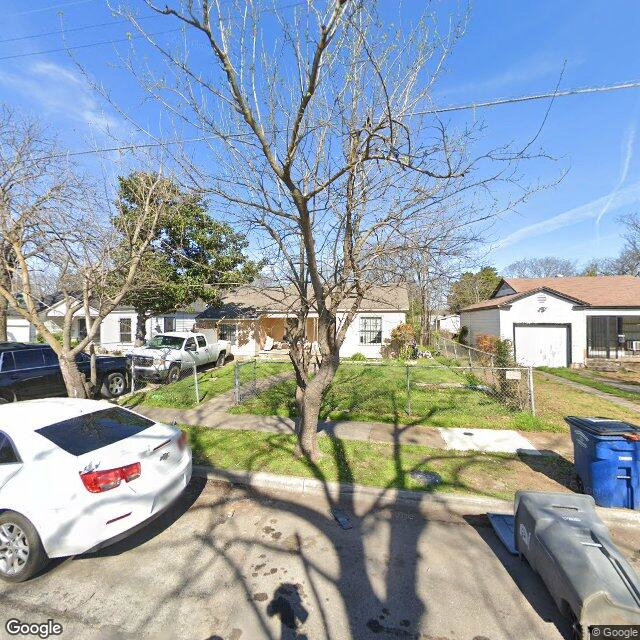
2227 Hudspeth, Dallas, TX 75216
To contact a resident: (214) 918-6991
For more information about senior living options: (866) 208-4318
Sipia Select Costs & Pricing
Sipia Select offers competitive pricing for its living spaces, with private rooms available at $2,500 per month, significantly lower than the average costs in Dallas County ($4,702) and across Texas ($4,096). For studio apartments, Sipia Select presents a price range from $2,500 to $4,500, which again is more affordable compared to the Dallas County rate of $3,625 and Texas's average of $3,758. Additionally, their one-bedroom units range from $2,500 to $6,100, which not only provides flexibility in pricing but also remains attractive when juxtaposed against the local market averages of $3,760 in Dallas County and $3,761 statewide. Overall, Sipia Select stands out as a cost-effective choice while still offering a variety of room types to suit different needs.
| Floor plans | Sipia Select | Dallas County | Texas |
|---|---|---|---|
| Private | $2,500 | $4,702 | $4,096 |
| Studio | $2,500 to $4,500 | $3,625 | $3,758 |
| 1 Bedroom | $2,500 to $6,100 | $3,760 | $3,761 |
Memory care communities with a similar price nearby
-
from +$300 / mo

B & Y Care Home
$2,800 to $4,000 / month19.9 miles away -
from -$115 / mo

Briarview Senior Living
$2,385 to $5,715 / month19.8 miles away -
from +$495 / mo

Parsons House Preston Hollow
$2,995 to $4,295 / month11.3 miles away -
from +$225 / mo

Monticello West
$2,725 to $5,095 / month8.5 miles away -
from +$440 / mo
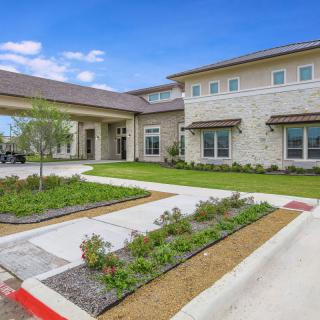
Arabella of Red Oak
$2,940 to $5,135 / month14.3 miles away
Overall Review of Sipia Select
Pros
 The patient is much improved due to the far better care at Sipia Select.
- Sipia Select provides far better care for the patient.
- The hospital social worker found a better place, Sipia Select, for the patient.
- The patient shows clear improvement after moving to Sipia Select.
Cons
 The patient was not getting adequate care at Ashford Hall Nursing Center.
- The patient did not receive adequate care at Ashford Hall Nursing Center.
- The care provided at Ashford Hall Nursing Center was inadequate for the patient.
Review
Sipia Select in Dallas is best suited for families pursuing a meaningful upgrade in care quality when a loved one has not received adequate attention at a prior facility. The two available reviews frame Sipia Select as the place that delivers noticeably better, more attentive care, particularly after a hospital team's involvement to move a patient out of a underperforming center. In the described case, a social worker connected the family with Sipia Select, and the patient’s condition improved markedly once the care team assumed responsibility. That outcome matters: it signals a facility with stronger clinical oversight, hands-on staff, and a higher level of day-to-day responsiveness than the prior setting. For families weighing post-acute or long-term placement, Sipia Select offers a credible path to relief and stability.
Alternatives are worth considering for several reasons. If budget constraints are tight, or if a resident requires specialized programs not evident in the available feedback, other communities may deliver different value, amenities, or service mixes that better fit those needs. Location and availability also matter; a single compelling story cannot substitute for a broader, multi-family track record. Prospective residents should not assume that two positive anecdotes confirm consistency across all residents. Instead, treat Sipia Select as a high-fidelity option for care quality where there is documented, externally observed improvement; use it as a baseline to compare other facilities’ staffing, oversight, and post-acute coordination.
From the available feedback, the primary advantages are clear and substantial. The improvement in the patient’s well-being after transfer implies that Sipia Select offers more attentive, capable care, with better oversight and day-to-day responsiveness than the prior facility. The hospital social worker’s involvement and recommendation add an external validation that the transition was driven by clinical judgment, not a family whim. Those elements can translate into safer medication management, closer monitoring of health changes, and quicker escalation when concerns arise. The main caveat is the narrow evidentiary base: only two reviews, both pointing to the same positive outcome, with no detail about other essential services, pricing, or long-term satisfaction. Still, the demonstrated impact on one resident cannot be dismissed.
For families deciding next steps, the practical questions matter as much as the sentiment. Confirm whether Sipia Select provides a robust post-acute transition pathway, including timely care plan development, medication reconciliation, and clear communication with hospitals and families. Ask about staff-to-resident ratios, shift coverage, and how meals, rehabilitation, and daily activities are organized to support recovery and ongoing health. Request references beyond the hospital social worker’s endorsement and arrange in-person tours to assess the daily environment, cleanliness, and staff engagement. Determine how flexible the care plan will be as needs evolve, and whether there are options to revisit placement if care expectations change.
Compared with alternatives, Sipia Select stands out for care quality over generic amenities. It is particularly compelling for families seeking a transfer from a center deemed inadequate, with the expectation of a sharper focus on health status, responsiveness, and coordinated care. However, potential buyers should weigh the limited published evidence and the lack of detail about breadth of services, memory care, rehabilitation, or social programming. If those specific services are critical, expanding search to other Dallas-area communities would be prudent. In short, Sipia Select appears to deliver a superior care experience in the right scenario, but only after aligning service capabilities and cost with the resident’s precise needs.
Recommendation: place decisive emphasis on care quality and transition capabilities. Sipia Select is a strong recommendation for families whose priority is resolving deficiencies experienced in prior facilities and achieving steady, attentive care. It is less suited for those who need highly specialized programs, flexible budgeting, or broader amenities beyond care quality. Prospects should schedule a tour, verify staffing and care planning processes, and solicit multiple, independent references to corroborate the two reported outcomes. If alignment is confirmed, staff responsiveness, hospital coordination, and a measurable improvement in the resident’s condition, then Sipia Select becomes a practical, low-risk choice in Dallas for post-acute or ongoing senior care that prioritizes genuine care over convenience.
 Board and Care Home
 Memory Care
 Activities on-site
 Devotional services off-site
 Indoor common areas
 Private
 Dallas Love (10 miles away)
 Ambulatory care
 Diabetic care
 Meals provided



 Exploring the Contrasts Between Assisted Living and Skilled Nursing
 Vibrant Senior Living: A Comprehensive Guide for Active Older Adults
 Assisted Living and Memory Care: Understanding Their Core Differences