
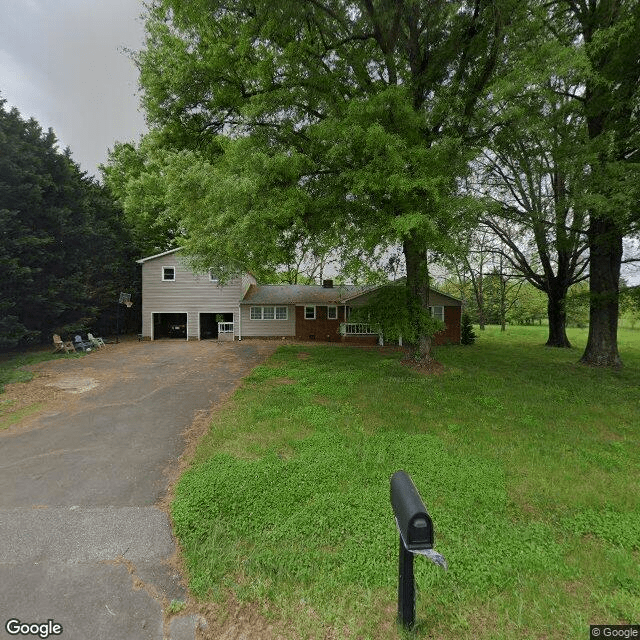
4675 Hickory Lincolnton Rd, Newton, NC 28658
To contact a resident: (704) 462-0077
For more information about senior living options: (866) 208-4318
Overall Review of Angels of Hope
Pros
 The church has a warm, close-knit congregation.
- The pastor is amazing, teaching the Word honestly and boldly.
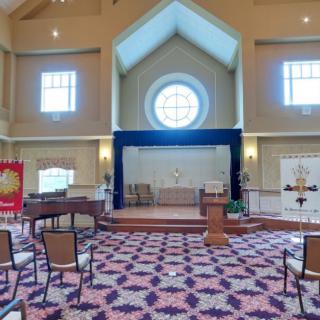
- The worship band is powerful and creates an atmosphere where God’s presence is felt.
- The children’s church is wonderful and teaches kids about God in an engaging, easy-to-understand way.
- The church offers a genuine, family-like community.
- Friendly people make this church welcoming.
- The church has two of the best pastors anywhere.
- Congregants feel loved at this church.
- The church emphasizes Bible-believing and Bible-teaching.
Review
Angels of Hope in Newton, NC is best suited for seniors who deliberately prioritize a close, Bible-centered faith community where relationships with pastors and fellow worshippers are the core of daily life. This is a setting where spiritual nourishment comes through straightforward, unapologetic teaching and through an atmosphere permeated by confident worship. It appeals to retirees or older adults who want a tangible sense of belonging, a place where a pastor learns you by name and where volunteers and members rally around one another. For someone who measures quality by the warmth of a church family, the dynamic described here offers a compelling, consistent source of meaning and social connection.
Yet, this community may not align with every senior’s needs. Those who require hands-on daily living assistance, structured medical oversight, or a broad slate of secular social activities may want to consider alternatives. If the priority is a full-service senior living arrangement with on-site care, meal programs, transportation, and memory-care options, a facility or community designed specifically for assisted living will likely be a better fit. Similarly, seniors seeking a different theological flavor, or a setting with a larger or more varied program calendar, should explore other churches or faith-based communities. The fit hinges on balancing spiritual community with practical daily living requirements.
From a decision-maker’s perspective, the strongest pros translate into dependable social capital and purposeful daily life. The warmth of the congregation creates immediate social ties that alleviate loneliness and foster ongoing engagement, which is invaluable for emotional well-being in later years. Knowing that pastors are accessible and remembered by name signals a level of personal care that many seniors crave, especially when faith is a central pillar of daily life. The emphasis on Bible-believing, Bible-teaching anchors routines around doctrinal clarity, offering continuity for seniors who want their beliefs reaffirmed and modeled in everyday settings. The worship band’s power and the overall atmosphere help seniors feel connected to something larger than themselves, a practical antidote to weathering life’s transitions with purpose.
These strengths, while meaningful, must be weighed against practical living realities. The most compelling pros, personal attention, transparent teaching, and vibrant worship, offset, for many, the potential absence of on-site care coordination by providing a reliable social ecosystem. For seniors who prize community support and spiritual companionship, this environment can significantly reduce isolation, encourage regular participation in meaningful activities, and sustain a sense of purpose between visits to medical providers or family members. In short, the church-based approach functions as a robust social and spiritual scaffold, creating resilience through relationships and shared faith, even when formal caregiving services are not part of the package.
However, the available material leaves important gaps for evaluating true senior-living suitability. There is no explicit mention of on-site caregiving, medication management, daily meals, transportation arrangements, or memory-care programming. For families weighing a move, these omissions matter: medical emergencies, mobility challenges, and routine assistance are real-world needs that often dictate the feasibility of long-term residence. Prospective residents should flag these questions early, leaning on pastoral outreach and church-sponsored activity networks to understand whether informal support can substitute for formal care, or if complementary services from external providers would be required. It is essential to know how transportation, meal access, and spiritual outreach to homebound or isolated seniors are managed.
In the end, Angels of Hope presents a clear, practical value proposition for a specific senior: one who seeks a deeply rooted, faith-forward community where relationships with pastors and peers are the primary daily resource. For those whose top criteria include religious vitality, doctrinal clarity, and a sense of belonging that persists beyond weekend services, this is a compelling option. For seniors whose needs center on daily living support, medical oversight, or diversified non-faith programming, the right move is to consider alternatives or to plan a hybrid approach that couples a faith community with a separate, care-focused living arrangement. The prudent path involves an in-person visit, conversations with church leadership, and transparent discussions about care expectations, transportation, and ongoing health needs. With those conversations in hand, the choice becomes not merely about worship, but about a sustainable home that nurtures both spirit and daily life.
 Board and Care Home
 Memory Care

 Are Dementia and Alzheimer's Disease Lethal? A Comprehensive Exploration
 Exploring the Power of Reminiscence Therapy for Individuals With Dementia
 An In-Depth Look at Reminiscence Therapy in Dementia Care