For more information about senior living options: (866) 208-4318
4.2 from 31 reviews
5 stars
23
4 stars
2
3 stars
1
2 stars
0
1 stars
5
Arbor Springs Costs & Pricing
At Arbor Springs, the cost of a studio room is significantly higher than both Polk County and the broader state of Iowa. Priced at $7,050 per month, Arbor Springs reflects a premium offering in terms of services and amenities when compared to Polk County's average monthly fee of $3,533 and Iowa's statewide average of $3,613 for similar accommodations. This disparity suggests that residents at Arbor Springs may enjoy enhanced facilities or specialized care options that justify the higher expense. It's an important consideration for families evaluating long-term care solutions in relation to their budgetary needs.
Floor plans
Arbor Springs
Polk County
Iowa
Studio
$7,050
$3,533
$3,609
Skilled Nursing Facilities with a similar price nearby
Residents and families specifically mention dementia support and Alzheimer’s care.
Multiple reviews describe care tailored to dementia and Alzheimer’s, with families feeling their loved one’s needs were understood. Several people also emphasize how the community handled advanced symptoms and changing health over time. A couple of reviews also directly question whether the day-to-day approach matches the promised dementia focus, citing concerns about care quality or staffing stability.
common26 reviews mention this
Staff kindness and responsiveness
Reviews repeatedly tie day-to-day experience to how the staff show up.
Many reviewers describe staff as kind, caring, and engaged, often mentioning regular communication about health changes and staff who call residents by name. Several families say their loved ones were clean, well cared for, and supported with everyday needs. A smaller set of reviews raises the opposite concern—claiming poor supervision, inadequate nursing care, or staff who are not sufficiently attentive—along with frustration about management and staffing turnover.
common2 reviews mention this
Small group activities and outings
Residents are described as having structured group activities.
Some reviews mention organized activities happening in common spaces, and others highlight small group programming. One reviewer specifically describes an outing to pick out flowers, alongside other family-visible events like holidays. Overall, the activity mentions focus on keeping residents engaged rather than leaving them to passively spend the day.
common2 reviews mention this
Meals and day snacks
Food shows up in reviews as a regular part of the routine.
A couple of reviews specifically praise meals and describe the dining experience as satisfying. One reviewer also mentions snacks being brought around during the day, with the resident happy about them. Another review pairs food with therapies as part of an overall positive stretch of care.
caveat3 reviews mention this
Concerns about supervision and nursing
Some families report worries about supervision and nursing consistency.
While many reviews are positive, a few raise serious concerns about staffing behavior and responsiveness, including claims of aides not engaging with residents and difficulty getting appropriate help. One reviewer also describes a shift after the initial period, citing staff turnover and lower nursing care. These reviews stand out as the main counterpoint to the otherwise frequent praise of care quality and staffing.
How we summarize
Counts show how many written reviews mention each theme; a review can touch several themes, and only frequently mentioned themes are displayed.
Features
Types of Care
Memory Care
Skilled Nursing Facility
Amenities
Activities on-site
Bath tubs
Beautician on-site
Devotional services off-site
Devotional services on-site
Indoor common areas
Outdoor common areas
Respite or short term stays offered
Swimming pool / hot tub
Wheelchair accessible showers
Transportation
Des Moines International (9 miles away)
Care Services
Ambulatory care
Diabetic care
High acuity care
Dining
Meals provided
Activities
Activities on-site
Devotional activities offsite
Devotional activities on-site
Videos
Nearby Places of Interest
This part of West Des Moines, Iowa offers a variety of amenities that cater to the needs of seniors. With several parks nearby, such as Valley View Park and Grant Park, residents can enjoy outdoor activities and scenic views. The area also boasts a range of dining options including Hana Ramen Sushi, Culver's, and The Cheesecake Factory, providing diverse culinary experiences. For medical needs, there are reputable physicians like Mercy Jordan Creek Pediatric and the University of Iowa Hospital and Clinics in close proximity. Additionally, there are multiple pharmacies for easy access to medications. Places of worship such as Westview Church and Living Faith Lutheran Church offer spiritual support and community connections. Overall, with convenient access to entertainment venues like Century Theatre and essential services like hospitals such as Iowa Methodist Medical Center nearby, this part of West Des Moines provides a comfortable and well-rounded environment for senior living.
Parks
Valley View Park (0.6 miles)
Playground At Maple Grove School (1.6 miles)
Westown Meadows Park (2.4 miles)
Grant Park (2.5 miles)
Stonegate Park (3.1 miles)
Restaurants
Hana Ramen Sushi (0.7 miles)
The Cheesecake Factory (0.8 miles)
Culver's (0.8 miles)
Bar Louie (1 miles)
McDonald's (1 miles)
Burger King (1.1 miles)
Taco John's (1.1 miles)
Physicians
Bassett, Tony-Mercy Jordan Creek Pediatric (0.7 miles)
University of Iowa Hospital and Clinics (0.9 miles)
Hunter Karen Parkway Periodontal Group West Des Moines (1.5 miles)
At Arbor Springs, the cost of a studio room is significantly higher than both Polk County and the broader state of Iowa. Priced at $7,050 per month, Arbor Springs reflects a premium offering in terms of services and amenities when compared to Polk County's average monthly fee of $3,533 and Iowa's statewide average of $3,613 for similar accommodations. This disparity suggests that residents at Arbor Springs may enjoy enhanced facilities or specialized care options that justify the higher expense. It's an important consideration for families evaluating long-term care solutions in relation to their budgetary needs.
Reminiscence therapy helps individuals with dementia recall past memories through structured discussions and meaningful objects, enhancing mood, relationships, and sense of identity while celebrating their lives. It can be practiced in formal settings or at home, requiring sensitivity to personal histories and cultural backgrounds.
Reminiscence therapy is a structured method for older adults, especially those with dementia, to share life stories using prompts and sensory cues, fostering emotional well-being, social engagement, and self-identity. It aims to improve quality of life by enhancing interpersonal connections and cognitive stimulation while requiring careful facilitation to avoid distressing memories.
Dementia, particularly Lewy body dementia, often involves hallucinations that can significantly distress both patients and caregivers due to disruptions in sensory processing and neurotransmitter imbalances. Effective management includes compassionate communication, environmental adjustments, and a multidisciplinary approach to care while addressing the emotional needs of caregivers.
Get PricingAsk A QuestionSchedule A TourContact Senior Advisor
By clicking submit, you agree to our Partner's Terms of Use. You
also consent to receive calls and texts, which may be autodialed, from our Partner. Your consent is not a condition to
using our Partner's service. Please visit our Partner's Privacy Policy for information about their privacy practices.

 Memory Care
 Skilled Nursing Facility
 Activities on-site
 Bath tubs
 Beautician on-site
 Devotional services off-site
 Indoor common areas
 Outdoor common areas
 Respite or short term stays offered
 Swimming pool / hot tub
 Wheelchair accessible showers
 Des Moines International (9 miles away)
 Ambulatory care
 Diabetic care
 High acuity care
 Meals provided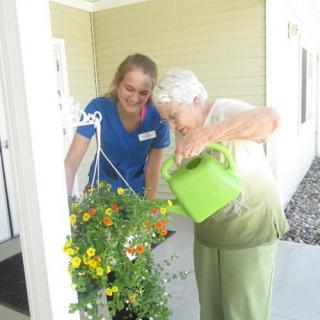
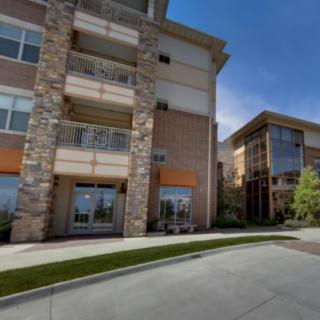
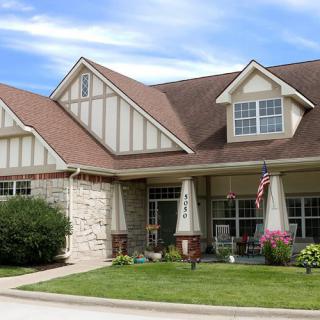
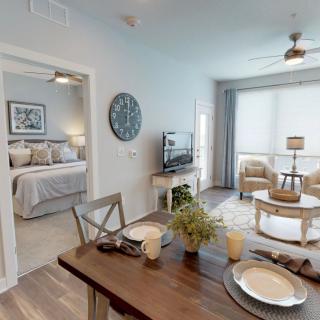
 Well-maintained rooms, robust amenities, and engaging activities with attentive staff.

 Exploring the Power of Reminiscence Therapy for Individuals With Dementia
 An In-Depth Look at Reminiscence Therapy in Dementia Care
 Dementia-Related Hallucinations: Causes, Experiences, and Practical Approaches