
1516 W Laurel Avenue, Chandler, AZ 85233
To contact a resident: (480) 245-6443
For more information about senior living options: (866) 208-4318
Whitewing Mansion Assisted Living II Costs & Pricing
Whitewing Mansion Assisted Living II offers competitive pricing compared to the broader market in Maricopa County and across Arizona. For instance, the monthly cost for a semi-private room is $2,200, significantly lower than the county average of $2,801 and the state average of $2,820. Studio apartments at Whitewing Mansion are priced at $2,395, in contrast to Maricopa's $3,960 and Arizona's $3,829 averages. Similarly, one-bedroom units are offered at $2,495 compared to county and state averages of $3,473 and $3,532 respectively. The facility's private rooms are also attractively priced at $2,500 while local rates hover around $3,318 - demonstrating a strong value proposition for residents. Finally, two-bedroom accommodations are available for $2,895 against higher averages of $4,112 in Maricopa County and $4,106 statewide. These figures reflect Whitewing Mansion's commitment to providing affordable assisted living options without compromising on comfort or care quality.
| Floor plans | Whitewing Mansion Assisted Living II | Maricopa County | Arizona |
|---|---|---|---|
| Semi-Private | $2,200 | $2,801 | $2,820 |
| Studio | $2,395 | $3,960 | $3,829 |
| 1 Bedroom | $2,495 | $3,473 | $3,532 |
| Private | $2,500 | $3,318 | $3,345 |
| 2 Bedrooms | $2,895 | $4,112 | $4,106 |
Memory care communities with a similar price nearby
-
from +$300 / mo

La Bella Vita ALH
$2,500 to $7,000 / month9.2 miles away -
from +$200 / mo
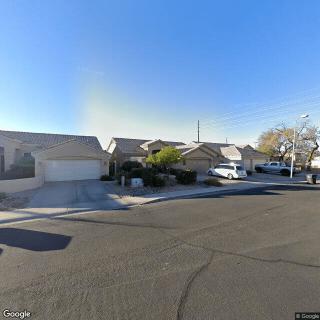
Golden Touch One Adult Care Home
$2,400 to $5,800 / month0.5 miles away -
from -$200 / mo
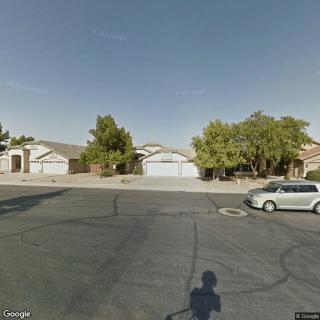
Santo Nino Villas 2
$2,000 to $2,300 / month4.5 miles away -
from -$200 / mo
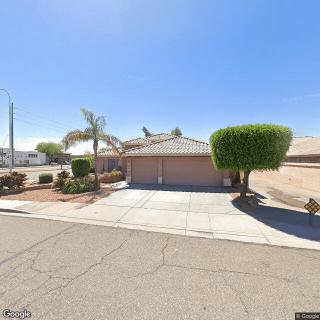
Angel's Adult Group Home
$2,000 to $3,000 / month10.0 miles away -
About the same

Windsor Luxury Assisted Living, LLC
$2,255 to $5,950 / month14.1 miles away
Overall Review of Whitewing Mansion Assisted Living II
Pros
 The group home is beautiful, updated, and cozy, with care staff who are kind and treat residents like family.
- They take good care of the patients and are nice to guests.
- It is one of the most updated and cozy custom homes in Gilbert.
Cons
 Turnover of employees was outrageous.
- The food was absolutely terrible.
- Neglect causing injury and ultimately DEATH.
Review
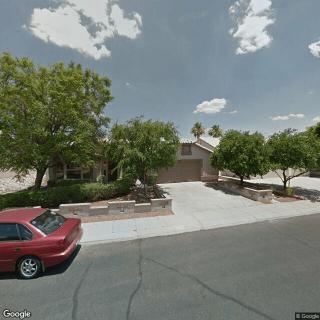
Whitewing Mansion Assisted Living II in Chandler is best suited for families seeking a small, home-like setting where care staff are described as kind and residents are treated like family. The community appears to excel for those who value warmth, personal attention, and a cozy, updated living environment over a more institutional feel. It suits seniors who do not require highly regimented medical care on every shift and who want a setting that feels intimate rather than corporate. Families prioritizing a strong sense of daily comfort and approachable staff will likely feel at home here. Those needing reinforced safety oversight, highly consistent staffing, or rigorous nutritional monitoring may want to widen the search to options with larger teams and more formal programs.
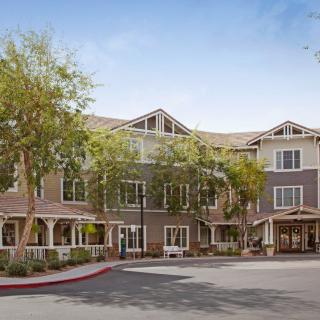
On the upside, several reviews paint Whitewing Mansion II as a pleasant, attractive place. Observers describe it as a nice, updated group home where the care staff are genuinely kind and residents are treated with familial warmth. The environment is characterized as cozy and “beautiful,” with a sense that staff members form personal connections with residents. This combination of a comfortable setting and friendly caregivers can translate into meaningful daily companionship, predictable routines, and a feeling of being seen by people who know the resident’s preferences. For families that prize an intimate, neighborly atmosphere, these strengths carry real value.
Yet the most troubling feedback arrives in stark terms. One reviewer levels a severe accusation of outrageous staff turnover, terrible food, and neglect that allegedly led to injury and death, urging others to keep their loved ones away. That single but alarming account raises red flags about stability, accountability, and resident safety. Even if this portrayal is not representative of every shift or caregiver, it signals the need for careful verification: licensing records, incident histories, and current staffing patterns. For a family weighing options, such a claim cannot be dismissed outright and must be explored through direct accountability questions and on-site observations.
The positive experiences and the severe concerns together create a difficult balancing act. The proven strengths, warm staff, a home-like vibe, and an updated, cozy setting, can offset a lot for residents who thrive on daily reassurance, individualized attention, and a predictable routine. However, the existence of high staff turnover and a claim of neglect serious enough to cause harm undermines confidence in day-to-day safety and continuity of care. Prospects should not dismiss these concerns, but rather use them as a framework for due diligence: demand detailed staffing schedules, request examples of care plans, and insist on transparent reporting of any incidents, followed by a clear quality-improvement plan from management.
Practical due diligence becomes essential. Prospective families should schedule face-to-face meetings with the administrator and front-line caregivers, tour the kitchen, observe mealtime service, and ask blunt questions about meal quality, dietary accommodations, and resident who handles medications. Inquire about nurse availability on site, response times for emergencies, and the process for reporting and addressing complaints. Review state inspection reports and ask for current references from families with residents at similar care levels. If possible, arrange a short-term stay or a trial period to observe consistency in staffing and the quality of interactions. Collect concrete data on staffing ratios, turnover rates, and any recent corrective actions.
In the end, the decision hinges on what matters most to the family. If a warm, intimate setting with friendly, attentive staff and a feeling of “home” outweighs the risk of potential gaps in oversight, Whitewing Mansion II can be a good fit, provided rigorous checks are completed and ongoing oversight is secured. If, instead, stability, predictability, and ironclad safety practices are non-negotiable, exploring alternatives with larger teams, clearer protocols, and proven incident management may be the wiser course. The right choice will align the resident’s needs with a care environment that combines genuine kindness with reliable, measurable safeguards.
 Board and Care Home
 Memory Care
 Private
 Phoenix Sky Harbor International (12 miles away)
 Diabetic care


 8 Important Indicators That Memory Care May Be Necessary
 Delving into the Inner World of Dementia: Insights into Thoughts and Awareness
 Five Subtle Dementia Indicators to Observe: An In-Depth Guide to Understanding “Does My Mom Have Dementia?”