
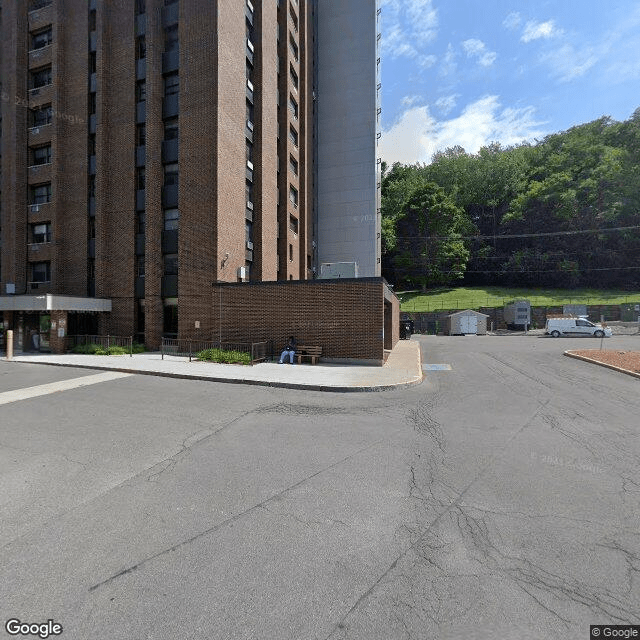
417 Churchill Ave, Syracuse, NY 13205
To contact a resident: (315) 469-7786
For more information about senior living options: (866) 208-4318
Overall Review of Bernardine Senior Apartments
Pros
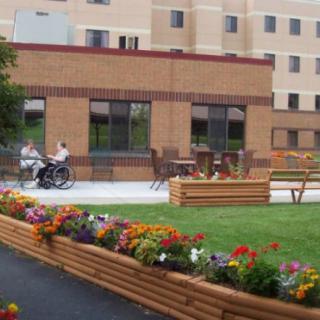
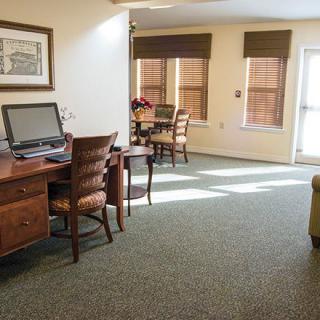
 The Bernardine offers residents their own open, airy, clean, and fully remodeled apartments with a full range of services.
- For those needing Medicaid-subsidized assisted living, it is described as the best option in the area.
- It provides small, clean apartments for seniors.
- The community recently added a second elevator tower, improving accessibility.
- Independent living residents enjoy privacy and a high level of independence.
- The facility is described as a very nice place to live and work.
- It is a great place for seniors to heal from sickness and rehab.
- Residents have access to aides who administer medications and check on them.
Cons
 Nurses enter residents' apartments and leave doors open when residents are sleeping or not home.
- People are allowed to be in occupied apartments without tenants' permission.
- The food some residents eat is absolutely horrendous.
- There is no privacy; residents' apartments are entered without knocking.
- The building is filthy.
- There are unkempt residents and some staff are very rude.
- The staff treat residents poorly.
- The facility lacks friendliness.
- The hallways are hot and the elevators are slow.
- The reviewer would not stay there.
- The reviewer would not recommend the place.
Review
Bernardine Senior Apartments in Syracuse is best suited for seniors who need Medicaid-subsidized assisted living but still want a private apartment and a meaningful degree of independence. The community works well for residents who prefer not to surrender personal space, yet still require routine support, medication reminders, and a basic safety net. Its recent expansion, including a second elevator tower, improves access and mobility, making daily life more manageable for those with limited movement. Put plainly, this is a practical, budget-conscious option for aging in place with predictable services rather than a luxury experience.
Those assessing options should explicitly consider alternatives if pristine interiors, ironclad privacy, or consistently polished staffing are non-negotiables. The environment can feel rough around the edges, with concerns about cleanliness and privacy that persist for some residents. Families seeking high-end finishes, a vibrant social calendar, or gourmet dining will likely find better fits elsewhere. For those who require more intensive clinical oversight than Medicaid typically covers, or who want a facility with a more refined atmosphere, exploration outside Bernardine is prudent. In short, this is not the choice for luxury seekers or those prioritizing flawless day-to-day presentation.
On the upside, residents benefit from private, small apartments that are clean and largely remodeled, preserving a sense of personal space and autonomy. The setting supports independent living while still delivering essential services, with aides available to manage medications and perform routine checks. The addition of the second elevator tower enhances accessibility for mobility-limited residents, reducing some of the friction associated with multi-story living. Several accounts highlight the place as suitable for healing and rehabilitation, giving families a practical bridge to regained function without forcing a move to a higher-cost facility.
Yet the list of drawbacks is consequential. Privacy frequently suffers: doors can be left open, entries into apartments occur without clear notification or consent, and some residents report non-consensual presence in occupied spaces. Cleanliness and upkeep are inconsistent, with owners and staff sometimes described as inattentive, and hallways can feel uncomfortably hot or poorly maintained. Staffing issues surface in remarks about blunt or rude interactions, and the community’s mix of residents, some with behavioral or mental health concerns, can create an environment that feels unpredictable. The overall finish and ambiance are not high-end, which matters to families seeking a calm, meticulously managed setting.
Still, the practical value remains compelling for the intended population. For those constrained by Medicaid budgets, Bernardine often represents the best available option in the area, delivering a private apartment and essential assisted living services without the cost burden of upscale facilities. The model of on-site medication management and routine caregiver checks lightens the load on family caregivers and supports a reasonable standard of daily living. The property’s improvements, expanded footprint and elevator access, address meaningful logistical gaps and can support safer, more dignified rehab or transition periods.
Decision-makers should approach with a focused checklist during visits. Observe privacy practices in real-time, ask detailed questions about policy and enforcement around apartment entries, and request tours at different times to gauge cleanliness and maintenance quality. Have candid conversations with current residents about daily life, staff responsiveness, and the consistency of care. Compare the total monthly cost, what is included, and any potential out-of-pocket expenses, ensuring long-term care needs align with the budget. If independence at a modest price is the priority, Bernardine is a reasonable fit; if privacy integrity and a consistently pristine environment are non-negotiables, alternatives with stronger reputations in these areas deserve serious consideration.
 Independent Living
 Syracuse-Hancock International (7 miles away)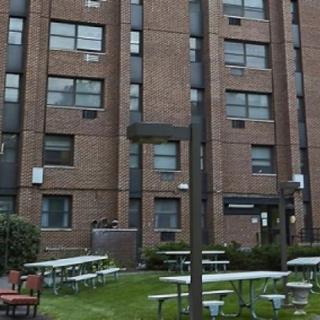


 Comprehensive Look at Senior Blood Pressure Charts: Normal and Elevated Levels by Age
 Top Canine Companions for Older Adults
 Comprehensive Guide to Blood Pressure Charts for Older Adults: Understanding Normal and High Readings by Age