
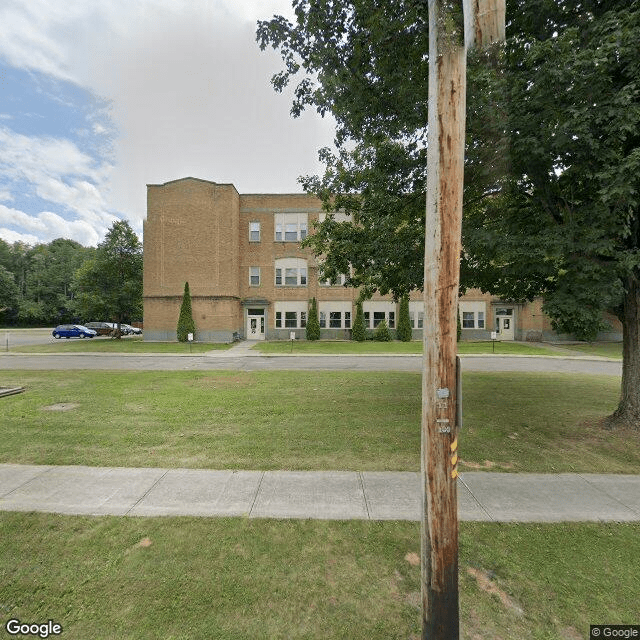
18 Chapel St, Sherburne, NY 13460
To contact a resident: (607) 674-5655
For more information about senior living options: (866) 208-4318
Overall Review of Sherburne Senior Housing
Pros
 The apartment/condo options come in different sizes.
- Halls and the community room are clean.
- Some fitness equipment is available on-site.
- Storage units are available for each apartment.
- The building is secured and safe.
- The pool complex is nearby.
- There is a ten-minute walk to shopping.
- A medical complex is next to the parking lot.
- There is plentiful parking, including handicap parking.
- Laundry is on-site.
- A stage is available for speakers and entertainers.
- Rich is credited with doing a great job within his allotted time.
Cons
 The property needs full-time maintenance.
- The building manager’s office is not handicap accessible, preventing private meetings for some residents.
- The fitness equipment lacks a safe location, increasing the risk of falls.
- Bannister cleaning is needed in some areas.
- Minor painting is needed in certain areas.
- Other areas require attention to improve safety for residents and guests.
Review
Sherburne Senior Housing is best suited for independent seniors who want a secure, amenity-rich small-community setting with ready access to everyday conveniences. The layout and services cater to residents who value apartment options of different sizes, on-site laundry, private storage units, and a predictable, self-contained environment. The building’s secure structure, ample parking, including handicap spaces, and nearby amenities create a practical, walkable lifestyle for those who can manage day-to-day routines without 24/7 hands-on care.
Those considering alternatives should note this community is not ideal for residents needing ongoing personal assistance or memory-care support. Families seeking robust, around-the-clock staffing, frequent health-related interventions, or highly proactive care management will likely want options with higher care levels. The same caveat applies to potential residents who require an accessible meeting space for private discussions with management; the current arrangement makes private conversations less convenient for mobility-impaired visitors. In short, Sherburne Senior Housing excels as a secure, self-sufficient home, not as a full-service care solution.
The strengths of the offering begin with security and convenience. A clearly secured building provides peace of mind, and the on-site laundry plus individual storage for each apartment simplify daily living. The availability of multiple apartment sizes helps families tailor space to needs and budget. Proximity to a pool complex, a medical complex adjacent to the parking area, and a ten-minute stroll to shopping create a practical ecosystem where routines stay close to hand. The presence of a community stage or hall expands opportunities for social events and resident-led programs, which can be a meaningful part of aging in place. These factors collectively offset the absence of extensive in-unit services for many residents who can maintain independence.
However, several material drawbacks temper the appeal. Maintenance is undersized for a building of this scope, described as needing a full-time presence to address the inevitable wear and tear promptly. While Rich is acknowledged for doing what can be done within allotted time, minor painting, bannister cleaning, and other attention items suggest a leaning on patchwork rather than preventative upkeep. The safety implications of the fitness area are nontrivial: treadmills and stair steppers require a clearly protected location to prevent falls, and the overall environment should be monitored to keep equipment from becoming hazards to residents. Additionally, not all residents can meet privately with the building manager because the office is not handicap-accessible, a friction point that can impede timely, personalized attention when issues arise.
These gaps matter because they determine how well the community sustains a dignified, worry-free daily rhythm. Pros offset cons when maintenance is amplified by a clear plan, a more accessible management arrangement, and a proven track record of timely repairs. If the venue can commit to regular, full-time maintenance presence and reconfigure or relocate the fitness equipment to a safer, more visible zone, the practical benefits, clean common areas, reliable laundry, secure entry, ample parking, and the ease of nearby services, become decisive advantages. Without those enhancements, the risk is a growing sense that small issues accumulate into recurring headaches, especially for residents with limited mobility or those who rely on staff for urgent assistance.
For decision-making, the key is alignment with care expectations and mobility realities. Prospective residents should inspect the building’s accessibility features, test the fitness equipment area for safety, and confirm that maintenance responsiveness meets personal standards. It is prudent to inquire about concrete steps to relocate or reconfigure equipment, improve painting and banister upkeep, and establish a fully accessible channel for private staff meetings. Family members evaluating this community ought to balance the strong convenience and security with the need for dependable upkeep and accessible management, especially when future health needs might rise.
Overall, Sherburne Senior Housing stands out as a solid, practical option for independent seniors who value security, location, and a real sense of community, delivered within a manageable, cost-conscious package. It works best for those who can navigate minor maintenance quirks and who do not require intensive daily care or fully accessible administrative spaces. For residents who anticipate needing regular assistance, round-the-clock oversight, or seamless access to management without mobility barriers, it would be wise to explore alternatives that couple independent living with stronger care supports and a more robust maintenance footprint.
 Independent Living






 A Detailed Exploration of Living Wills and Advance Directives
 Comprehensive Guide to Medicare Coverage for Hospice Care
 Caring for Those Who Care: Recognizing, Understanding, and Overcoming Caregiver Burnout