
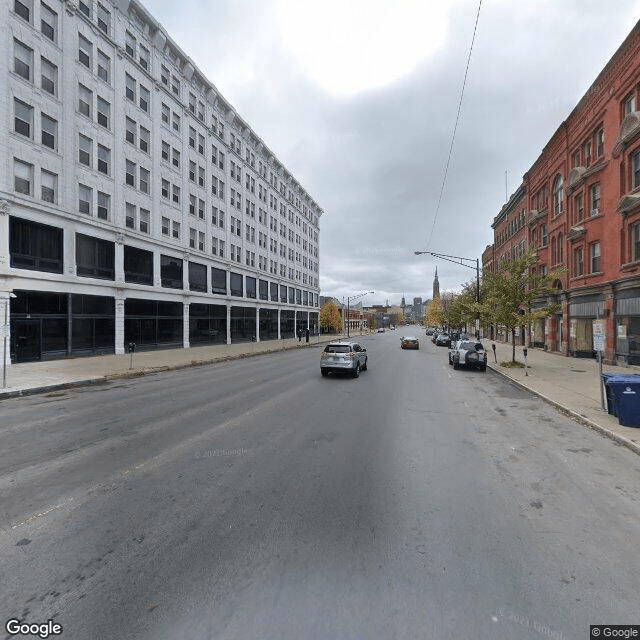
921 Main St, Buffalo, NY 14203
To contact a resident: (716) 883-1705
For more information about senior living options: (866) 208-4318
Overall Review of Roosevelt Apartments
Pros
 The residents are polite.
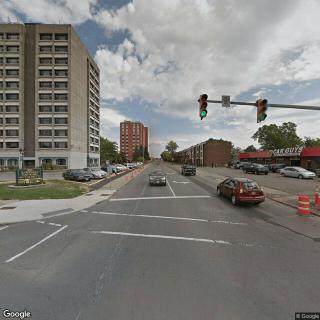
- The building is quiet and warm, with a convenient location off Main Street and easy access to the NFTA transit system.
- They feel very safe and secure there.
- People love the pizza place.
- The apartments are very large and fairly nice.
- They have friends there.
Cons
 The facility is not user-friendly for people in wheelchairs, walkers, or using electric carts.
- The reviewer won’t hold their breath for improvements.
- The apartments are very large but could use renovations.
Review
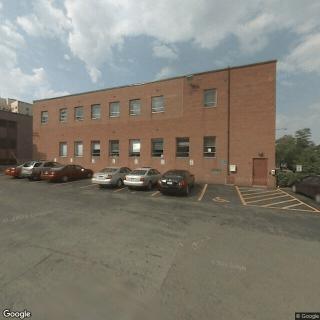
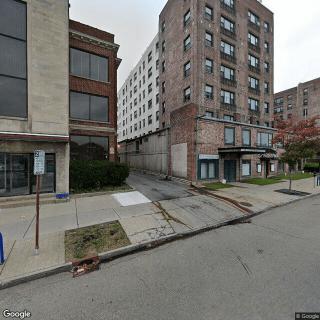
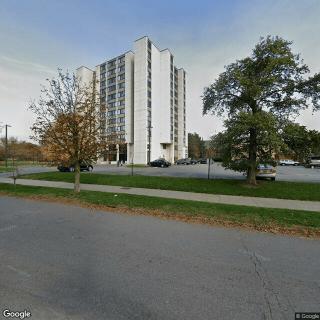
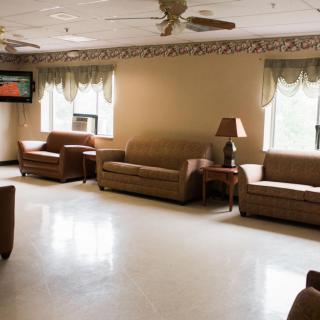
Roosevelt Apartments are best suited for seniors or households on a tight budget who value a central Buffalo location, reliable safety, and a quiet, community-oriented atmosphere over modern amenities or hands-on care. The building sits near Main Street with easy access to NFTA transit, making trips to downtown, shopping, and medical appointments practical without a car. The environment is described as quiet, warm, and orderly, with residents who interact in a familiar, low-drama setting. For a household that prioritizes affordability and proximity to transit over luxe finishes or assisted living services, this property offers a compelling, uncomplicated living option.
Those who should consider alternatives are primarily seniors who depend on mobility accommodations or on-site support. The reviews indicate the building is not user-friendly for people using wheelchairs, walkers, or electric carts, which can translate into real daily friction and safety concerns. If access to elevators, wide doorways, step-free interiors, and well-planned circulation are non-negotiable, this community may fall short. Prospective residents with high care needs or expectations of regular on-site services will likely find better alignment elsewhere, where care, meal programs, and daily assistance are built into the model.
On balance, the key advantages, affordability, large apartment layouts, and a stable, neighborly vibe, partially offset the major drawbacks. The units themselves are described as spacious, which can accommodate furnishings and in-home helpers where mobility is manageable. The safety and security of the building contribute to peace of mind for families seeking steady housing without the volatility of more expensive options. The location’s walkable access to shops, transit, and services is a meaningful strength, offering practicalメリット for daily living and appointments without a car.
Yet the shortcomings are not trivial. The mobility-accessibility issue is a central fault line, and it cannot be dismissed by charming anecdotes about residents or a quiet lobby. The building appears to be older and in need of renovation, which means ongoing maintenance concerns and potential reliability risks for daily living. A further complication is a rumor or plan cited by some residents that UB has purchased the property with the intent to convert it into a dormitory, which introduces questions about long-term stability, neighborhood dynamics, and the availability of true long-tenure housing for aging residents. These factors significantly dilute the appeal for households seeking predictability and continuity.
The practical takeaway for families is clear: Roosevelt Apartments deliver essential value where cost and transit access trump specialty services. For a resident who can navigate potential accessibility barriers and who does not require on-site care, this can be a sensible, affordable bridge housing option or a long-term residence in a less demanding environment. However, for those whose priority is a fully accessible layout, guaranteed on-site support, or protection against redevelopment risk, it is prudent to evaluate alternatives that emphasize elevator access, modernized interiors, and clearer long-term tenancy plans.
In short, Roosevelt Apartments are a pragmatic choice for budget-conscious seniors who prize location and safety above all else and who can live with older infrastructure and limited mobility accommodations. Families should weigh the cost advantages and proximity to amenities against the likelihood of ongoing accessibility challenges and the potential for future redevelopment. Before committing, it is advisable to obtain current specifics on unit accessibility, confirm whether renovations are planned or underway, and clarify the status and plans surrounding any transition to dormitory use. This will determine whether the community can serve as a steady, affordable home or simply as a short- to mid-term stepping stone while a more suitable assisted-living aligned option is pursued.
 Independent Living
 Buffalo Niagara International (8 miles away)

 A Detailed Exploration of Living Wills and Advance Directives
 Comprehensive Guide to Medicare Coverage for Hospice Care
 Caring for Those Who Care: Recognizing, Understanding, and Overcoming Caregiver Burnout